
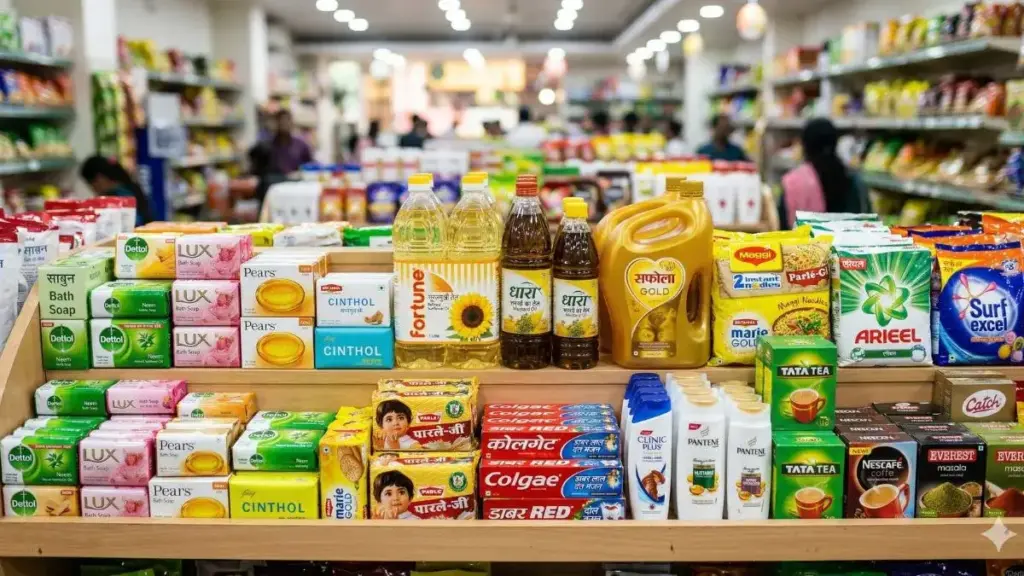
Due to increasing tension between Iran, America and Israel, economic pressure has started increasing, and the effect of inflation has also started becoming visible. If the current situation continues, everyday essentials—from soap and soda to cooking oil—will become more expensive within a few days. This will make it even more difficult for the common man to survive. Fast-moving consumer goods (FMCG) companies have already started preparing to increase prices once again from the first quarter of financial year 2027.
Results revealed in NuVama report
According to a report by NuVama Institutional Equities, input costs are continuously increasing due to the huge rise in crude oil prices and weakening of the Indian rupee. As a result, maintaining price stability is proving to be a very difficult task for companies. The brokerage firm’s report estimates that if the current trend of inflation in raw material prices continues, product prices may rise by at least 3 to 4 per cent in Q1FY27.
However, the impact is expected to be limited in Q4FY26 due to current inventory levels, but the industry is preparing for price changes as these stocks start getting exhausted. “In our view, companies generally hold enough stock of raw materials and finished products to last 30–45 days; hence, there is every possibility of a price increase in 1QFY27,” NuVama’s report said.
Companies ready to increase prices
It is worth noting that almost every FMCG company uses plastic, a substance derived from petroleum, for packaging its products—like soap, biscuits and shampoo. Since the cost of packaging is now going to increase, companies will inevitably pass on this increased cost to consumers and sell their products at higher prices. Apart from this, due to rising prices of crude oil, the cost of logistics (transportation) is also increasing. From shipping container rentals to marine insurance premiums, everything has become expensive. India not only imports a large part of its crude oil needs, but also imports large quantities of edible oil from other countries, and this import is mainly through sea routes. If the supply chain breaks down, cooking oil will automatically become expensive.