
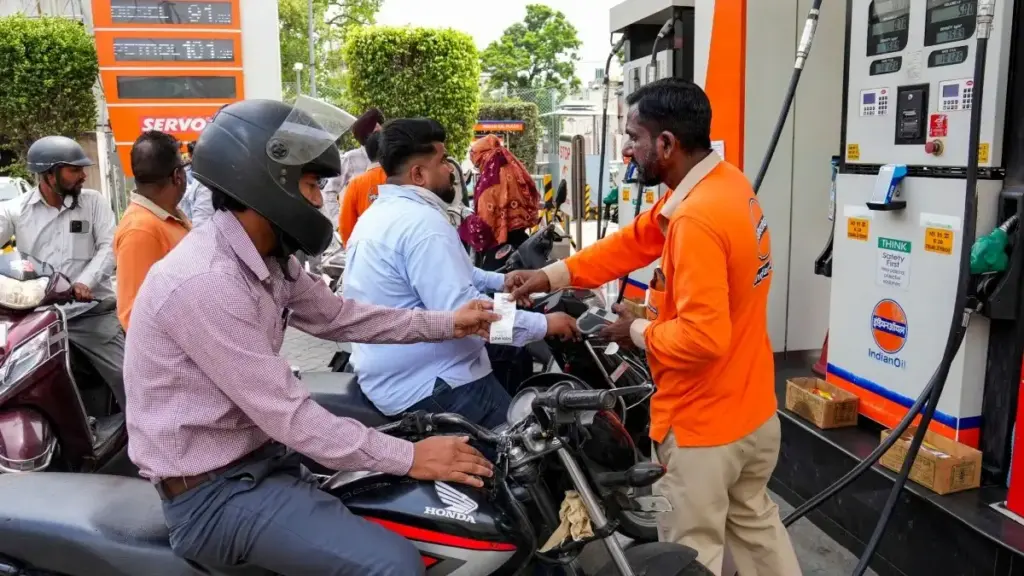
Petrol Prices Today: India is currently facing a double whammy in terms of crude oil. Not only is the amount of oil available for purchase less, but the country is also paying a much higher price for it. According to preliminary data from the government’s Petroleum Planning and Analysis Cell (PPAC), India reduced crude oil purchases by 4.3 percent in April 2026 compared to the same period last year. However, despite this reduction, the import bill has increased by more than 50 percent. The reason for this increase is the increase in global oil prices.
More than 50% increase in import bill
In April 2026, India imported 20.1 million tonnes of crude oil, worth $16.3 billion. In contrast, a year earlier – in April 2025 – the country had purchased 21 million tonnes of crude oil at a price of $10.7 billion.
City Petrol (₹/Litre) Diesel (₹/Litre) New Delhi ₹98.64 ₹91.58 Kolkata ₹109.66 ₹96.07 Mumbai ₹107.55 ₹94.08 Chennai ₹104.51 ₹96.13 Gurugram ₹99.51 ₹92.01 Noida ₹98.49 ₹98.91 Bengaluru ₹107.12 ₹95.04 Bhubaneswar ₹107.12 ₹96.83 Chandigarh ₹98.12 ₹86.09 Hyderabad ₹111.84 ₹99.95 Jaipur ₹108.81 ₹93.81 Lucknow ₹98.45 ₹91.72 Patna ₹109.89 ₹96.11 Thiruvananthapuram ₹111.71 ₹100.59
Crude oil prices in the international market have remained above the $100 level for a long time. Between April 2025 and April 2026, crude oil prices increased by nearly 70 percent. During this period, the average price of India’s oil basket was $114.48 per barrel, which was $67.72 per barrel last year. Today, Friday, Brent crude was seen trading at $105.2 per barrel, an increase of 2.55 per cent – or $2.62. Meanwhile, WTI crude hit $98.27 a barrel, up 1.99 percent – or $1.92.
Petrol and diesel prices in big cities
There was no change in petrol and diesel prices across India today, Friday, May 22. The prices in big cities of the country are as follows:
Indian refineries increased LPG production
The ongoing conflict in the Middle East and the blockade of the Strait of Hormuz have also disrupted LPG supplies. To deal with this supply crisis, Indian refineries have increased LPG production by about 30 percent. Production was 10 lakh tonnes in April 2025, which increased to 13 lakh tonnes in the first month of the current financial year. However, during the same period, LPG consumption declined to 22 lakh tonnes from 25 lakh tonnes in April last year. To control the supply, the government implemented the OTP-based delivery system and reduced the interval for booking cylinder refills to 25 days in urban areas and 45 days in rural areas.
**Huge reduction in import of LNG**
There has also been a huge reduction in the import of Liquefied Natural Gas (LNG), used in the production of CNG and PNG. In April 2025, LNG imports stood at 2,778 million metric standard cubic meters (mmscm), which later declined to 1,954 mmscm in April 2026. Domestic gas production also declined, falling from 2,908 mmscm to 2,787 mmscm. Due to shortage in supply of LNG, Indian companies have bought cargo shipments from Nigeria, Angola, Oman and Indonesia. In April 2026, the country’s total natural gas consumption stood at 4,703 mmscm – a decline of 16.7 per cent compared to the same period last year.