
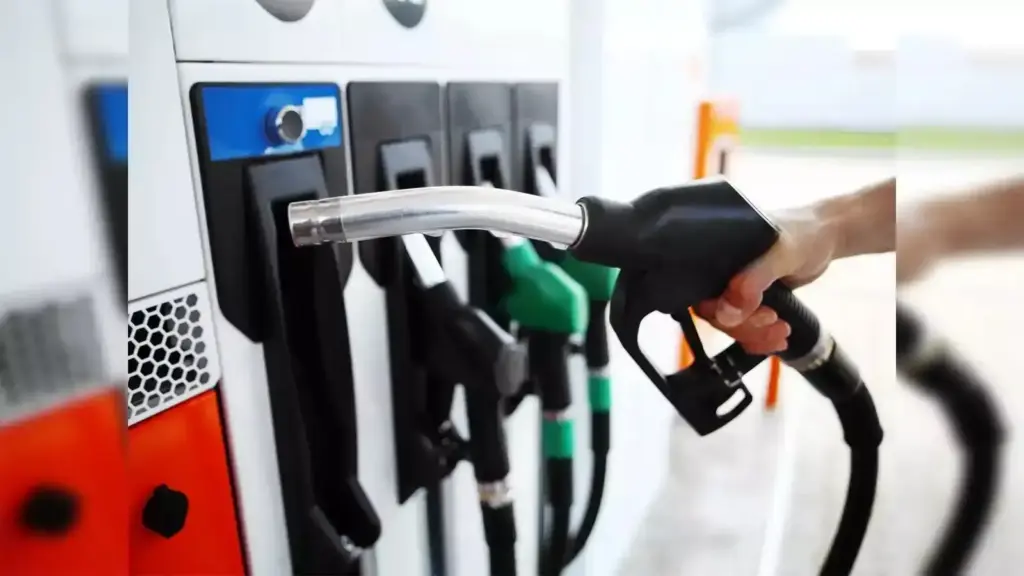
After the elections in five states including Bengal, commercial LPG cylinder customers got a big shock today, May 1. The price of gas cylinder has increased by about ₹ 1,000. Following the hike in gas prices, state-owned oil marketing companies—Indian Oil, HPCL, and BPCL—released the revised rates of petrol and diesel at 6:00 am today, May 1. According to the latest rates of May 1, petrol is available at ₹ 94.77 per liter and diesel at ₹ 87.67 per liter at Indian Oil pumps in Delhi. This means that unlike LPG, customers will continue to get relief in petrol and diesel prices even after the elections. It is worth noting that the retail prices of petrol and diesel remain the same from the beginning of April 2022.
Relief for general public
In a statement, Indian Oil confirmed that there is no change in the rates of the main fuel which directly impacts the general public. As per standard procedure, ATF (Aviation Turbine Fuel) prices are changed on the 1st of every month on the basis of input cost. There has been no change in rates for domestic airlines, while prices have been increased for international aviation companies.
Relief on petrol and diesel
IOC said there was no change in the retail prices of petrol and diesel. These fuels constitute about 90 percent of the total consumer consumption. The prices of kerosene supplied under the Public Distribution System (PDS) also remained stable. Overall, prices of about 80 percent of petroleum products have remained the same, providing stability for most consumers, the statement said.
So, where did the changes happen?
IOC clarified that the rate changes are limited to select industrial segments, which have a very small share in the total consumption. In particular, the prices of bulk diesel and ATF for international aviation operations have been increased. Why did the prices of petrol and diesel not increase in India despite the rising rates of crude oil? When crude oil becomes expensive in the international market and domestic prices are not increased, oil companies suffer direct financial loss. However, when crude oil prices subsequently fall, these companies do not immediately reduce retail prices; Instead, they use this opportunity to make up for their earlier losses.
Petrol and diesel prices have been stable for a long time
Amid the Iran-related conflict, crude oil prices in the international market rose from $77 to $120 per barrel. In many countries around the world, petrol and diesel prices practically doubled. From America to China, the rates of petrol and diesel increased significantly; Yet, in India, these prices remained stable for a long time. Not only are market forces behind this stability, but government strategy, electoral calculations and the existing tax structure also play an important role in it. Since June 2017, a “dynamic pricing system” for petrol and diesel has been in place across the country, under which prices change daily. But, in reality, oil companies do not operate completely independently, and the government exercises indirect control over pricing decisions.
Connection between elections and fuel prices
Past data and past trends suggest that fuel price hikes are usually halted before elections, and any changes are postponed until the election process is over. Since the prices of essential commodities—such as petrol, diesel and cooking gas—have a direct impact on the common citizen, they often emerge as key election issues. This is why prices are often kept stable during state assembly elections: to avoid increasing public anger. In 2019, prices remained the same during elections in many states. During the 2020 Bihar elections, prices remained stable till 51 days before the voting date, and only after that the prices started increasing. A similar trend was seen during the 2021 West Bengal elections. Additionally, in 2022, prices in many states, including Uttar Pradesh, remained the same for months before the elections, but saw a sharp increase in prices after the elections were over.
How does the government manage the entire process
In India, retail prices of petrol and diesel are determined through a multi-layered system. After the crude oil is refined, dealer’s commission is added to the base price. Next, the central government imposes excise duty, and then state governments add VAT. This is the reason why prices differ in different cities. When crude oil prices rise, the government does not immediately increase retail prices; Instead, it first reduces excise duty or asks oil companies to bear losses for a certain period. This approach is considered a ‘counter-subsidy’ model.
How is the loss compensated?
When crude oil prices rise, the government does not immediately raise retail prices; Instead, it first reduces excise duty or asks oil companies to bear losses for a certain period. This approach is considered a ‘counter-subsidy’ model.