
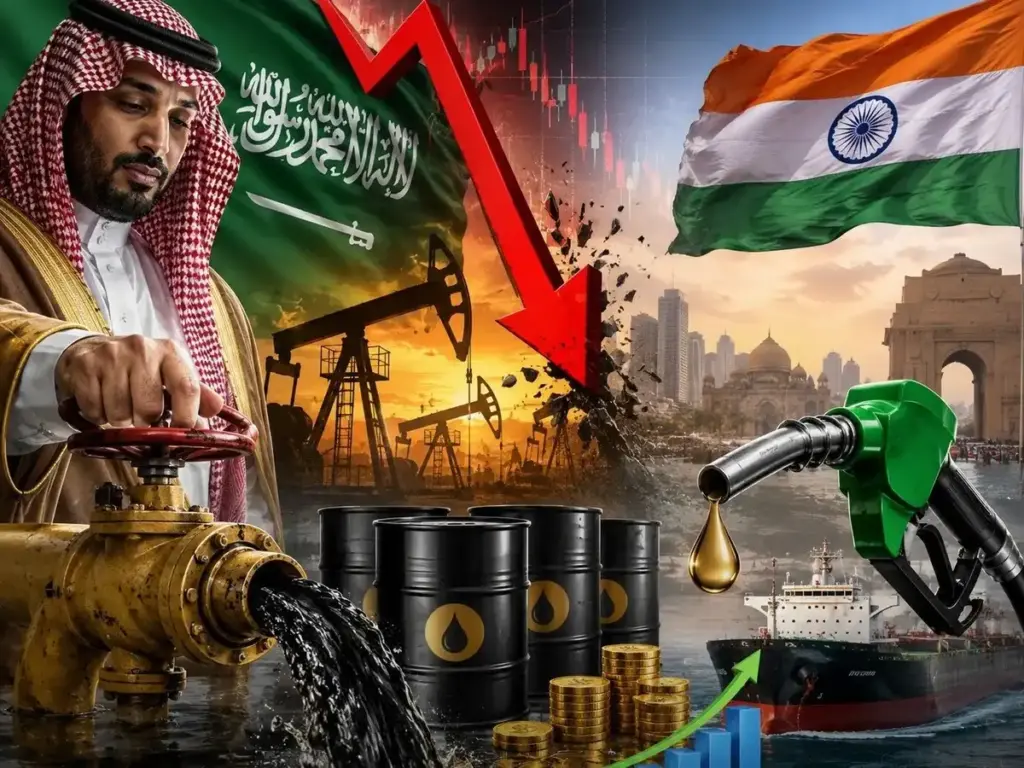
Saudi Aramco, the world’s largest oil exporter, has cut its official selling price (OSP) of crude oil supplied to Asian customers including India for August. The company has set the price of its main ‘Arab Light’ crude at $1.50 a barrel below the regional Oman/Dubai benchmark. This is a record decline of $11 per barrel compared to July. According to Reuters, this is the largest single cut since 2003. With this cut, OSP has reached its lowest level since June 2020; At that time, the lack of demand due to COVID-19 lockdown had led to a glut of crude oil in the global market and prices had fallen to multi-decade lows.
Will petrol and diesel become cheaper in India?
Saudi Arabia’s move to cut crude oil prices could reduce procurement costs for big importers like India. A $10 increase in the price of crude oil typically results in a loss of about ₹6 per liter to Indian oil marketing companies; Therefore, this decision of Saudi Arabia is in the interest of India. If international crude oil prices remain low for a long time, the pressure on petrol, diesel and LPG prices may reduce in future. It is noteworthy that Petroleum Minister Hardeep Singh Puri had recently indicated that if crude oil prices stabilize at pre-war levels, then prices of petrol and diesel can be reduced.
Why were oil prices reduced?
According to Reuters, experts believe that the supply of crude oil in the global market is expected to increase after the tension between America and Iran subsides. As a result, Saudi Arabia aims to regain lost market share in Asia, especially China and India, which has led to a sharp decline in prices.
Trying to woo China again
China is a key market for Aramco – the world’s largest crude oil importer – and Saudi Arabia has seen its market share decline. It is estimated that China’s imports from Saudi Arabia increased to 705,000 barrels per day in July. That’s up from the 12-year low of 626,300 barrels per day hit in June, but less than half the average of 1.48 million barrels per day seen in the three months prior to Iran-related tensions. With prices low, it is expected that Chinese refiners may once again increase purchases of Saudi oil.
**The road ahead is difficult**
History is witness to the fact that China has reduced imports when prices increased, but increased purchases when prices fell. Aramco’s price cut for August cargoes is large enough to allow China’s state refineries to resume purchasing their full scheduled volumes. However, market experts say that the competition will not be easy for Saudi Arabia. Countries like the United Arab Emirates (UAE), Iraq and Kuwait are offering even deeper discounts on their crude, giving Asian buyers many lower-priced options.
**The price war may intensify**
Experts believe that the current situation depends on the Strait of Hormuz remaining open. If tensions increase or there is any obstruction in this important sea route, crude oil prices may once again rise sharply. On the contrary, if supply remains stable, the price war in the global oil market may intensify.