
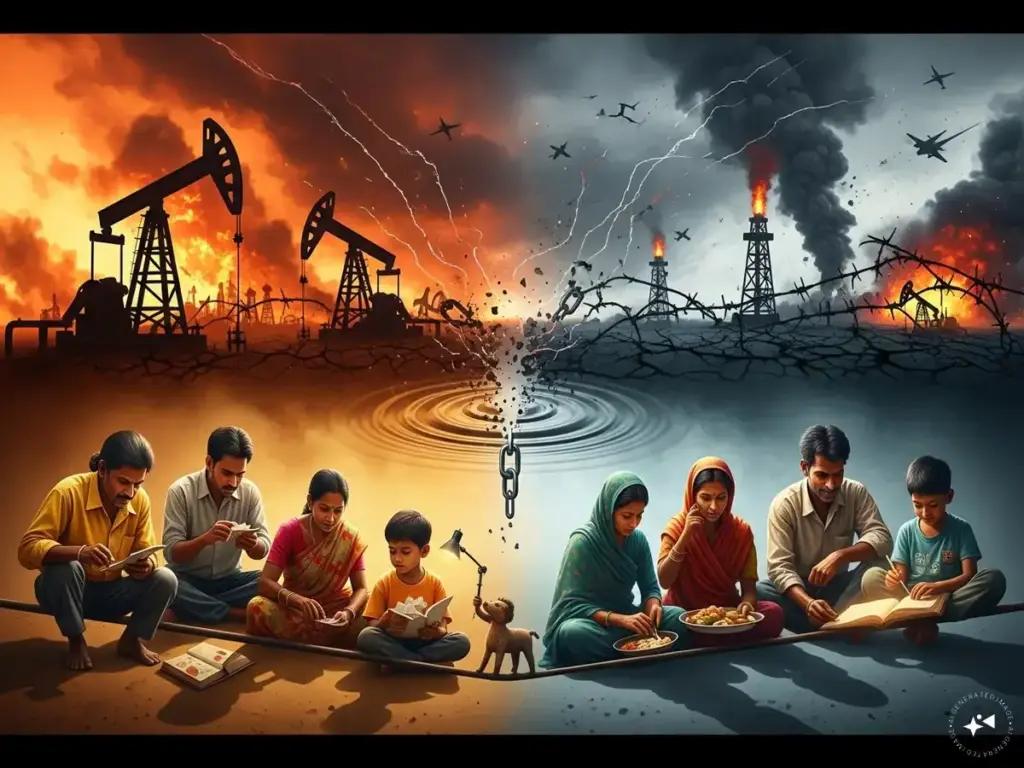
Amid rising prices and economic pressure in the country, the “vicious cycle of inflation” is once again in the news. Factors like increase in fuel costs like petrol-diesel and CNG, decline in weather-dependent agricultural production and increasing pressure on loan EMIs are continuously increasing the burden on the pockets of the common consumer.
Experts say that when one economic problem gives rise to another and which then affects the third, it is called “vicious circle of inflation”. It’s a cycle in which prices rise, costs rise, and then expenses become more expensive.
How does this vicious cycle arise?
This cycle often starts with fuel prices. Transport and logistics costs increase when petrol, diesel and CNG become expensive. This has a direct impact on the prices of vegetables, grains and everyday goods.
Additionally, changes in weather and climate patterns such as El Niño conditions affect agricultural production. When crops are weak, supply in the market decreases and prices increase further.
Why is EMI affected?
When inflation rises, central banks often change interest rates to control inflation. Due to this, the EMI of home loan, car loan and personal loan may increase or their burden may remain for a long time. As a result, the monthly budget of the typical family comes under even greater pressure.
How does a circle extend itself?
The vicious cycle of inflation is considered dangerous because it keeps increasing itself. For example-
Fuel expensive → Transport expensive Transport expensive → Food items expensive Food items expensive → General expenses increased Expenses increased → Savings decreased → Loan and EMI burden increased
In this way the entire economic system gradually comes under pressure.
expert opinion
Economists believe that to break this cycle, it is very important to stabilize fuel prices, improve agricultural production and strengthen the supply chain. Additionally, emphasis is also being laid on modern farming and irrigation systems to reduce weather-based risks.