
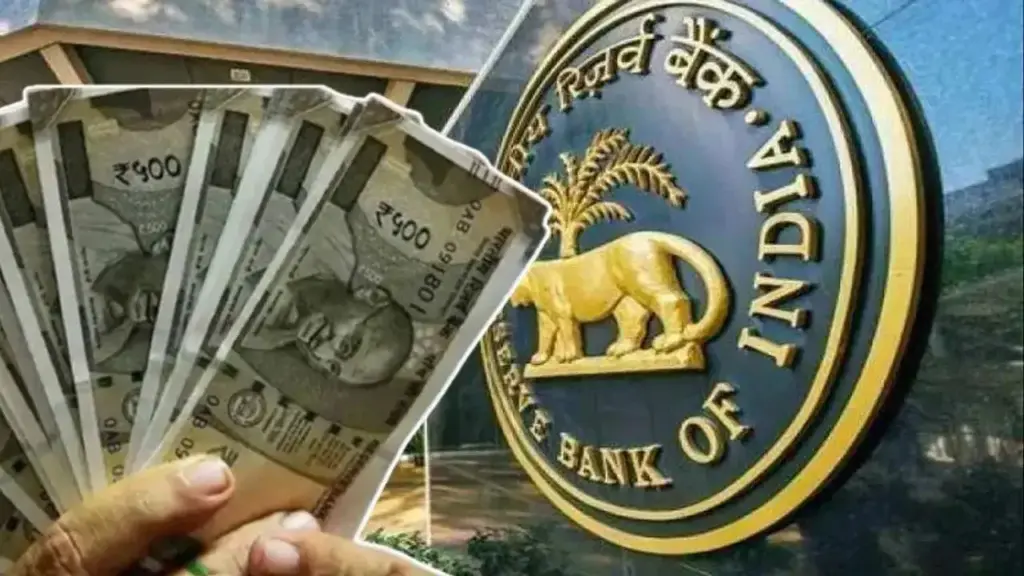
The Reserve Bank of India (RBI) has decided to transfer ₹2.87 lakh crore to the Central Government. This amount is more than the annual budget of many big states of the country. This is not a fabricated story, but the real reality of May 22, 2026 – the day RBI announced the biggest ever dividend to the government in its 90-year history. However, this move has also triggered a new debate on the role of RBI. What is this whole matter after all? How did RBI earn such a huge amount? And what effect will this have on your pocket and the country’s economy?
**What is the dividend of ₹2.87 lakh crore?**
RBI acts as the central bank of the country; But, this is not just a typical government office. RBI earns profits from its various activities. By law – specifically under Section 47 of the RBI Act – the bank is required to transfer a substantial portion of its annual profits to its sole shareholder: the Government of India. This transfer is called ‘surplus transfer’ or ‘dividend’.
On May 22, 2026, the 623rd meeting of the Central Board of Directors was convened under the chairmanship of RBI Governor Sanjay Malhotra. During the meeting, approval was given to transfer a record profit of ₹2,86,588.46 crore to the government for the financial year 2025-26. This is the biggest payment so far in the 90 year history of RBI. Last year (FY25), the figure was ₹2.69 lakh crore – a record amount at that time. In other words, this time with an increase of 6.7%, the previous record has now been broken.
**How did RBI earn so much profit?**
RBI makes its record earnings in different ways; However, one particular factor has been the biggest contributor to this year’s stellar performance: the weakening rupee.
**Weakening of Rupee:** According to PTI, the Indian rupee weakened by 9.88% against the US dollar during the financial year 2025-26. When the rupee weakens, the value of foreign exchange reserves (about $600 billion) held by the RBI – expressed in rupee terms – automatically increases significantly. This is a kind of “accounting profit” which directly adds to the profits of RBI. The biggest contributor to this huge payout was the nearly 10% decline in the value of the rupee, leading to valuation gains on foreign currency assets.
Interest on foreign investments: RBI invests its foreign exchange reserves in US government bonds and other safe foreign instruments. This creates a steady flow of interest income for the central bank.
Domestic investment and printing of currency: RBI buys government bonds, earns interest on them, and also charges fees for printing currency notes. Over the past decade, the RBI’s balance sheet size has grown significantly, leading to an increase in its overall earnings.
Impact of the West Asian crisis: War-like conditions in West Asia led to a rise in oil prices, which increased India’s import bill and put pressure on the rupee. This is a matter of concern for the government, but for the RBI, the weakening rupee has emerged as an important source of profits.
What will the government do with this money and how will it affect you?
This amount of ₹2.87 lakh crore is no less than a lifeline for the government, especially at a time when the global situation is quite challenging. For the government, the burden of subsidies on oil and fertilizers has suddenly increased due to tensions in West Asia. Media reports suggest that this record dividend could help the government deal with the challenges posed by rising subsidy expenditure.
Its special advantages and disadvantages:
Controlling fiscal deficit: This flow of funds will help the government keep its fiscal deficit – that is, the difference between its income and expenditure – within the targets set in the budget.
Less borrowing: When the government has funds, it will not need to borrow as much from the market. This can help keep bond yields (interest rates) stable and prevent unnecessary pressure on your home or car loan EMIs.
Impact on inflation: This dividend will infuse additional cash (liquidity) into the banking system. Although excess liquidity can lead to inflation, this time RBI has kept a huge amount in its contingency fund, which will help in balancing the flow of money in the market.
Is RBI becoming the ‘silent financier’ of the government?
This question is being raised because the dividend payment of RBI is increasing year after year. As a result, the question arises whether the role of the central bank is limited to making monetary policy only, or is it gradually becoming a permanent source of income for the government? Some economists view this trend with suspicion.
Capitalmind CEO Deepak Shenoy called the record dividend “disappointing.” He argues that instead of distributing dividends of such a huge amount, the RBI should give priority to strengthening its risk reserves (contingency fund), so that it can be better prepared to deal with any major economic crisis that may arise in the future.
“This historic RBI dividend is a result of a weak rupee and higher interest income,” said Anuj Gupta, head of commodities at HDFC Bank. Amid the challenging global situation, this is no less than a boon for the government, as it ensures budget balance and eliminates the need to impose additional tax burden on the public. However, this development has undoubtedly sparked a new debate on the autonomy of the RBI and its preparedness for the future. For the government too, this is a golden opportunity to use these windfalls wisely and for long-term development purposes.
Former RBI Governor Shaktikanta Das says, “RBI should work like a competent doctor who prescribes medicine according to specific needs, and not like a resourceful doctor who keeps giving only one remedy.”