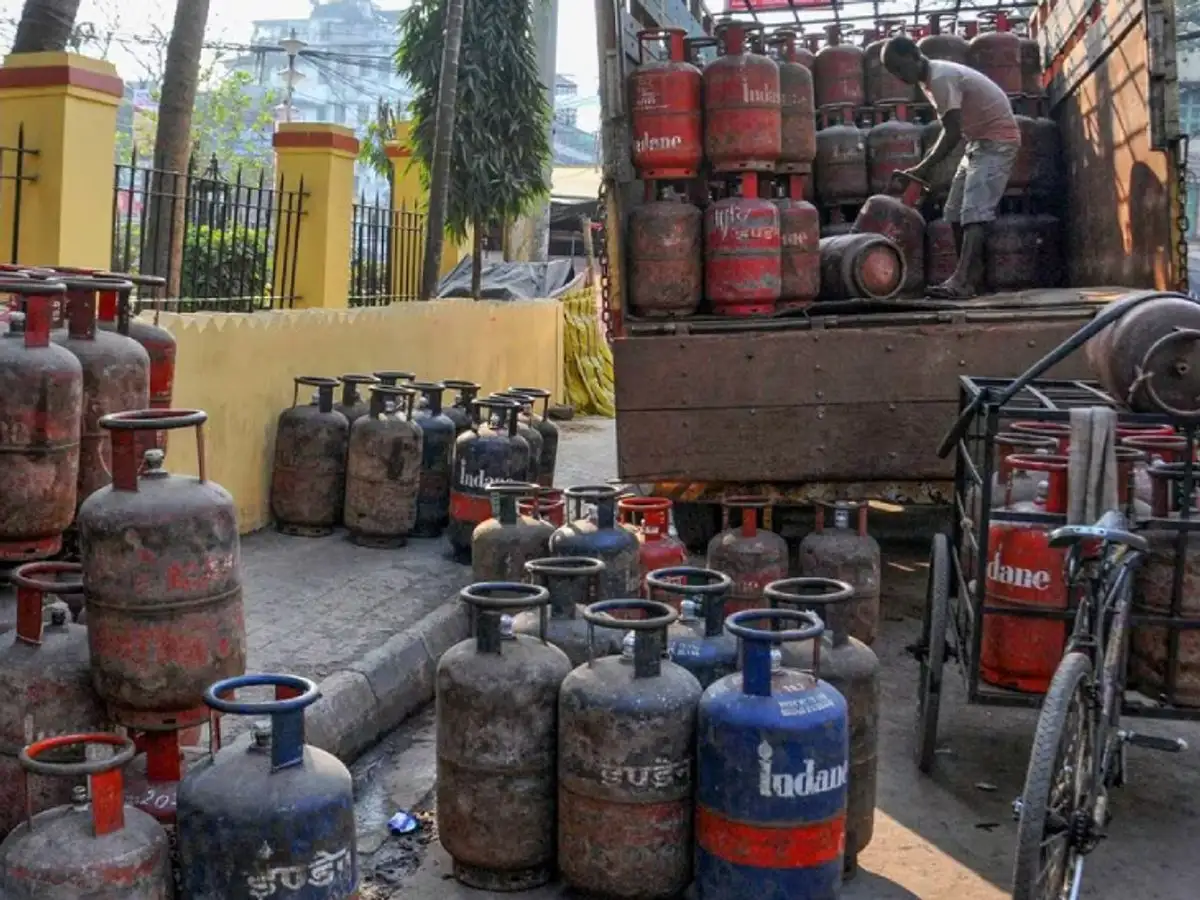
The government has once again reiterated that even amid the current geopolitical fight, there is no shortage of petrol and diesel in the country. The situation regarding LPG cylinders is definitely bad, but there is no need to panic. On March 16 and 17, two tanker ships carrying 92,700 tonnes of LPG are scheduled to arrive in India. These two tankers—named *Shivalik* and *Nanda Devi*—have already crossed the Strait of Hormuz and are scheduled to reach Mundra and Kandla ports. Currently, six LPG tankers, one LNG tanker, and four crude oil tankers are in the Persian Gulf; It is expected that these ships will also get permission to pass through the Strait of Hormuz.
LPG cylinder supply resumes
Regarding the country’s energy security, officials from the Prime Minister to the Foreign Minister are in constant touch with their counterparts in Iran, Israel and America. Apart from the Gulf countries, India is in touch with many other countries to buy different energy resources, from oil to natural gas. Meanwhile, according to the Ministry of Petroleum and Natural Gas, supply of LPG cylinders for commercial use has resumed in 29 states and union territories. The responsibility of distributing commercial cylinders has been handed over to the respective state governments. Domestic production of LPG has been increased by 30 percent; Currently, 60 percent of the country’s domestic LPG requirements are met by imports. Apart from this, the government has once again appealed to the people to consider switching from LPG cylinders to PNG (Piped Natural Gas). There are currently 330 million LPG subscribers in the country, of which 6 million are in a position to switch to PNG immediately.
Black marketing of cylinders will be banned
GAIL India has been directed to provide full cooperation and assistance to consumers in facilitating this transition. All petroleum and gas companies have been directed to spread information about LPG and PNG through social media and other means, so that customers do not fall prey to misconceptions and the situation can be prevented from turning into panic. To stop black marketing of gas cylinders, raids have been conducted at more than 1,400 places in dozens of states including Maharashtra, Goa, Bihar, Odisha and Uttar Pradesh and legal cases are being registered against those involved. A surprise check was conducted at 1,300 places. All states have been instructed to form committees at the district level to keep an eye on the supply of gas cylinders. At an inter-ministerial press conference on Saturday – which focused on updates on the ongoing dispute – it was also made clear that there is no shortage of fertilizer domestically. There is a lot of stock of fertilizer in the country for the upcoming Kharif season. Since India is dependent on imports for its fertilizer needs, there were speculations of a fertilizer crisis following the dispute.
Strange situation due to panic booking
Talking about LPG, daily booking of domestic gas cylinders – which is usually between Rs 50 to 55 lakh on normal days – has increased to 88 lakh. Domestic customers have been appealed to avoid such panic booking and have been advised to choose online booking at all costs. Cylinder booking will be available at a gap of 25 days in urban areas and 45 days in rural areas.
Domestic customers have also been advised not to personally visit the dealers for booking or crowd at the distribution centers to purchase cylinders. At the commercial level, permission has been given to use biomass in the Delhi-NCR region for the next one month. Apart from this, domestic LPG production has reached its highest level ever. Officials say that the LPG supply situation is expected to be almost normal in the next seven to ten days. On Saturday, the government also confirmed that all Indian sailors currently in the Persian Gulf area are safe, and 253 sailors have been successfully repatriated so far. All ports have been directed to provide full facilities and support to all cargo ships arriving with shipments.
large stock of fertilizer
Urea: 6.2 million tonnes (1 million tonnes more than same time last year)
DAP (diammonium phosphate): 2.5 million tonnes (almost double last year’s level)
NPK: 5.6 million tonnes (compared to 3.1 million tonnes at this time last year)
Tenders issued for global urea purchase
Orders have been placed for 1.35 million tonnes
90 percent of this quantity is expected to arrive by the end of March
Fertilizer companies given approval to purchase gas for fertilizer production
There is ample stock of urea available for the Kharif season, which is starting from September 15.