
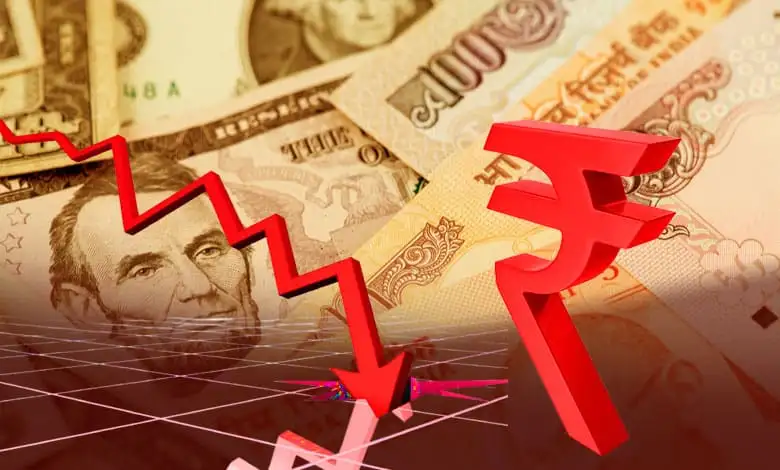
Amid the ongoing conflict in the Middle East, the rupee has seen a sharp decline. On Friday, the rupee weakened significantly against the dollar, reaching near $94 per barrel. The currency recorded its biggest one-day fall in four years. The rupee fell 108 paise to close at 93.71, and breached the 93 level for the first time. The month of March has proven to be extremely turbulent for the Indian currency; Since the beginning of the month, it has lost 266 paise—or about 2% of its value—in its biggest period of decline in recent history. Experts are now expressing concern over the rupee’s movement, and some are even predicting that it may eventually touch the 100 level.
What is RBI doing about the fall of rupee?
The Reserve Bank of India (RBI) remains proactive and is actively intervening to stop this uncontrolled decline. The central bank has used state-owned banks to sell dollars, as well as forward contracts and non-deliverable forwards (NDFs) extensively in offshore markets. Estimates suggest the RBI sold more than $15 billion in March alone in an effort to prop up the currency. However, the central bank’s strategy appears to be primarily focused on maintaining macroeconomic stability.
Five reasons behind the fall of rupee:
* Foreign portfolio investors (FIIs/FPIs) have boosted dollar strength by pulling out over $8.5 billion (about ₹80,000 crore) from Indian equities in the month of March alone.
* Due to the ongoing conflict in the Middle East, Indian crude oil prices have soared above $156 per barrel—an all-time high. Since India imports more than 88% of its crude oil needs, this directly increases the national import bill, putting considerable downward pressure on the rupee. The escalating crisis in West Asia involving Iran, Israel and the United States has seriously weighed on global markets, causing investors to turn to safe-haven assets such as the US dollar. Amid the conflict, steadily rising energy costs and weak trade data have raised fears of a widening of the current account deficit, resulting in a marked weakening of the Indian rupee.
The Reserve Bank of India (RBI) has refrained from large-scale market intervention—instead choosing to reserve its reserves for development priorities—which has allowed market forces to put downward pressure on the rupee.
What effect will this have?
Weakening of rupee has many negative effects on the country. For the common man, this could mean rising fuel prices and an increase in the cost of imported electronic goods. Apart from this, the risk of inflation also increases. For the industrial sector, manufacturing companies that are heavily dependent on imported raw materials are likely to see their profit margins decline. Companies that have not hedged their foreign currency liabilities will have a direct and adverse impact on their balance sheets. From the perspective of the broader Indian economy, due to the twin pressures of widening trade deficit and rising inflation, it is likely that the RBI will delay any cut in interest rates, which could slow economic growth.
Rupee can touch 100 mark
In the short term, the rupee’s performance remains extremely disappointing. Currency experts predict that as long as the conflict in West Asia continues and crude oil prices continue to rise, there will be considerable downward pressure on the rupee. If geopolitical tensions do not ease immediately, the domestic currency may fall to 94 to 95 levels against the US dollar. There are also fears that it may cross the 100 mark.