
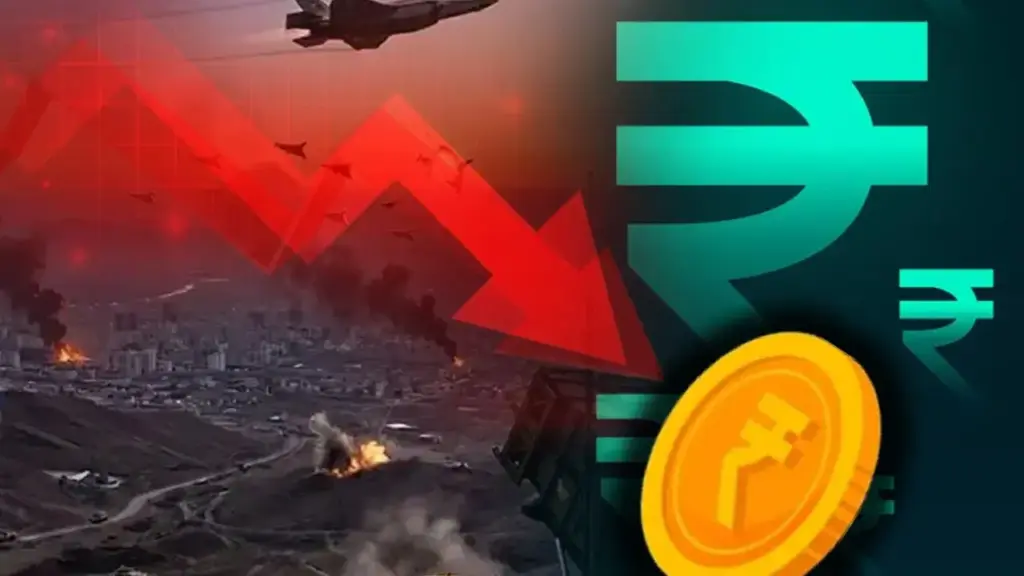
Amidst the war-like situation related to Iran—on one hand, a huge surge in crude oil prices is being seen—on the other hand, the Indian Rupee fell to its all-time low of 92.62 against the US Dollar on March 18. Given this, according to Goldman Sachs, the Indian rupee is currently the weakest among South Asian currencies and could fall further to 95 against the US dollar by next year. If this happens, it could prove to be a major blow to the Indian economy. In the last one month alone, the rupee has depreciated by about 1.77 percent. However, the Reserve Bank of India (RBI) is continuously intervening in the market in an attempt to reduce the pressure on the rupee. Given the current market conditions, RBI has sold about $18 to $20 billion in a single week.
Why is the rupee falling?
In the month of March, foreign investors pulled out shares worth about $5.5 billion from the Indian market, leading to a decline of about 8 percent in the Nifty 50 index. On March 17, the rupee hit 92.41 against the dollar—marking a decline of about 6.75 percent in the last 12 months—and ultimately closed at its all-time low of 92.46. According to Goldman Sachs economist Shantanu Sengupta, who specializes in India, the rupee is expected to fall to 95 against the dollar based on the possible closure of the Strait of Hormuz—which could be caused by the US-Israel conflict—and fears of a widening of the current account deficit.
decline in growth rate
Goldman Sachs also believes that this situation may also have an impact on India’s economic growth rate. In a change to its previous estimates, the institute has reduced its GDP growth forecast for the financial year 2026-27 from 7.0 percent to 6.5 percent. Additionally, inflation is projected to increase by 30 basis points, while the current account deficit (CAD) may widen by 0.8 percentage points to 1.2 percent of GDP.