
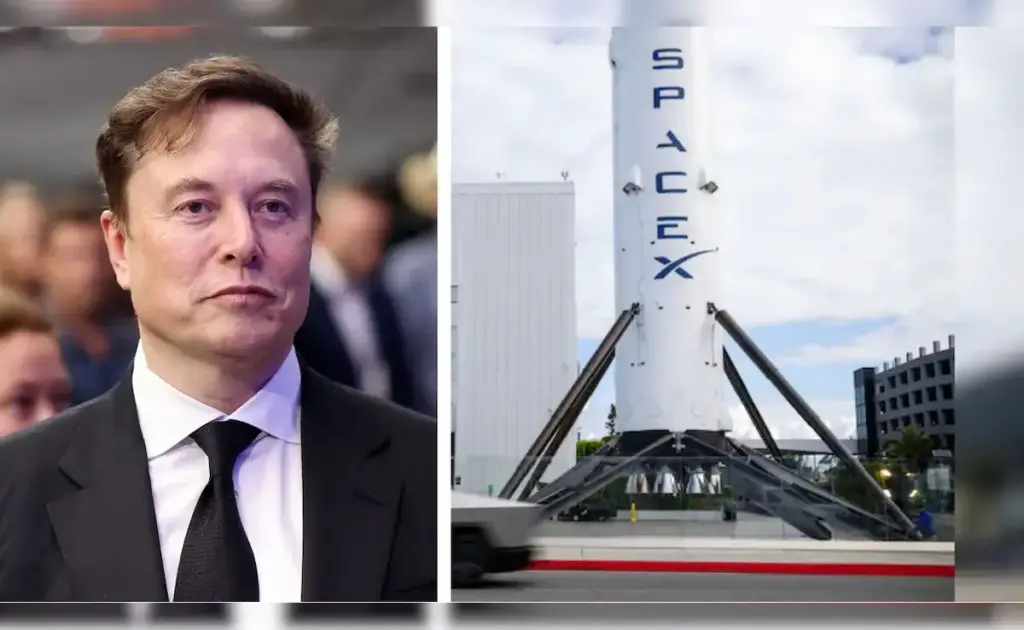
Elon Musk — the world’s richest man and tech titan — is preparing to take his famous space and satellite company, SpaceX, public through an initial public offering (IPO). For this purpose, the company has officially submitted draft papers for the IPO with the US Securities and Exchange Commission (SEC).
It is widely expected that SpaceX will list on the Nasdaq exchange by June 12 under the ticker symbol SPCX. According to a Reuters report published last week, SpaceX aims to list its shares by June 12; For this, the roadshow is expected to start from June 4 and the sale of shares is expected to start by June 11. If everything goes according to plan, it could prove to be the biggest IPO in history.
SpaceX long flight
For years, SpaceX was viewed primarily as a rocket launch company; However, now its scope has expanded much more than that. The company currently launches satellites, operates the Starlink satellite internet network, builds reusable rockets, and now owns xAI — Musk’s artificial intelligence venture. Its reusable rocket technology has reduced the cost of sending payloads into space by 80 percent. While SpaceX’s rocket business requires a lot of research and capital spending, its Starlink service — which has more than 10 million subscribers worldwide — generates billions of dollars in cash revenue for the company every month.
Where is the catch in this?
SpaceX’s unusually high valuation remains a main concern for investors. Based on a valuation of $1.75 trillion, the company’s market capitalization is much higher than the $18.7 billion in revenue it is expected to generate in 2025. While on one hand the company is expanding rapidly, on the other hand its operating expenses are also increasing at the same pace. As a result, if a valuation of $1.75 trillion is being sought against a revenue base of $18.7 billion, this implies a price-to-sales (P/S) multiple of more than 90x. Companies like Apple and Nvidia don’t trade at such high multiples.
This is also a cause for concern
Its corporate governance is also a matter of concern. According to reports, even after the IPO, CEO Elon Musk will still control about 80 percent of the voting power, despite only owning 43 percent of the company’s equity, thanks to the company’s ‘super-voting shares’. This means that ordinary investors will own shares, but will have very little say in company decisions.