
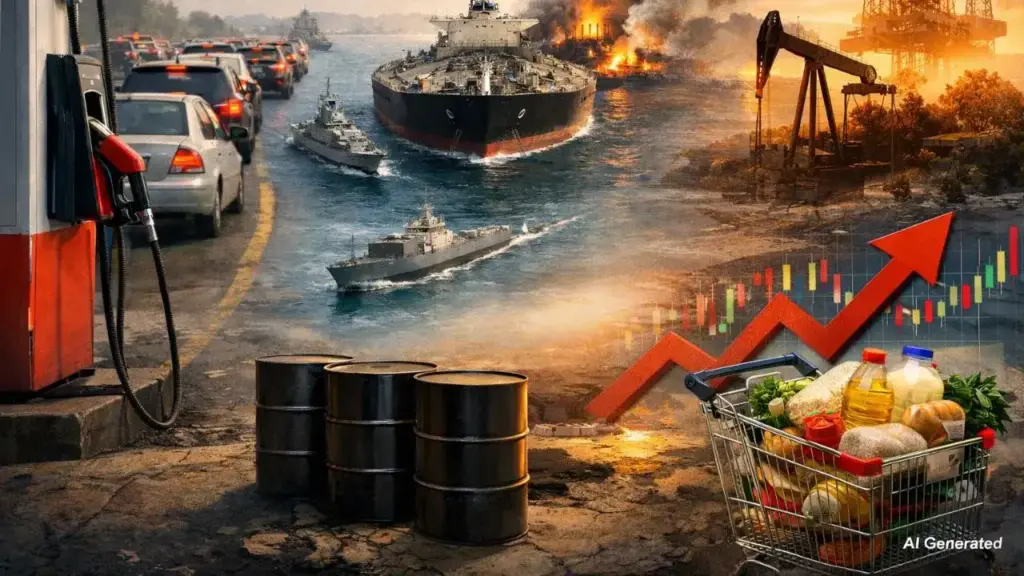
The global energy crisis is continuously increasing due to the ongoing conflict with Iran. It seems that this crisis is entering a new and more dangerous phase. Nearly 80 countries around the world have started implementing emergency measures to save their economies. The main concern focuses on the Strait of Hormuz, where oil and gas supplies have not yet fully returned to normal. *Financial Times* has issued a warning about this situation in its recent report.
According to *Financial Times*, experts have warned that if the situation does not improve soon, there could be another big jump in crude oil prices. Paul Diggle, chief economist at fund management firm Aberdeen, said his team was looking at a scenario in which Brent crude oil prices could reach $180 a barrel. If this happens, inflation will rise rapidly in many countries, raising fears of a global recession. He remarked that the world is currently living on ‘borrowed time’.
Energy consumption increases in summer
With the onset of summer season, the use of both air conditioners and air travel has increased. As a result, the demand for petrol, diesel, jet fuel and crude oil is increasing rapidly. In contrast, global oil reserves are declining at a record pace. Australia has decided to allocate $10 billion to strengthen its fuel and fertilizer reserves. France has announced that it will further expand the scope of its economic support measures to save its national economy. Meanwhile, India has appealed to its citizens to put a stop to gold purchases and avoid international travel to conserve the country’s foreign exchange reserves.
fear of global recession
According to the International Energy Agency (IEA), by the end of March 55 countries had imposed emergency measures; Now this number has increased to 76. Experts have warned that if the conflict does not end – and the Strait of Hormuz is not fully reopened in the coming weeks – the global economy could slip into recession. EU Transport Commissioner Apostolos Tzitzikostas also warned that the situation was becoming increasingly uncertain. Between March and June, global oil consumption exceeded production by about 6 million barrels a day, according to the IEA. Some experts believe that this deficit could increase to 8 to 9 million barrels per day. To meet this shortage, governments and companies are rapidly depleting their existing oil reserves. Since the war began, worldwide oil reserves have declined by approximately 380 million barrels. Governments are releasing more than 2 million barrels of oil from their emergency reserves into the market every day; However, it is expected that these measures will continue until July.
Impact on factories and supply chain
If the situation worsens, many countries may be forced to implement rationing of petrol and diesel. Factories may close, and supply chains may experience significant disruptions. Right now, the price of Brent crude is more than $105 per barrel. However, experts warn that prices may have to rise further to keep demand in check.
Countries like Pakistan, Sri Lanka and Philippines are already facing fuel shortage. These countries have implemented a four-day work week for some time. Petrochemical and aviation sectors are suffering the most from this impact. Many refining companies are avoiding buying expensive oil and instead using their existing stocks in the hope that the war will end soon.
However, some economists are optimistic that oil supplies will improve in the near future, allowing prices to fall below $100 per barrel. Conversely, if oil prices go above $150 per barrel, the world may face severe inflation, supply shortages and economic recession.