
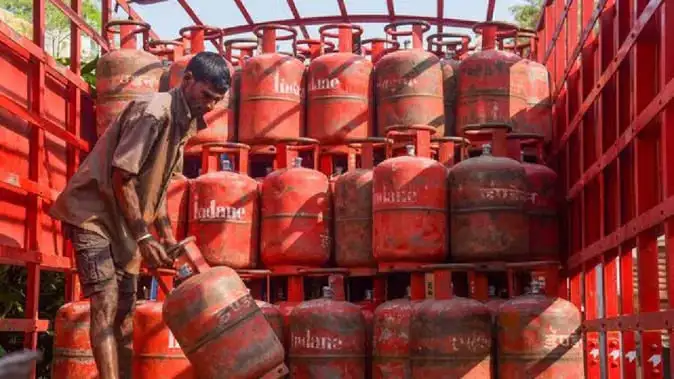
Tension remains high in the Strait of Hormuz, leading to a standoff between the United States and Iran. Although a ceasefire is currently in force between the two countries amid the ongoing conflict in the Middle East, the crisis related to oil and gas supply is still unresolved. In India, the government has taken several steps specifically to deal with the LPG crisis, and these initiatives have also started yielding positive results. These government measures include increasing domestic LPG production, as well as diversifying sources of gas imports—now importing gas from countries other than the Gulf region—to reduce India’s sole dependence on the Gulf region. Apart from this, government oil companies have now started purchasing supplies from the ‘spot market’ as well, to ensure that under any circumstances the citizens of the country do not face any kind of difficulty due to lack of supply.
Buying from spot market started!
Due to ongoing tensions in West Asia, there are continuous disruptions in gas supply. According to a report in *Times of India* (TOI), purchasing from the spot market has started to meet the demand for LPG cylinders from both households and commercial establishments. Presently, LPG cargo is being procured from this source on a continuous basis.
Impact of Hormuz tension on LPG supply in India!
Citing sources close to the matter, the report said that India’s state-owned oil marketing companies (OMCs) have entered into supply agreements with the United States to ensure smooth supply of LPG within the country. It is expected that the consignment of LPG purchased from the spot market will start reaching India in the months of June and July.
“We will buy LPG from wherever it is available.”
The report quoted Sujata Sharma, joint secretary in the Ministry of Petroleum and Natural Gas, as saying that before the hostilities between the US, Israel and Iran began, India used to import about 60% of its total LPG needs. However, amid the current LPG crisis, the government issued instructions to increase domestic production; Which has resulted in huge increase in domestic production, and reduced India’s dependence on imports.
He further clarified that the main objective of the Government is to maintain adequate domestic supply, and to achieve this objective, LPG consignments will be procured from any source—wherever it is possible and practical to do so. According to data shared by the ministry, India requires around 80,000 tonnes of LPG per day. Meanwhile, domestic LPG production within the country has increased by about 20 percent, and currently stands at 46,000 tonnes. Moreover, the remaining gas required to meet the demand is now being procured from various countries. Whereas earlier LPG was imported from 10 countries, now the number of such supplier countries has increased to 15.
Increase in imports from these countries
Before the conflict, 90 percent of India’s LPG requirements were met by various Gulf countries. These included UAE, Qatar, Saudi Arabia, Kuwait, Bahrain and Oman. However, amid the LPG crisis—and under the government’s “Plan B” (Modi government’s strategy) to diversify sources of imports—the majority of purchases are now being made from countries such as the United States, Norway, Canada, Algeria, and Russia. Recently, the government clarified that a cargo of approximately 800,000 tonnes of LPG has already been secured and is currently en route.