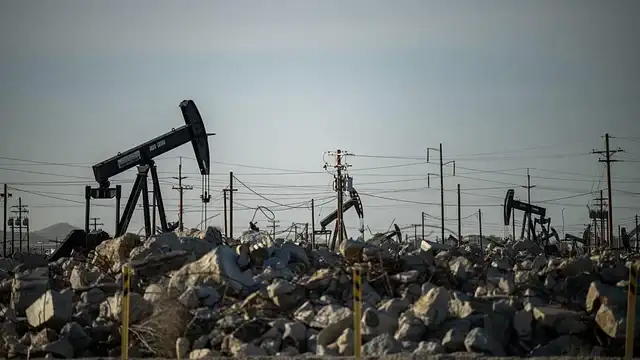
Crude oil prices rising above $110 per barrel, coupled with rising tensions in Iran, is a major warning shot—not just for the Indian economy, but for “India Inc.” Also for. This situation threatens to reduce expectations of double-digit growth in corporate earnings to single digits in the 2026-27 financial year. Companies have already started declaring their financial results for Q4FY26.
Fear of huge cut in earnings
IT sector giant Tata Consultancy Services (TCS) is also going to declare its results on April 9. Right from the time this quarter India Inc. It was expected to strengthen the path of recovery, but now the hopes of profits in all sectors seem to be fading. Dr. V.K., Chief Investment Strategist, Geojit Investments Limited. Vijayakumar warns: “If crude oil prices remain high and restrictions on gas availability continue, another round of earnings cuts are inevitable.” He further adds, “This cut in earnings will mainly impact sectors that are highly dependent on imports and linked to crude oil.”
India ink.’ What is?
“India ink.” is a term that is used to collectively refer to the corporate sector of a country. This includes public sector enterprises, large business conglomerates—such as Reliance, Adani and Tata—as well as companies listed on stock exchanges. Collectively, these institutions contribute about 60 percent of the country’s nominal GDP. India ink. Sectors related to manufacturing, trade, professional services and construction come under its scope.
India ink. an alarm bell for
The rise in crude oil prices will have an adverse impact on the paint, lubricants, plastics and chemicals industries. As the cost of crude oil increases, the production cost of products made from these raw materials will also inevitably increase. This will reduce the operating margins of companies, as the burden of increased input costs cannot always be passed on to consumers immediately.
Additionally, if oil prices rise, expenses related to transportation and logistics will increase. This will lead to widespread inflation throughout the economy. As inflation increases, the purchasing power and discretionary spending ability of the public will reduce. This will lead to a decline in demand in sectors like FMCG and auto. Experts believe that if oil prices remain at $110 levels for a long time, India’s GDP growth could fall below 6%—a figure that was earlier estimated to be above 7%.
If this conflict drags on for a long time, the earnings of companies listed in the Nifty-50 index may fall by up to 4%.
Which sectors will be hit the most?
The rise in crude oil prices will have the biggest impact on those sectors which are essentially energy-intensive. “Industries that use petroleum-based inputs—like paints, adhesives, and tires—will be hardest hit by this impact,” says Vijayakumar. “Manufacturers who rely on LNG as fuel to produce items like vitrified tiles have already suffered huge losses.”
He further adds that the full intensity of this impact is expected to be felt in the first quarter (Q1) of FY27 and not Q4. Santosh Meena, Head of Research, Swastika Investmart, says, “The sectors that are being hit the hardest are those with high energy consumption—such as fertilizers, chemicals, ceramics, paints, glass and tyres. These industries are currently facing tremendous pressure on their profit margins due to acute shortage of LPG/LNG, plant closures and sudden increase in input costs. Similarly, the auto and aviation sectors are facing significant pressure due to production disruptions and fuel shortages. “They are struggling with rising prices, which is directly reducing their profitability and also reducing customer demand.”
The expectation for the IT services sector is that this financial year will end on a slow note, as orders are being delayed due to global uncertainties. Apart from these, export-oriented industries like oil marketing companies, logistics and gems and jewelery are also facing macroeconomic slowdown. In contrast, the upstream and defense sectors remain relatively strong.