
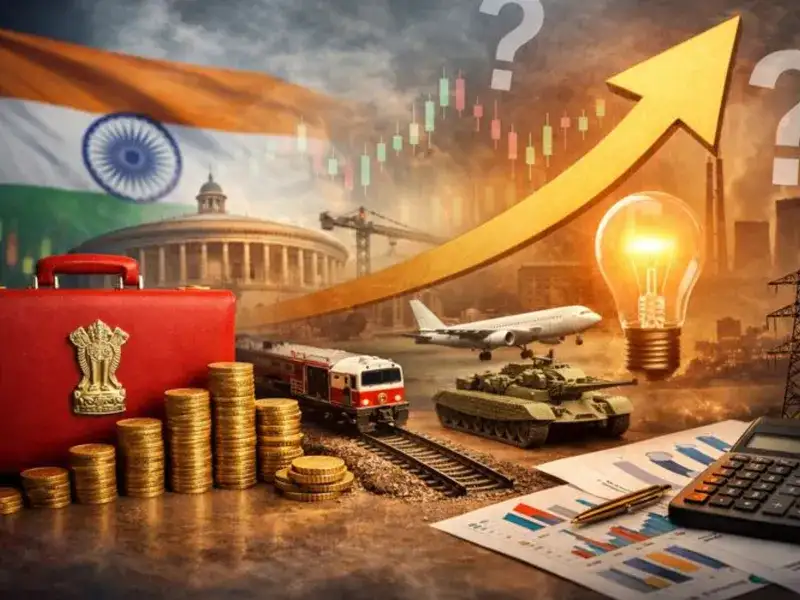
Just a few hours are left before the biggest economic event of 2026 – the presentation of the Union Budget. As soon as Finance Minister Nirmala Sitharaman climbs the stairs of Parliament on the morning of February 1 with her budget briefcase (or rather, digital tablet), the entire country will watch her announcements with bated breath. This budget comes at a time when economies around the world are facing instability, and India is trying to accelerate its growth rate. Amid the buzz around this upcoming Budget 2026, let’s turn the pages of India’s budgetary history and learn about five important budgets that not only made headlines but also decided the direction of the country’s economy. Let’s delve deeper into the interesting stories of these five historic budgets.
black budget
The first notable budget in the history of India is known as the ‘Black Budget’, which was presented in 1973 by the then Finance Minister Yashwantrao B. Chavan had presented. It was called ‘Black Budget’ because the economic condition of India was very bad at that time. The country was facing a huge fiscal deficit of Rs 550 crore. During this period of Indira Gandhi’s government, an important decision of nationalization of coal mines was taken. With an empty treasury and economic hardship, this budget marks one of the most challenging periods in history.
liberalized budget
After this comes the historic budget of 1991, which is known as the ‘Liberalized Budget’. This budget presented by Dr. Manmohan Singh breathed new life into the struggling Indian economy. This was the time when India’s foreign exchange reserves were almost exhausted. Through this budget, India ended the ‘License Raj’ and opened its economy to the world. The arrival of foreign companies in India and the expansion of Indian companies globally is a direct result of this budget. It is also considered a declaration of economic independence for modern India.
dream budget
The 1997 budget brought a smile to the faces of the middle class and companies, earning it the name of ‘Dream Budget’. Finance Minister P. Chidambaram cut income tax rates so drastically that people could not believe it. Corporate taxes and surcharges were also reduced. The government argued that lower taxes would encourage people to pay taxes honestly and leave them with more money to spend. This budget was truly a dream come true for the middle class.
millennium budget
The ‘Millennium Budget’ presented in 2000 to welcome the new century proved to be a milestone for India’s technological development. Finance Minister Yashwant Sinha in the Atal Bihari Vajpayee government laid the foundation of making India an ‘IT superpower’ with this budget. Custom duty on items like computers, software and CDs was significantly reduced. Because of this visionary thinking, today India is a global leader in software and IT services. It created millions of new employment opportunities for the youth.
rollback budget
Finally, there is the ‘rollback budget’ of 2002. This was also presented by Yashwant Sinha, but this budget became a big headache for the government. It proposed a significant increase in the prices of cooking gas (LPG) and service tax. The protests across the country were so intense that the government had to back down and roll back the price hike. Because the government had to take back many of its major decisions, it became known in history as ‘Rollback Budget’.