
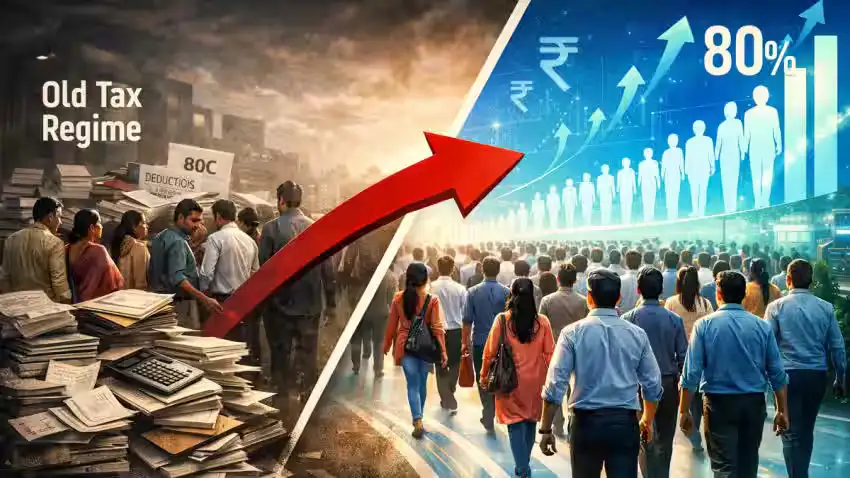
As February 1, 2026 is approaching, the attention of salaried people and the general public is focused on income tax. The reason for this is that in the last budget, the government had made the new tax system the default option. Although the option of the old tax system is still available, the government’s message was clear: the new tax system is the way forward. Now, ahead of Budget 2026, the question once again lingering in people’s minds: will the old tax regime continue, or will it be gradually phased out completely?
Why did concerns increase after the new tax regime became default?
In the last budget, the government had promoted a new tax regime with easier tax slabs and fewer rules. There was a big relief when annual income up to Rs 12 lakh was made tax-free. This made the difference between the two tax systems clear. Now, many taxpayers feel that the old tax system is being deliberately ignored. This is the reason why people have high expectations from the old tax system before the Union Budget 2026.
Why is the old tax system important for the middle class?
Although the new tax regime may seem easy, a large number of middle class families are still dependent on the old tax regime. Benefits like investment under Section 80C, health insurance under Section 80D, interest on home loan and HRA significantly reduce the actual tax burden. For those who have planned long-term investments and loans, sudden changes in the system are not easy. The biggest question in Budget 2026 is: will the government understand the needs of this segment of the population?
Will Budget 2026 facilitate smooth transition from the old to the new tax system?
If the government decides to gradually abolish the old tax system, taxpayers are expected to find relief in the change. The sudden change could hurt those who have already made tax-saving investments. Budget 2026 may introduce a framework that allows people to transition from the old to the new tax regime without any loss.
Return or farewell to the old tax system?
The budget of 2026 is considered important for the future of the old tax system. The government has two options. The first is to re-strengthen the old tax system and increase the deduction limit. The second way is to fully promote the new tax system and gradually abolish the old system. In which direction the government wants to go, it will be clear only from the budget speech of the Finance Minister.
No change in the old tax system for years
The biggest problem with the old tax system has been that no major changes have been made in it for years. Neither the tax slabs have been increased nor the limits of important sections like 80C have been increased. This is the reason why there is hope in every budget that this time there may be some relief in the old tax system. Taxpayers are looking at the budget of 2026 with this hope.
Increasing confusion in tax planning
Every year, speculations about the old tax system have made tax planning difficult. People are not able to decide how they should invest. Taxpayers need a clear roadmap from Budget 2026 so that they can make the right decisions for the years to come.
Why is Budget 2026 special?
The budget to be presented on February 1, 2026, will be the third full budget of the Modi 3.0 government. This is also important because the new Income Tax Act 2025 is going to come into force from April 1, 2026, which will replace about 60 years old tax law. Therefore, Budget 2026 could be the budget that will decide the direction of the future tax regime. Budget 2026 will decide the future of the old tax system. Taxpayers no longer want to be left guessing. They need clear answers about which system to adopt next. The budget to be presented on February 1 can bring a big decision for the middle class.