
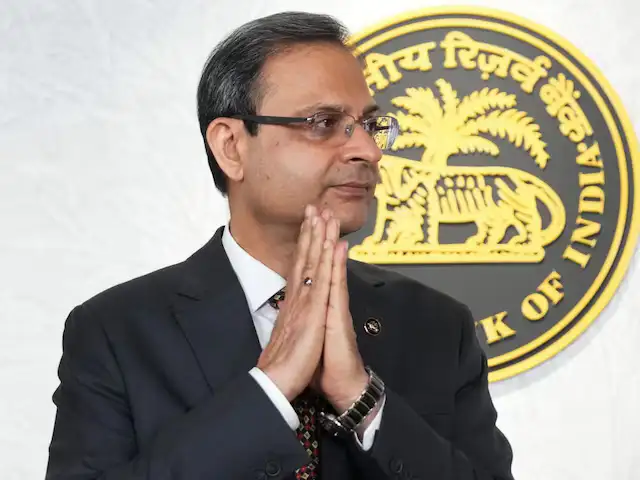
The Reserve Bank of India (RBI) is scheduled to announce its decision on the repo rate today—Wednesday, April 8—during the first Monetary Policy Committee (MPC) meeting of FY 2027. This is also the first meeting of the MPC since the war in the Middle East began; This incident may have an impact on the central bank’s estimates related to economic growth and inflation. Earlier, separate surveys conducted among economists, treasury chiefs and strategists had indicated that the central bank might keep its interest rates unchanged; However, its comments regarding the financial year will play an important role in deciding the future policy stance of the central bank. Let’s take a look at the five key factors that will ultimately determine the financial landscape of your household budget.
inflation forecast
In the upcoming policy review, RBI will release its inflation projections for fiscal year 2027 (FY27). Most economists believe the Consumer Price Index (CPI) for FY27 will range between 4 percent to 4.7 percent. Earlier, the RBI had estimated CPI for FY26 at 2.1 per cent—a much lower figure. In February, India launched a new CPI series with 2024 as the base year. Inflation rose to 3.2 percent in February—up from 2.7 percent in January—due mainly to increases in food and precious metal prices.
The RBI is also likely to include the post-war situation in the Middle East in its projections for FY27. The central bank had earlier estimated CPI at 4 per cent for the first quarter (Q1) of FY27 and 4.2 per cent for the second quarter (Q2) of FY27. These estimates may be revised during the upcoming MPC review.
growth forecast
During the policy review, RBI’s projections for gross domestic product (GDP) growth for FY27 will also be the subject of much discussion. Most economists believe that, given the potential economic fallout from the ongoing war in the Middle East, economic growth in FY27 is likely to be slightly slower than FY26. Earlier, RBI had estimated real GDP growth for Q1 FY27 and Q2 FY27 at 6.9 per cent and 7 per cent respectively. Economists at Barclays estimate growth for FY27 at 6.8 percent—a figure significantly lower than the 7.6 percent estimated for FY26. Any comments made about future growth prospects will be closely watched, as the ongoing conflict in West Asia could potentially weigh on India’s growth momentum during the current fiscal year.
crude oil price estimates
When the conflict began in late February, Brent crude oil prices rose sharply and went well above the $100 per barrel mark. Higher oil prices are harmful for India as they may further increase inflationary pressures. India imports about 80 percent of its energy needs. Economists who had predicted oil prices to hover around $65 per barrel before the conflict began have now revised their estimates; They suggest that Brent crude oil prices could remain between $85 and $90 per barrel in the near future. Currently, oil prices are above $100 per barrel—a level well above these projected estimates. According to market observers, any comments from RBI regarding crude oil price projections will be closely scrutinized.
rupee fluctuations
The rupee has managed to recover somewhat from its all-time low, thanks to recent directions issued by the RBI aimed at curbing excessive speculation in the offshore non-deliverable forwards (NDF) markets. On March 30, the rupee briefly breached the psychological level of 95 against the US dollar. This indicated that another currency management measure—even though it is generally seen as a means to increase liquidity—also proved ineffective in arresting the continuing decline of the rupee.
That day, the rupee fell to its all-time low of ₹95.23 against the US dollar. Last week, the market was open for only two trading sessions, resulting in considerable fluctuations in currency rates. On April 7, the rupee recovered strongly and touched ₹93 against the dollar. In short, it has taken some time for the rupee to partially recover. However, experts believe that the rupee may take some more time to regain its full strength.
The reason for this is that market experts estimate that if Brent crude oil prices remain at a high level of $100 per barrel, then the pressure on the rupee may increase further. Additionally, importers may find the current trading level of the rupee as an attractive entry point to hedge their positions.
Liquidity Management
In a recent report, Fitch Ratings said durable liquidity in the banking system has declined, reflecting pressure on the currency as well as policy measures. Liquidity surplus in India’s banking system narrowed to ₹16,785 crore—its lowest level since January—due to advance tax payments and Goods and Services Tax (GST)-related outflows. To increase liquidity in the banking system, the Central Bank has regularly conducted liquidity management operations—such as open market operations (OMOs), which involve purchases of government securities, and variable rate repos (VRRs)—to inject additional rupee liquidity into the system. In March alone, the RBI infused around ₹2.4 lakh crore into the system through VRR operations conducted in different phases.
RBI may take more such steps to manage the impact on rupee liquidity, especially given that the central bank has directed banks to maintain their net open positions (NOP) in rupee at $100 million or less at the end of every trading day. Although the move related to NOP was not immediately seen as a positive step, the market expects about $40 billion of trades to be liquidated; This is expected to ultimately help stabilize the currency and—more importantly—ensure adequate dollar liquidity in the market. If this situation arises, it may reduce the need for RBI to intervene in the market if necessary. Banks have time till April 10 to follow this instruction.