
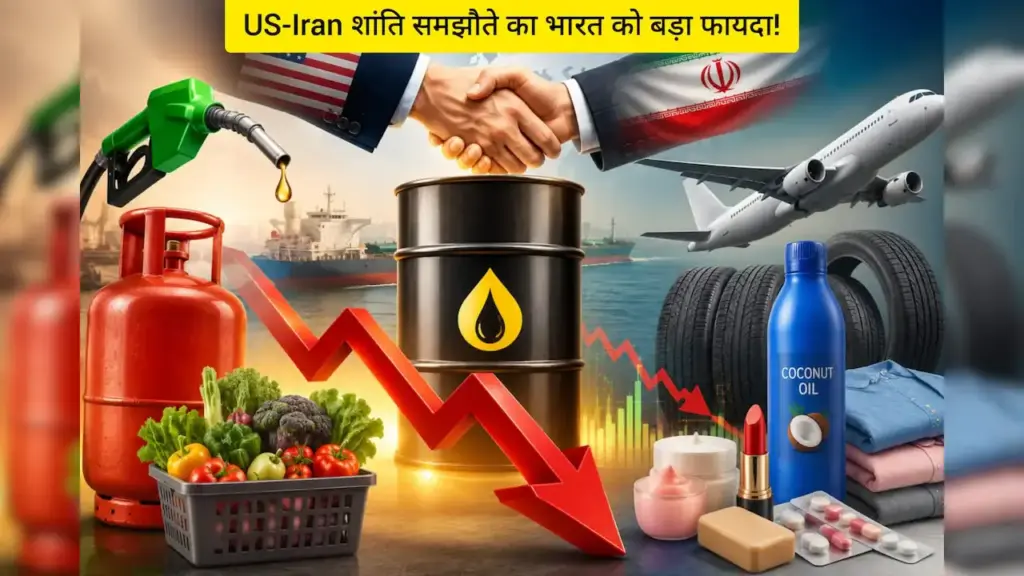
After a 107-day standoff, the US and Iran are set to meet face-to-face on Friday for historic peace talks in the Swiss resort of Bergenstock. The talks will focus on implementing the agreement and the way forward. The proposed peace deal between the US and Iran – scheduled for June 19 – will not only be a diplomatic breakthrough but also a source of significant economic relief for India. India imports about 85% of its crude oil needs; As a result, once the supply of oil and gas through the Strait of Hormuz returns to normal, prices of petrol, diesel and LPG are expected to decline. This will also impact transportation and manufacturing costs.
A fall in crude oil prices will reduce the cost of petroleum-based raw materials – such as synthetic threads, rubber, plastics and petrochemicals – making clothes, soaps, detergents, cosmetics, medicines, tires and even agricultural supplies cheaper. Let us see how much India will benefit from this US-Iran peace agreement and which commodities can become cheaper.
**Petrol and diesel prices may fall**
During the conflict between the US, Israel and Iran, sanctions imposed by Iran in the Strait of Hormuz disrupted oil supplies, leading to a surge in crude oil prices in the international market. Given that India imports more than 85% of its crude oil needs, complete reopening of the Strait of Hormuz will ensure uninterrupted imports and increase oil availability in the market. This will reduce the prices of crude oil, which will provide relief in the cost of petrol and diesel.
**Abundant availability of LPG cylinder and domestic gas**
India is also largely dependent on imports for LPG, with about 88% of LPG imports coming from this region. In such a situation, the opening of the Strait of Hormuz will ensure adequate LPG supply to India, which will help the government to stabilize LPG prices and reduce the subsidy burden. Domestic consumers will be able to see its direct benefits.
**Fruits, vegetables and food items may become cheaper**
Diesel use is not limited to vehicles only; It is also widely used in agriculture, cold storage and goods transportation. Transportation costs play an important role in transporting fruits, vegetables and other food items between states. In addition, fertilizers coming from Gulf countries contribute significantly to agriculture; Therefore, if diesel and fertilizers become cheaper, the prices of food items may go down.
Prices of products like cold cream, body lotion, lipstick and kajal may also reduce.
The prices of shoes and slippers may also reduce.
Prices of products like sportswear, readymade clothes, curtains and carpets may also reduce.
Prices of medical products like medicines, syringes, glucose bottles, medical tubing, gloves and masks may also reduce.
Many pesticides and insecticides used to protect crops from insects and diseases can also become cheaper.
**Air travel can become cheaper**
Aviation turbine fuel (ATF) may become cheaper due to fall in crude oil prices. As a result, airlines may discount fares or sell lower priced tickets.
**Relief on EMI**
If crude oil prices fall further, not only petrol and diesel prices but the overall inflation rate may also come down. This may increase the likelihood that the RBI will keep interest rates low or reduce them if needed. As a result, the common man can get relief on home, car and business loan EMIs in future. Soaps, detergents and everyday items can become cheaper.
Raw materials such as polypropylene and polyethylene – used in making laundry powder, detergents, bath soaps, plastic packaging, wrappers, containers and lids – are derived from petroleum. As a result, reduction in costs may also reduce the prices of these products.
Tire and auto parts prices may also fall
The fall in crude oil prices may also impact the tire industry. Since the synthetic rubber used in making tires is entirely based on petroleum, a fall in crude oil prices can reduce the production costs of tire companies, making these products cheaper.