
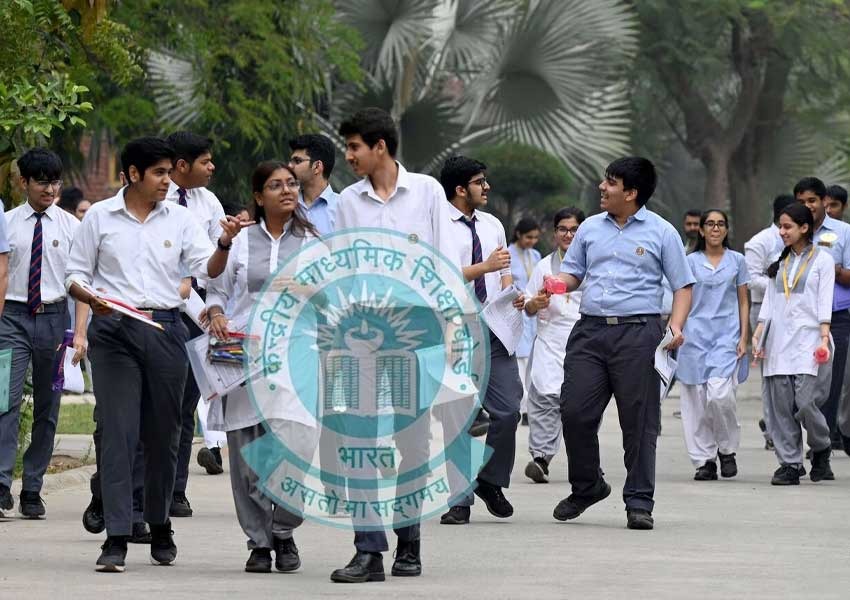
Central Board of Secondary Education: The Central Board of Secondary Education (CBSE) has taken important steps to conduct primary level education in children’s mother tongue or regional language.
The board has directed all affiliated schools to identify the mother tongue (R1) of the students as soon as possible and prepare educational material before the summer holidays are over. This step is in line with National Education Policy (NEP) 2020 and National Curriculum structure 2023 (NCFSE).
English dominance so far, now the priority of mother tongue
Till now, English has been the main teaching language in CBSE schools, but now children from pre-primary to class 2 will be taught in their mother tongue, home language or regional language (R1).
Schools from class 3 to 5 can continue studying in R1 or start another language (R2), which will depend on the convenience and understanding of the students. Languages like Santhali, Mundari, Ho, Khadia, Kudamali and Hindi in Jharkhand can be selected as R1, where children are comfortable to speak them.
Mathematics also in mother tongue
CBSE clarified that topics like mathematics can also be taught in mother tongue or regional language, so that children have easy understanding concepts.
Classes 1 and 2 have focus on two languages and mathematics, so the selection of language is important. NCERT has provided books of classes 1 and 2 in 22 Indian languages, and translation work for higher classes is in progress.
Schools will have to form NCF committee
CBSE has directed schools to constitute ‘NCF Implementation Committee’ by the end of May 2025.
This committee will take responsibility of identifying the language of children, translation of textbooks, and preparing teaching materials. The committee may include teachers, parents, and local language experts.
Monitoring and monthly reports from July
From July 2025, schools will have to submit a monthly progress report to CBSE. Board supervisors will visit schools, so that the progress of the new system can be monitored and necessary assistance can be given to schools.
CBSE schools in cities like Ranchi, Jamshedpur, and Dhanbad in Jharkhand have started preparations in this direction.
Special training for teachers
CBSE has instructed schools to train teachers for multilingual teaching, class management, and language -based evaluation. Training modules are being prepared in regional languages like Santhali and Mundari in Jharkhand.
Large CBSE schools like DAV and Kerala Public Schools in Ranchi have planned to organize workshops for teacher training.
Small schools will get additional time
The board admitted that large and resource-rich schools may implement this change soon, but schools in small and rural areas may face challenges.
Such schools will be given additional time and assistance for change, provided they present a clear timeline. Small CBSE schools in districts like Sahibganj, Gumla, and Latehar in Jharkhand have raised the issue of lack of resources.
What will be the effect in Jharkhand
This decision of CBSE is being welcomed in Jharkhand, as it will promote tribal and regional languages.
However, there are also challenges, such as shortage of teachers, availability of standardized textbooks in regional languages, and priority of English medium of parents. A Ranchi educationist said, “Studying in mother tongue will increase the understanding of children, but schools need support from the government for resources and training.”