
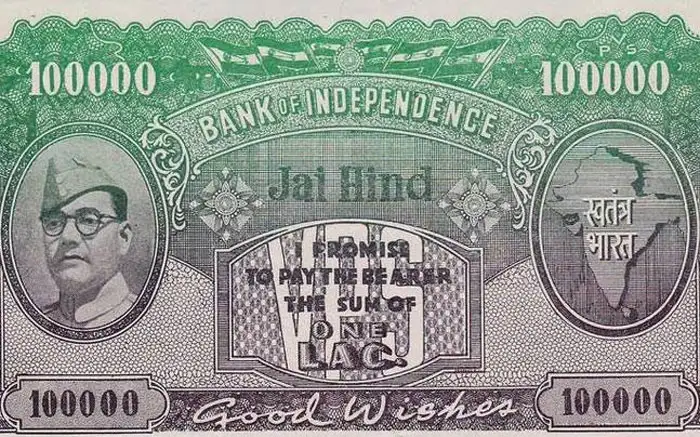
Do you know that even after India gained independence, notes bearing the picture of British King George VI continued to circulate in the Indian markets? Yes, because it was not possible to print new notes immediately. In the newly independent country, this was a form of dependence on the old colonial power, but the country had no choice. Notes bearing the Ashoka Pillar symbol were not printed until 1949, when the Government of India issued a new design for the one rupee note. The next year, in 1950, notes of Rs 2, 5, 10 and 100 were issued. Much later, in 1969, a one rupee note bearing the photograph of Mahatma Gandhi was introduced on his 100th birth anniversary. Nowadays there is so much discussion about Vande Mataram and Bengal, so it is also important to know that at one time Netaji Subhash Chandra Bose’s picture was also printed on the notes. Did the Congress government get them printed? Let’s start from the beginning.
In olden times, barter system was prevalent. You used to give one thing and get another thing in return. However, this system lacked fairness. Even today, some tribal communities operate in a similar manner. Later, currency began to be used. Copper, silver and gold coins were used. The reign of Sher Shah Suri (1540-1545 AD) is considered to be the beginning of a new era in the monetary system.
pure silver and gold coins
During the reign of Muslim ruler Sher Shah Suri, the practice of minting coins from mixed metals was stopped permanently. Pure silver coins were introduced under the name “Rupee”. The currency of India is still known as Rupee. The weight of the coins was also standardized. Pure copper coins were called “Daam” (money). At that time, one silver rupee was equal to 40 copper paisa. The names of Kalima and Caliphs were engraved on one side of the silver rupee. On the other side, the name of the Sultan, the name of the mint and the date were engraved. Sher Shah Suri had engraved the Kalima “La Ilaha Illallah Muhammadur Rasoolullah” in Arabic on one side of his silver coins. He also got “Rupaya” written in Devanagari script. The Mughal ruler Akbar (1556–1605) issued a gold coin with an image of an eagle on one side. There have been many changes in the Indian currency.
– In 1672, the East India Company began issuing its rupee from Bombay.
– In 1790, machine-printed rupees started being issued from Calcutta.
– In 1800, the British started printing rupees from Surat.
– By 1835, identical rupees were in circulation.
– In 1862, the portrait of Queen Victoria appeared on coins and notes.
– In 1917, one rupee notes were issued for the first time.
– In 1935, the Reserve Bank of India was established.
– In 1938, the largest note ever, the Rs 10,000 note was printed.
– In 1950, after independence, one rupee coins came into circulation.
– In 2010, the Indian rupee got a new symbol, ₹.
– In 2022, RBI launches digital rupee.
In short, this is the story of the Indian rupee. The Indian rupee is in the news right now as there is an exhibition running till January 31, 2026 in the Fort area of Mumbai, where you can understand the history of the Indian subcontinent through its currency.
And yes, the story of Netaji Subhash Chandra Bose appearing on a note is also interesting. In the 1940s, notes of Rs 1 lakh were issued. These were issued by the Hukumat-e-Azad Hind (Interim Government of Independent India). This currency was issued by the exiled government of Subhash Chandra Bose. On it was a map of undivided India, which Bose and his team were trying to liberate from British rule. It is important to note that these notes were not issued by the RBI, but by Azad Hind Bank, which was established in Rangoon (now Myanmar).