
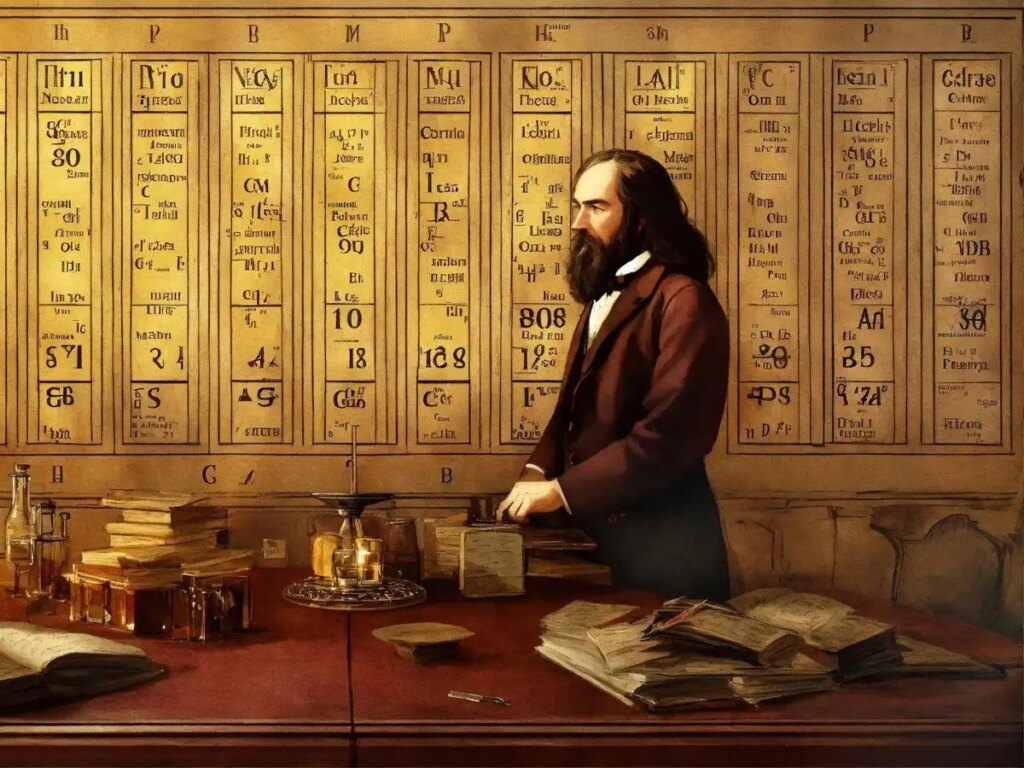
Preparations for the coming of the New Year have been completed. As soon as the clock strikes 12 today, the year will change. People will hug each other, congratulate and celebrate. But what if, amidst all the joy and excitement, you discover that the New Year you are celebrating is actually a “lie”? What if the time and date you are using today to fit your schedule or needs are just an illusion?
Actually, this has happened in history. The way we count time, days, months and years today has actually been changed before. The truth is that there was a time when 10 days were directly removed from the calendar. Before we move on to 2025 to 2026, let’s know some interesting things about the calendar. You already know that the Roman king Romulus created the 10-month calendar. This did not include the two months of winter. Then, the Roman king Numa Pompilius created a 12-month calendar and named the 61 days of winter January and February, making them the first and second months of the year. This led to some improvements in the calendar and festivals began to fall at the right time, but the calendar still had shortcomings because it did not coincide with the solar year (based on the Earth’s movement). Therefore, there was considerable variation in the dates every year.
Julius Caesar made important changes in the calendar
The Roman emperor Julius Caesar made several important and permanent changes to the Roman calendar in 45 BC, creating what is known as the modern Julian calendar. His reform was an attempt to correct the shortcomings of the Roman calendar and bring it closer to the solar year (365.25 days). Despite the reforms of Numa Pompilius, the Roman calendar was still only 355 days long. To make it coincide with the solar year (365.25 days), an extra month, Mercedonius, was added every other year, but this method proved very difficult and was often not implemented correctly.
The right to add an additional month rested with the Roman priests (priests), who used it for political gain. Due to this, festivals and seasons started falling at wrong times. During his visit to Egypt, Julius Caesar sought help from the astronomer Sosigenes, who explained a more accurate solar calendar based on astronomical observations. He determined the year to be 365.25 days and adjusted the calendar to match the solar year. A leap year (366 days) was added every fourth year, with the normal year consisting of 365 days. During this time, months were divided into 30 and 31 days for the first time. February was given 28 days, and in leap years it had 29 days.
When there were 445 days in a year!
To align the calendar with the solar year, 46 BC was called the “Year of Confusion”, which had 445 days. This extra time helped bring the seasons and festivals back into perfect sync. Before this new calendar was adopted, Julius Caesar changed the name of the month Quintilis to July. Thus, a normal year now had 365 days. Every fourth year there was a leap year, with an extra day (in February). The length of the months was determined as follows: January, March, May, July, August, October, and December had 31 days, while April, June, September, and November had 30 days. This Julian calendar was adopted throughout the Roman Empire and remained in use for centuries in many regions, including Europe. Reforms of Pope Gregory XIII
In 1582, Pope Gregory XIII introduced a new calendar to correct the shortcomings of the Julian calendar, now known as the Gregorian calendar. The Julian calendar was more accurate than its predecessors, but it also had some problems. The Julian calendar had a system of adding an extra day every four years, resulting in an average year length of 365.25 days. The actual length of the solar year is 365.24219 days. This small difference caused the calendar to go backward by one day every 128 years. By the 16th century, this error had accumulated to 10 days. This meant that Easter, which comes after the spring equinox, was not happening at the right time. Pope Gregory XIII formed a team of astronomers and mathematicians to solve this problem. Under his guidance, many reforms were made in the calendar. The British people adopted the Gregorian calendar in 1752.
Firstly, 10 days were removed. To realign the calendar with the solar year, October 4, 1582 was directly followed by October 15, 1582. Thus, 10 days were skipped. The calendar used today is the result of these important reforms made by Pope Gregory XIII in 1582. The British people adopted this calendar in 1752, which is why the English New Year is celebrated on January 1.