
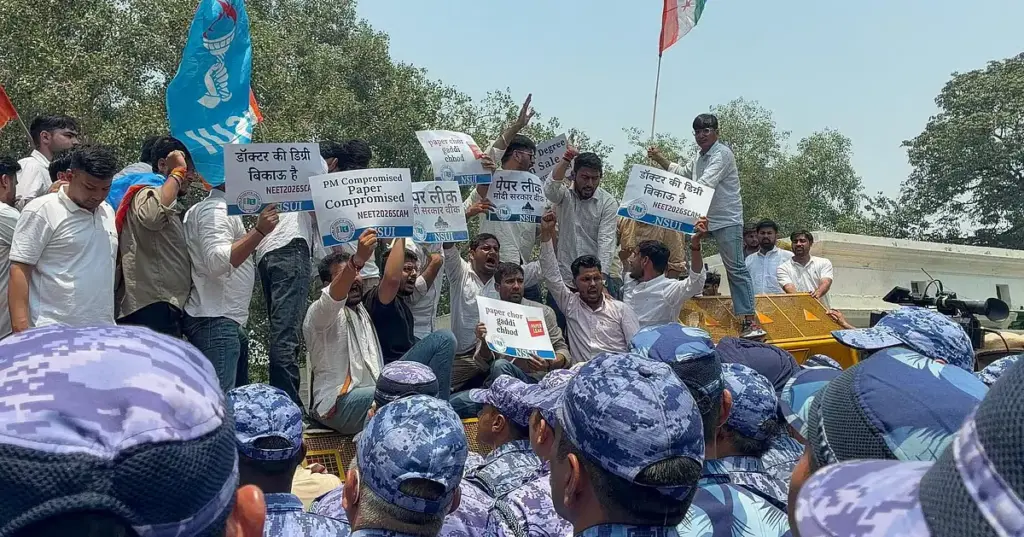
After the NEET (UG 2026) paper leak controversy, a major investigation is going on on the country’s largest examination agency, National Testing Agency (NTA). But now the most shocking revelation is related to the administrative structure of NTA and its existence. It has become clear from the government documents that how weak and weak is the foundation of the agency which is responsible for the future of lakhs of students and conducts such sensitive exams in a fair manner.
This big agency is registered at a fee of only Rs 50!
The most shocking revelation from the documents is that NTA was not created as a strong constitutional or autonomous body. Cooperative Act Model: At the political and administrative level, the question is becoming increasingly serious whether NTA, working for the Union Education Ministry, is built on the ‘society model’ under the Cooperative Act.
Mastermind of NEET leak caught on camera, ‘2.2 million children affected’.
Registration for just Rs 50: According to official documents, NTA was registered under the Societies Registration Act 1860 in Delhi on May 15, 2018, at a nominal fee of just Rs 50. Critics are asking whether the legal base of the country’s most prestigious medical and engineering entrance exam conducting body should be so weak?
Comparison with UPSC and SSC: Why is NTA working on ‘ad hoc’ system?
Today, across the country, NTA’s performance is being compared with established institutions like Union Public Service Commission (UPSC) and Staff Selection Commission (SSC). While institutions like UPSC and SSC were created under a very strong legal, institutional and constitutional framework, NTA is accused of being such a large national testing agency still working on an ‘ad hoc’ system.
Lack of clear bylaws: Sensitive tasks are handed over to anyone!
Academics and critics say that the NTA seriously lacks a strong statutory framework and clear by-laws. Due to this loose system, very confidential and sensitive tasks like exam administration and paper setting go into the hands of anyone, making it easy to hack the system. Due to the society model, the appointment of members and their responsibilities in the organization can be decided arbitrarily, which shows a lot of lack of transparency.
Four officers were removed as soon as the paper was leaked, raising more questions.
This loose administrative structure is also clearly visible in the recent decision in which four senior NTA officials were hastily sent back on deputation as the paper leak controversy escalated. Experts believe that this sudden removal shows that all is not well in the organization and doubts have deepened on its internal functioning. To save the efforts of lakhs of students, is it time to replace this Rs 50 “society model” with an accountable and legal National Examination Authority? Every student and parent is asking this question today.