
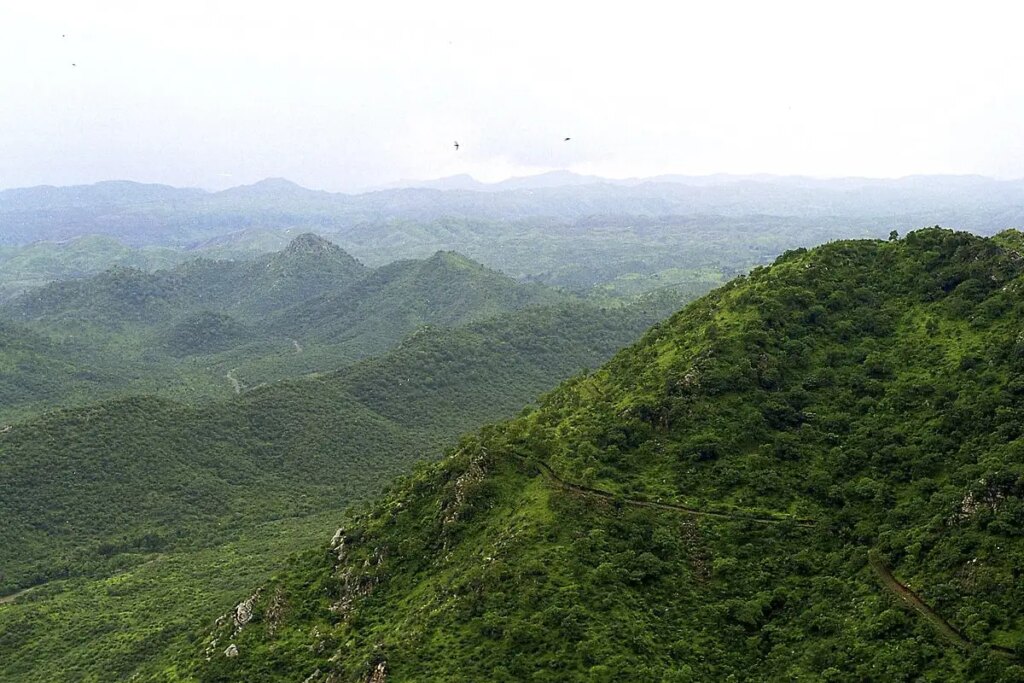
The Aravalli mountain range spread across the Indian subcontinent is not only a geographical wonder, but it also has a billion-year-old story hidden in it. Older than the Himalayas, the peaks of this mountain range hide scientific, historical and archaeological secrets. Have you ever wondered how it got its name and why it is mentioned in Mahabharata and Puranas? The geological and cultural mysteries hidden behind these ancient peaks still attract researchers and historians.
The Aravalli mountain range was formed during the Proterozoic era, approximately 2.5 to 3.2 billion years ago. It is classified as a fold mountain range, which is the result of the movement of tectonic plates and natural upheavals. It is several times older than the Himalayas and is considered to be one of the oldest fold mountain ranges in the world. The name Aravalli is derived from two Sanskrit words: ‘Ar’, meaning mountain peaks, and ‘Vali’, meaning a line or range.
Together, it literally means “a row of peaks”. The name refers to the long and continuous series of peaks that characterize this mountain range. In the Puranas and the Mahabharata, it is also known as Arbudachala or Arvata Mountain, probably in honor of the goddess Arbuda. The Aravalli range is not just a beautiful mountain range, but also a natural barrier to India. It prevents the expansion of the Thar Desert, is the source of several rivers such as the Luni and the Banas, and plays an important role in maintaining climatic balance.
This mountain range, extending from Palanpur in Gujarat to Delhi, is approximately 670-692 kilometers long. The Aravalli range is also a storehouse of minerals. Marble, zinc, copper and other minerals are found in abundance here. This mineral wealth is important for regional industries and construction.
The Aravalli range has been mentioned several times in the Puranas and the Mahabharata. In ancient times, it was known as Arbudachala and was considered to be of religious importance. It is not just a geographical feature, but also a part of India’s cultural and historical heritage.