
The firing squad was about to fulfill the punishment that a sudden fire broke out and the accused became pieces. The crowd of spectators at Semenowski Square in St. Petersburg was getting restless to watch this spectacle. 15 rebels were to be hanged here. In this shock, a criminal turned to the other and said – ‘Now we will be with Jesus Christ.’ But the person, who was an atheist, turned, smiled and pointed to the ground and said – a handful of dust.
The prisoner, who was interrogating for a shocking death, again had an experience that he later called a mysterious terror. People’s restlessness was increasing here. Waiting for death was long. In Qatar, fifteen convicts were parked in a queue to hang in groups of three-three. This prisoner was in another group. Some miracles happened when the first group stood in front of the firing squad. This is not a miracle where supernatural powers include. Here the royal car of the Emperor (Zar) of Russia arrives and a letter is handed over to the authorities.
Returned by knocking on the door of death
It is immediately announced that the death sentence of these convicts has been forgiven. Semenowski square was stunned and 15 lives were watching a new installment of their lives with sad eyes. The reason for this punishment, knocking on the door of death, we will tell you the story of return.
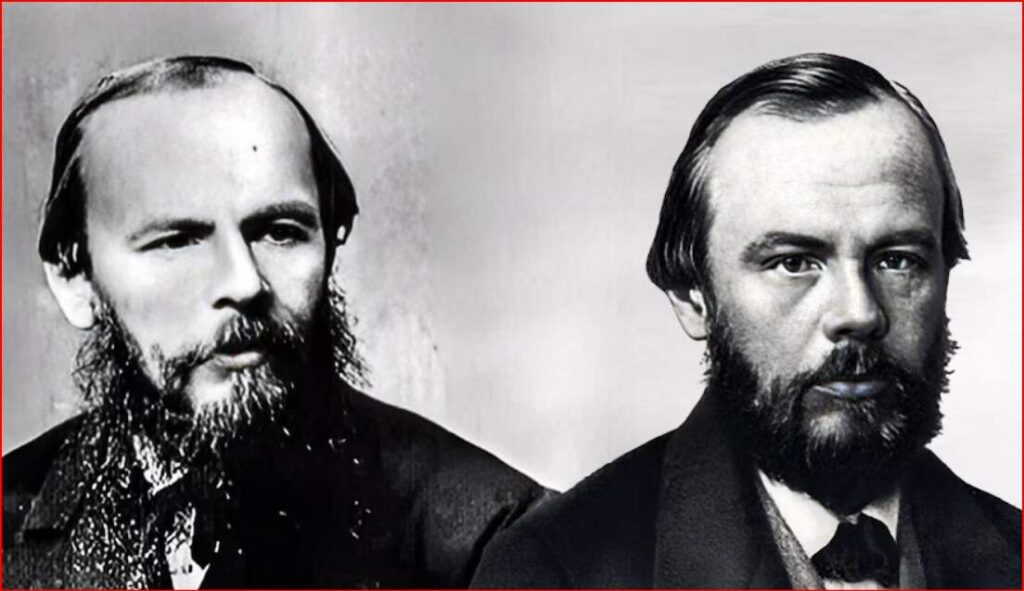
The incident gave a 27 -year -old prisoner to live again. This was the prisoner who transformed into Fyodor Dostovsi on the world stage in the next years. A great novelist, who made human suffering the basis of his creations. He recognized human suffering and experienced the difficulties of life.
Fyodor Dostovski writes in his great work, “Crime and Penush”, “Sorrow and suffering for a great mind and deep heart are always indispensable. I think true great people have to suffer a lot on earth.” Dostalski is the same prisoner who is discussed at the beginning of the article. Who tells his fellow prisoner – now we will be with Jesus Christ.
Dost -hung
Dostovski was greatly influenced by mental anguish due to waiting for death. So much so that he created a character to describe this feeling. His novel ‘The Idiot’ tells the story of Rajkumar Mishkin, a character who believes that he is hanging only 5 minutes.
“… they divided the remaining time of their life. Two minutes to say goodbye to their comrades, to meditate for two minutes and the remaining time to look around for the last time. They were going to leave this world with full health and energy at the age of 27 …”
“Now that they were alive, something was about to happen in three minutes. Something or something, but who, where was a church nearby? The golden dome was shining in the strong sun. Was.”
The Russian surroundings in which the boy Dostovski was born (September 11, 1821) was full of orthodoxy, autocracy and inequality. Russia’s power was in the hands of Zar Nicholas I. There was freedom of expression, but there was a strict censorship on expression. In Jarshahi, the authorities controlled intellectuals and reformers with oppressive policies. 80 percent of the population was poor and used to work like slaves in farming for zamindars.
But the intellectual wind of awakening from Western Europe sometimes entered Russia and left the rustle of change in the mind of Russian intellectuals. The influence of art, religion and romanticism in Russian literature was increasing. In such an atmosphere, Dostalski was born to a military doctor’s house. Born in a family of seven siblings, Dostovski realized the absence only through separation. At the school, he faced the bullying of the children of the Russian aristocratic class. The mother whose shadow kept them from the troubles of the world, she soon became a victim of TB. At that time he was 15 years old.
Now the examination period of Kishore Dostalski had started. His current studies were stopped. The family sent him to a school in St. Petersburg to become a military engineer. Here Dostalski settled a different world. He became a separate person among his 120 classmates. He loved solitude, he was immersed in the world of literature, uncontrollable, unnecessarily.
In 1848, when revolutions erupted throughout Europe (France, Germany, Austria), the power of Russia became concerned with the spark coming from the West. Debate on the change of debate club and system, Dostalski was a member of a debate club where there were stimulating debate on social change and system change. It was called Petreashevski Club.
It was a Russian intellectual group of the 19th century which was founded in 1845 by Mikhail Petreashevski. The club used to hold meetings on Friday meetings at St. Petersburg, where members discussed banned Western literature, philosophy and Russian reforms (anti-mood, monarchy).