
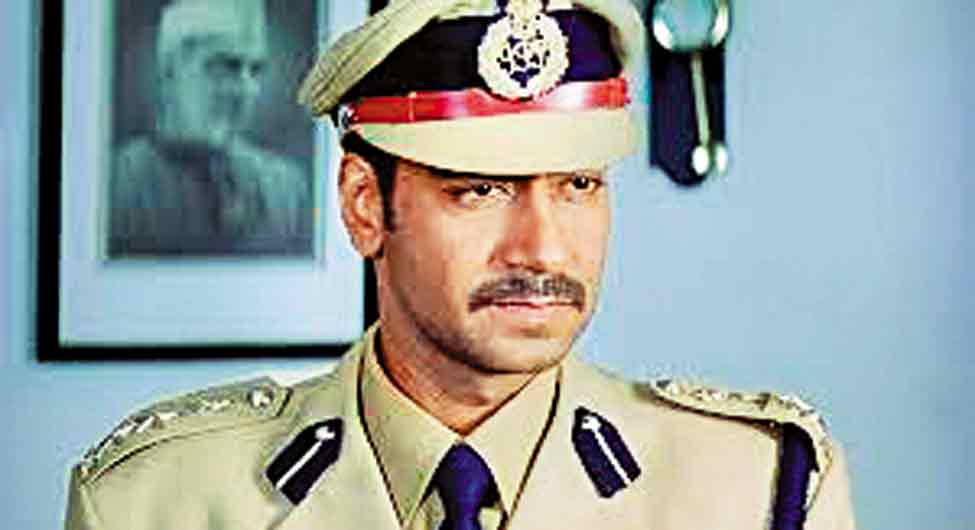
Despite a long and conscious history of intense cultural and political consciousness, the image of Bihar in Bollywood remains one of power, violence and conspiracy.
If you want to understand the interesting politics of Bihar, then look at the recently held assembly elections. There are so many types of parties and ideologies in the election field, as if a fair of diverse political thinking is taking place. These parties with different paths and dreams find a place in the soil here and flourish. This is the land where the struggle for power keeps taking new shapes all the time. There is a constant movement of change, yet some things seem to have remained stagnant for years.
This picture of Bihar has been missing in mainstream Hindi cinema. In the last few decades, the image of this region, historically known for its cultural richness, has become shrouded in crime, party politics and violence on screen. From Prakash Jha’s Damul (1984), Mrityudand (1997), Gangajal (2003), Abhaan (2005), Jai Gangajal (2016), Anurag Kashyap’s Gangs of Wasseypur Part One and Two (2012) to Sushant Kapoor’s recently aired series Maharani (ongoing from 2021) on Sony Liv and Pulkit’s Netflix film Bhakshak (2024). Similar themes are seen in all the films and series.
Many of these films are inspired by real events. Those incidents shocked the entire country and forced people to take seriously the repeated anarchy and blatant failure of law and order in the state. The story of Gangajal was based on the infamous Bhagalpur Blindings that took place in Bhagalpur, Bihar in 1979–1980. The police had committed a heinous act of blinding the undertrial prisoners by pouring acid into their eyes. That episode drew the nation’s attention to extrajudicial violence against prisoners inside prisons. The film exposed the complexity of this social reality in which common people suffering from crime, in whose lives crime had become almost a daily routine, initially started appreciating this inhuman action of the police. The story of Bhashak was based on the Muzaffarpur shelter home incident that came to light in 2018. More than 30 girls were sexually abused and harassed in a shelter home in Muzaffarpur, Bihar. This issue was first highlighted in 2017 by a team from Tata Institute of Social Sciences (Mumbai) during an audit of various shelter homes in Bihar. The film depicted the role of the media and the struggle of a fearless small-town journalist who took the risk of uncovering the truth and the associated political patronage amidst the heavy web of power and influence.Or.
Many films were made on the background of Bihar, crime was prominently shown in all of them. 2. Damul, 3. Maharani, 4. Jai Gangajal, 5. Gangajal, 6. Gangs of Wasseypur, 7. Kidnapping, 8. Bhashak
Some of these films, while creating stories in the background, based the real characters of that region and the popular stories related to them. For example, the character of the main villain of Pratighaat was reportedly taken from Kali Prasad Pandey, a big name in Bihar politics and crime in the 80s and 90s, who represented both the Assembly and the Lok Sabha. His image was in a way like ‘Robin Hood’. The lead character in the Maharani series is believed to be inspired by Lalu Prasad Yadav and Rabri Devi and many real incidents from their reign have also been woven into the story. Ramadhir Singh, a character from Gangs of Wasseypur, was inspired by criminal leader Suryadev Singh. The character of Sardar Khan was played by Shafiq Khan and Faizal Khan played the role of Faheem Khan.
However, what is worth noting is that Bollywood filmmakers have always had a fascination for the nexus of crime and power, and it grew to such an extent that this desire overshadowed everything else, leaving other good things about Bihar unnoticed. Nevertheless, there were some films which drew attention to social issues through their stories. Mrityudand was one such film, which brilliantly depicted the patriarchal dominance in the feudal society. The vocal resistance of women is shown in the film. Damul was a story of a deeply rooted caste system, depicting the brutal oppression it inflicts on the poor and the underprivileged.
Ketan Mehta’s Manjhi – The Mountain Man (2015) was a precious film set in the backdrop of Bihar. The film was a biopic based on a real life incident of Dashrath Manjhi. Manjhi’s wife had fallen from the top of the mountain while fetching water. After that, Manjhi, with 22 years of tireless hard work, cut a rocky mountain and built a road. This film was not only the story of the indomitable determination of a Dalit laborer, but also told the abject failure of the state in not providing basic facilities to the people even after decades of independence.
Where Bollywood left its mark, local filmmakers filled the gap. Filmmaker Achal Mishra made the film Gamak Ghar in 2019. This was his effort to bring forward the Maithili language. His effort was to spread Maithili, spoken in northern Bihar and parts of Nepal, to more people. In this film, he told the story of childhood memories and vacant houses in a very poetic manner. After that another film came, Dhunai (2022). It was based on the dilemma of a young theater artist having to choose between his dreams and his responsibilities. There is a boy who wants to go to Mumbai to become an actor, but is unable to do so due to family responsibilities. Due to poverty, his family wants him to stay in their city instead of going out.
Mishra attempts to depict the lives of marginalized people in Indian cinema. Pokhar Ke Dunu Paar (2022), directed by Parth Saurabh, is a story of two lovers in a small town who decide to elope, but later change their decision. It was also constructed by Mishra.
Independent filmmakers are raising hopes that apart from bloodshed and crime, other things should also be shown to show Bihar on the big screen. But it remains to be seen whether Bollywood will be able to move beyond the power dynamics and explore the vibrancy of the state.