
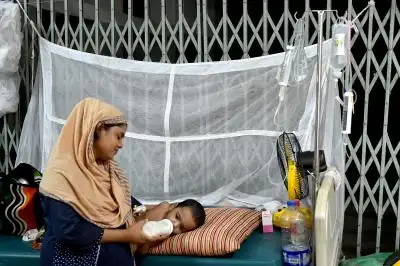
Dhaka, May 2 (IANS). Bangladesh is currently battling a serious epidemic of measles. The country has recorded more than 32,000 suspected cases and more than 250 deaths, the majority involving young children, since mid-March.
According to the report, due to this outbreak there is an atmosphere of chaos in hospitals across the country. Last month, a huge crowd of children gathered at the Infectious Disease Hospital in Dhaka. Many children were seen struggling to breathe, while some were lying unconscious. Due to lack of beds, many patients had to be treated on the floor.
The ‘Science Advisor’ report said the pandemic was the result of a “catastrophic breakdown” in the vaccine procurement system following the July 2024 protests, leading to a severe shortage of vaccines across the country and a sharp decline in vaccination rates.
According to experts, high rates of malnutrition among children and weak health system have played an important role in increasing the number of deaths. It also highlights how quickly progress made in public health can be undermined.
An interim government led by Mohammad Yunus was formed in 2024 after former Prime Minister Sheikh Hasina was ousted from power following widespread protests. The report alleges that the vaccine coverage system was badly affected during the 18-month tenure of this government.
According to the report, in September 2025, the interim government ended the arrangement for vaccine procurement through UNICEF and implemented the open tender system. In this process, the government invites bids from suppliers and evaluates the proposals and places the order.
UNICEF had strongly opposed this move and warned that it could disrupt the vaccination system and spread the epidemic. Rana Flowers, UNICEF representative in Bangladesh, said that she had repeatedly warned health officials and had also asked the then interim health advisor Noorjahan Begum to reconsider the decision.
The report said the tender process was mired in bureaucratic delays, leading to vaccine supplies stalling and stocks running out across the country. Due to this, routine vaccination was badly affected.
The special vaccination drive for measles-rubella (MR), which was earlier scheduled for 2024 and was postponed to 2025 due to political unrest, was also cancelled. By the end of March, government data revealed that only 59 percent of eligible children could get the measles vaccine in 2025.
Be-Nazir Ahmed, a former disease control director at the Bangladesh Directorate General of Health Services, warned that the emergency vaccination campaign going on at the current pace will not be able to quickly stop the pandemic.
Mohammad Mushtuk Hossain, an advisor at the Dhaka-based Institute of Epidemiology, Disease Control and Research (IEDCR), said the Bangladesh government should formally declare a public health emergency considering the seriousness of the situation.
He said, “It is already an emergency, then why the hesitation in declaring it officially?”
–IANS
dsc