
Jamnagar, February 2 (IANS). The Central Government has announced the creation of Regional Medical Hubs to promote medical value tourism and strengthen the AYUSH ecosystem. To make this a reality, the government’s focus is on quality healthcare, research, employment generation and global reach.
Union Finance Minister Nirmala Sitharaman, while presenting the Union Budget on February 1, outlined several transformative measures aimed at establishing India as a global hub for medical value tourism and enhancing international recognition of Indian traditional medical systems. The proposed regional medical hub under this initiative will have AYUSH centres, medical value tourism facilities, and state-of-the-art infrastructure for diagnostics, treatment, post-treatment care and rehabilitation. It is expected that these hubs will improve the experience of both international and domestic patients. It will also create large scale employment opportunities for doctors, allied health professionals and other health workers.
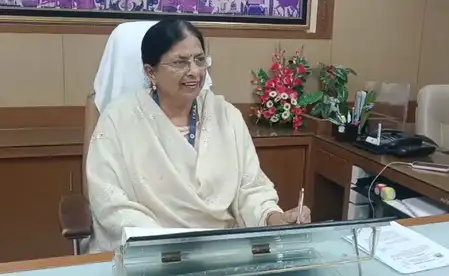
Director of Institute of Teaching and Research in Ayurveda, Jamnagar (Gujarat), Prof. Dr. Tanuja Nesari welcomed these announcements and thanked the government for the enhanced budgetary support for the AYUSH sector.
Dr. Nesari said that we are grateful to the Government of India for announcing an increase of approximately 20 percent for the AYUSH system and strengthening India’s commitment to global traditional medicine through WHO. One highlight of the budget is the decision to upgrade the WHO Global Traditional Medicine Center in Jamnagar, which functions under the Ministry of AYUSH. The aim of this upgrade is to increase evidence-based research, training and global awareness of traditional medical systems.
Dr. Nesari described the initiatives of the Budget as truly groundbreaking and said that these will help India meet the growing global demand for AYUSH services. He said that the proposed initiatives will strengthen quality education, clinical care and research through the establishment of three new All India Institutes of Ayurveda. Upgradation of AYUSH pharmacies and drug testing laboratories will ensure high quality standards, certification and availability of skilled staff.
He further said that the expansion of the WHO Global Traditional Medicine Center will further strengthen India’s leadership in traditional medicine on the world stage. India’s global recognition in traditional health has steadily increased in recent years. Yoga gained worldwide recognition after Prime Minister Narendra Modi took it to the United Nations, while Ayurveda has again gained global acceptance in the post-Covid era.
The increasing international demand for AYUSH products has benefited the farmers cultivating medicinal plants as well as the youth engaged in processing and value addition. According to officials, the new initiatives are aimed at combining traditional practices with modern healthcare framework, enhancing India’s soft power and positioning the country as a trusted global destination for holistic and evidence-based healthcare.
AYUSH sector stakeholders appreciated the government’s support and thanked Prime Minister Narendra Modi, Finance Minister Nirmala Sitharaman, Union AYUSH Minister Prataprao Jadhav and AYUSH Ministry Secretary Padma Rajesh Kotecha for their encouraging and visionary announcements for Ayurveda and the broader AYUSH ecosystem.
–IANS
DKM/DKP