
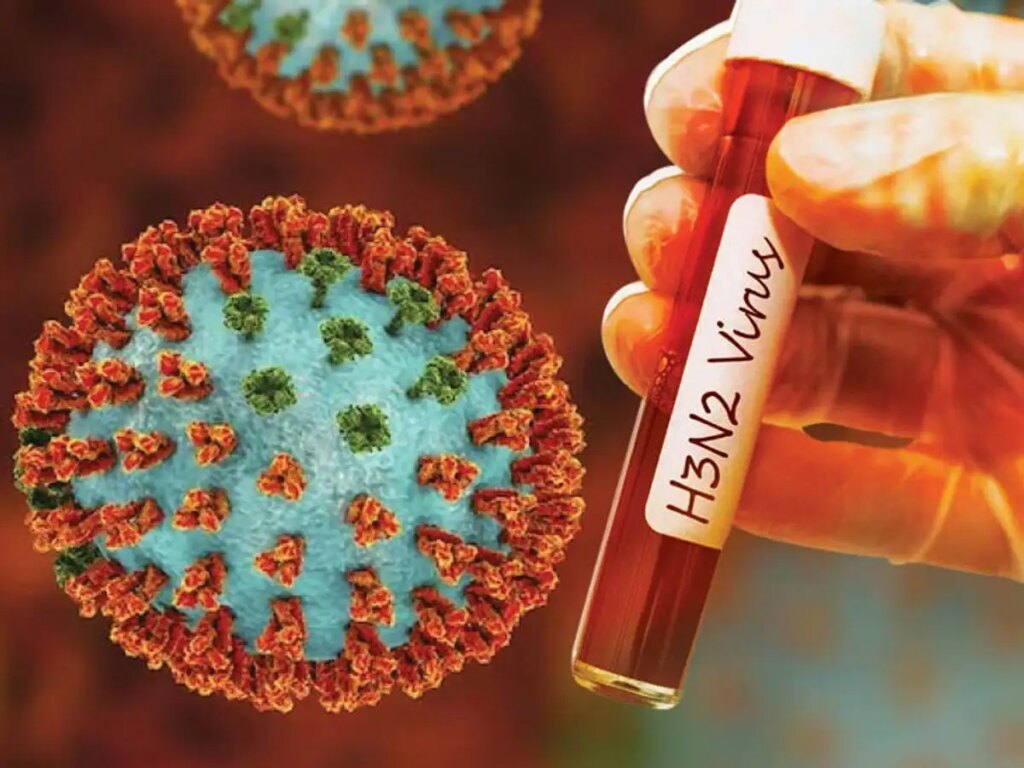
The rapidly spreading H3N2 super flu in Britain has increased the concern of health agencies. H3N2 super flu has now reached Pakistan, raising concerns about the possibility of the virus spreading to India as well. Health experts say that this danger cannot be completely ignored, and it is important to take precautions. So, today we will talk about how much danger India is facing due to the H3N2 super flu spreading from Britain to Pakistan.
What is H3N2 super flu?
According to the World Health Organization (WHO), this virus is a mutated form of influenza A, which is being called a sub-clade. It is being called super flu because some genetic changes have been seen in it. The WHO says this is not a new virus, nor does current data suggest that it causes more severe disease than before. However, its special thing is that it is spreading rapidly even before the normal flu season.
Why is concern increasing in Britain and Pakistan?
In recent times, there has been a sudden increase in the cases of this flu in Britain. The number of patients admitted to hospital there is much higher than last year. According to the data, the number of patients hospitalized due to flu has increased by more than 50 percent. Most infections have been seen in children aged 5 to 14 years and youth aged 15 to 24 years. In view of the situation, the UK’s National Health Service has appealed to the elderly, children and people at high risk to get the flu vaccine as soon as possible. After Europe, H3N2 super flu strain has also been confirmed in Pakistan. Health experts say that there is a need to be cautious. In Pakistan, this virus can be more dangerous for people with weak immunity, children and the elderly. Experts have also warned that if the flu turns into pneumonia, patients may need ventilators. This danger is being considered in India also.
The weather patterns, wind direction and movement of people between India and Pakistan are largely similar. Additionally, the winter season, characterized by fog, pollution, crowded places, close contact of children in schools, and travel, create a conducive environment for the virus to spread. Experts believe that if the virus is spreading in the neighboring country, then there is a possibility of cases being reported in India also. Additionally, cases of H3N2 influenza have been seen in India before. Therefore, the Indian health system is not completely unaware of this virus. The country has a flu surveillance system in place, hospitals have testing facilities, and doctors are able to identify symptoms. However, the low rate of flu vaccination in India is a major concern, especially among the elderly and people in high-risk groups. Experts also recommend that people above 60 years of age, people with diabetes, heart and lung diseases and people with weak immune systems need to be more careful.