
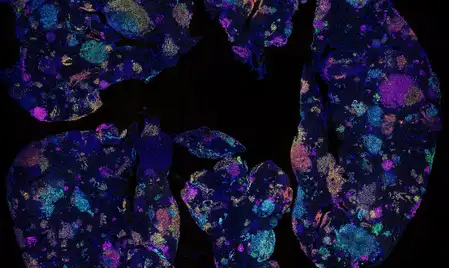
Melbourne, June 6 (IANS). Scientists have identified a new “blood signature” that can detect lung cancer risk more than five years in advance. Researchers believe that this discovery can prove to be an important step for early detection and prevention of cancer in the future.
This study has been published in the scientific journal Cell. According to research, this new technology can help people who may be at risk of lung cancer through preventive drugs.
Walter and Eliza Hall Institute of Medical Research (WEHI) released a report regarding this. According to which, scientists analyzed more than 48,000 blood samples. During this time they found a group of 14 special proteins that could indicate the risk of lung cancer within the next five years. This finding was also confirmed in eight different data sets from around the world, which also included non-smokers.
Researchers say this indicator does not come directly from the tumor, but reflects inflammatory changes that occur in the lungs before cancer develops. This means that even before the disease starts, some changes start taking place in the body, which can be identified and treated in time.
Xinhua News Agency reported that according to the study, lung cancer still remains the biggest cause of cancer death in the world. Currently, screening programs focus primarily on older people who have a history of smoking. In such a situation, cancer is detected in a large number of patients when the disease has progressed significantly.
Claire Weeden, a WEHI scientist and co-author of the study, said the discovery could help develop more effective and inclusive cancer screening programs around the world, including Australia.
Weeden had done this research during his time at the Crick Institute in Britain. He said, “These results take us closer to a future where steps can be taken to prevent cancer before it develops.”
Charlie Swanton, director of clinical research at the Crick Institute, said that this study strengthens the notion that a similar state of pre-existing inflammation in the body may be behind many diseases that occur with aging. They believe that in the future this blood signature could help predict the risk of not only lung cancer but also other lung diseases.
–IANS
kr/