
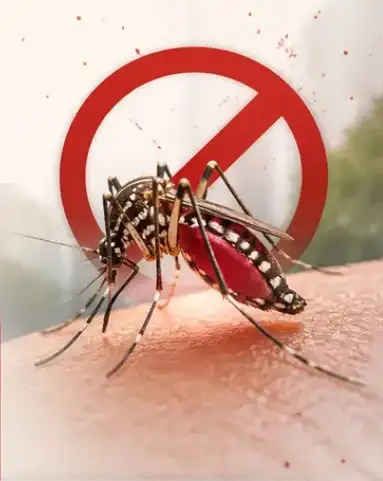
New Delhi, May 15 (IANS). ‘National Dengue Day’ is celebrated every year on 16 May with the aim of controlling the increasing cases of dengue and spreading awareness. This year’s theme is “Community Partnership for Dengue Control: Test, Clean and Cover”. Special awareness programs are organized across the country on this day, so that people adopt measures to prevent dengue and prevent the spread of this disease.
Dengue is a viral disease, which is spread by mosquito bites. It is caused by a mosquito called ‘Aedes aegypti’. Symptoms start appearing 5-6 days after the bite of an infected mosquito. This disease can spread rapidly and take the form of an epidemic. Dengue cases are seen in almost all the states and union territories of the country.
If we look at the main symptoms of dengue, then sudden high fever, severe headache, pain behind the eyes, especially on moving the eyes, as well as pain in muscles and joints, loss of appetite and taste, measles-like rash on the body, nausea and vomiting.
At the same time, serious symptoms of dengue include repeated vomiting, bleeding from nose and mouth, skin rashes, restlessness, intense thirst, weak pulse and difficulty in breathing. If such symptoms appear, contact the doctor immediately.
There is no specific vaccine or medicine for dengue, so prevention is the best solution. Health experts tell what to do and what not to do. For this, remove the water accumulated in coolers, tubs, buckets, pots etc. installed in the house at least once a week. Do not allow water to accumulate in drains and dustbins. For protection, use mosquito repellents like aerosols etc. during day time. Wear clothes that cover the entire body and use mosquito nets while sleeping. At the same time, do not let children play outside in shorts or half sleeve clothes.
According to the Ministry of Health and Family Welfare, the Government of India is taking many concrete steps to prevent dengue. Arrangements for awareness, surveillance and treatment have been made across the country under the NVBDCP i.e. National Vector Borne Disease Control Program under the Health Ministry. 869 Sentinel Surveillance Hospitals (SSH) have been set up, where dengue testing facilities are available.
Along with this, 27 Advanced Referral Laboratories (ARL) support these hospitals. Testing kits are provided free of cost and states are given technical guidance, training and financial assistance. Advisories are issued from time to time, so that possible outbreaks can be prevented in time. The government’s emphasis is on community participation. If every person keeps his house, neighborhood and workplace free from mosquitoes, then dengue can be controlled to a great extent.
–IANS
MT/VC