
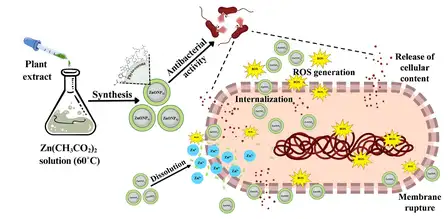
New Delhi, October 15 (IANS). To tackle the problem of antimicrobial resistance, researchers at the National Institute of Technology (NIT) Rourkela have developed powerful antibacterial agents using medicinal plant extracts that are environmentally safe and effective.
Continuous use of conventional antibiotics increases the problem of superbugs, which hinder treatment.
According to the study published in the Journal of Surfaces and Interphases, zinc oxide nanoparticles were used with an eco-friendly approach. These nanoparticles prevent bacterial cells from functioning normally.
For this, the team used not harsh chemicals but extracts prepared from marigold, mango and eucalyptus leaves and petals, which converted the zinc salt into zinc oxide nanocrystals, which contained the phytocompounds absorbed from the extract.
The extract-coated nanoparticles, specifically made from marigold petals, were twice as effective at killing bacteria than chemically synthesized nanoparticles or plant extracts alone.
The extract not only aided in the synthesis of the nanoparticle but also helped in stabilizing the nanoparticle through the formation of a herbal shield or phytocorona. It also helps control the excretion of zinc ions and ensures stable antibacterial action.
The flavonoids, alkaloids, tannins and phenolic phytocompounds present in these extracts have inherent antibacterial properties, resulting in a dual attack on the survival of bacteria.
Associate Professor in the Department of Life Sciences, NIT Rourkela, Prof. Suman Jha said, “Green-synthesized zinc oxide nanoparticles provide a promising solution to combat antimicrobial resistance through phyto-corona (by taking advantage of the medicinal properties of surface-adsorbed plant-derived phytocompounds).”
The use of native plant extracts makes this technology easy to scale up. This approach encourages home-grown, sustainable solutions that reduce reliance on imported drugs and synthetic antibiotics, which often cause more problems than they solve.
Jha said, “Our goal is to develop scalable, cost-effective and environmentally safe antimicrobial materials that can be integrated into healthcare, sanitation and food preservation applications. By harnessing India’s rich biodiversity and indigenous plant resources, we aim to create self-sustaining innovations that contribute meaningfully to global health and sustainability goals.”
–IANS
kr/