
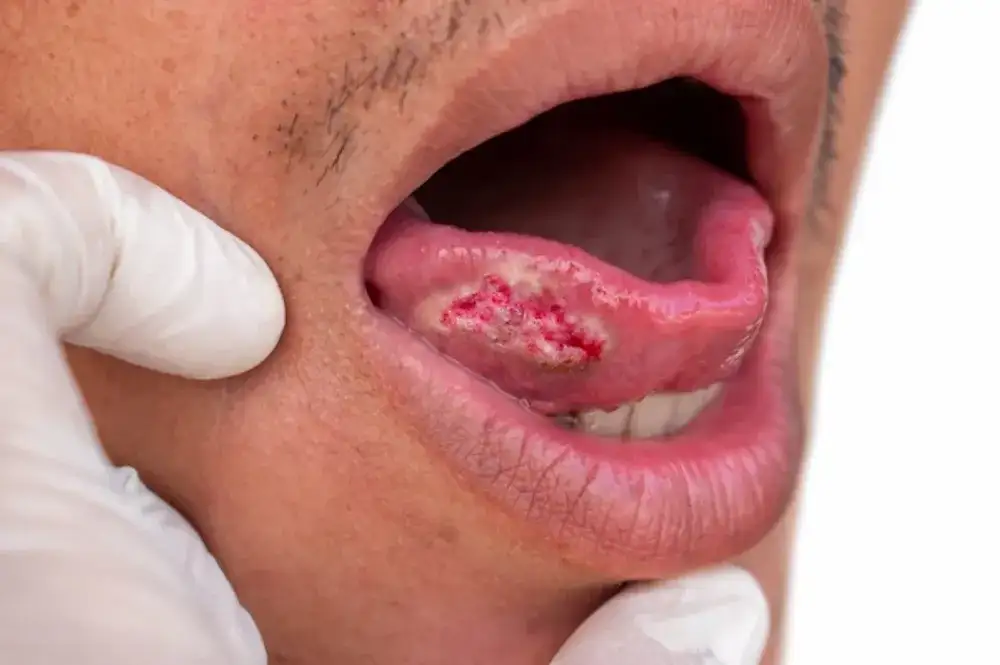
Small ulcers, white or red spots, and mild pain in the mouth are often ignored as minor problems. In most cases, these are linked to stress, dental problems, or common infections. However, according to doctors, if such blisters or spots do not heal within two weeks, then they can be an early sign of oral cancer. The disease often remains hidden due to lack of awareness and lifestyle habits, which leads to delayed treatment. So, let us understand how mouth ulcers can be a warning sign of cancer.
Why is oral cancer often ignored?
In its early stages, the symptoms of oral cancer are very mild. People often do not take seriously problems such as mouth ulcers that do not heal, white or red spots, or mild pain or irritation. Additionally, because habits like chewing tobacco, smoking, and drinking are associated with it, many people do not talk openly about these problems with their doctors. This is why the disease often goes undetected until it has progressed.
Who needs to be more cautious?
According to doctors, oral health is often ignored in our country. People who chew tobacco, smoke, drink alcohol, have broken teeth, and have poor oral hygiene should be especially cautious. If any blister or spot in the mouth does not heal within two weeks or starts growing, then it should be examined immediately. Doctors also say that there are many types of spots and blisters in the mouth. These include small, painful blisters that usually heal in 1 to 2 weeks. There are also white spots on the mouth, gums or tongue that do not go away by rubbing. White, mesh-like spots or blisters that may cause irritation. Red spots that may bleed and are considered more dangerous.
When can it become dangerous?
Most mouth ulcers are caused by injury, stress, vitamin deficiency, or infection and heal with simple treatment. However, in some cases, these may be signs of serious diseases. Mouth ulcers that do not heal for more than two weeks may be a sign of oral cancer. Additionally, leukoplakia and erythroplakia are considered precancerous conditions in many cases. Some lesions may also be associated with diabetes, HIV, or autoimmune diseases.
When to contact a doctor?
If you get frequent mouth ulcers or sores, if the ulcers are painful, or if they persist for a long time, it is important to consult a doctor. You should especially see a doctor if the blisters don’t heal after two weeks, if you notice lumps, bleeding, or persistent pain in your mouth, if you have trouble swallowing, chewing, or speaking, or if the lymph nodes in your neck become swollen.