
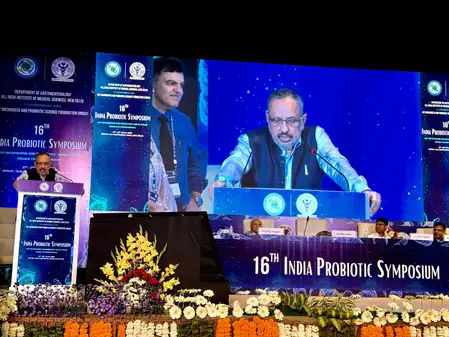
New Delhi, March 28 (IANS). Gut Microbiota and Probiotic Science Foundation organized the 16th Indian Probiotic Symposium on “Gut Microbiome and Probiotics: Impact from Birth to Centennial” in New Delhi on 27-28 March 2026. Rajeev Gauba, Member, NITI Aayog as the Chief Guest emphasized on the vital role of gut microbiome in immunity, metabolism and preventive health care.
Gauba expressed concern over the rapid change in eating habits in India, saying urbanization, changing lifestyles and increasing consumption of ultra-processed and refined foods driven by social media and instant commerce platforms are moving people away from traditional, nutrient-rich diets. They warned that these trends could have serious long-term consequences for gut health. An estimated 56.4 percent of diseases in India are caused by poor or unbalanced diet. He further warned that if ignored, “microorganisms can have widespread consequences.”
Placing gut health in the broader development context, Gauba described healthcare as the most important sector for both individual well-being and economic growth. He said India’s demographic dividend can be realized only if the workforce is healthy and timely preparations are made for active and healthy old age for the growing elderly population. He stressed that investment in health is investment in a developed India and cited initiatives like Ayushman Bharat, PM-JAY, PM Bharatiya Jan Aushadhi Pariyojana and Ayushman Arogya Mandir as having significantly strengthened primary healthcare and financial security. He said that out-of-pocket expenditure on health has declined from 62.6 per cent to 39.4 per cent between FY 2015 and FY 2022, resulting in savings of over Rs 1.25 lakh crore to families.
Also, Rajiv Gauba acknowledged the persistent challenges related to access to health services, equity, affordability, quality, patient safety and shortage of skilled health professionals. He emphasized that access to health services continues to be influenced by socio-economic factors. Urging health professionals to play an active role, he called for greater access to low-cost generic medicines and greater use of digital health tools, telemedicine, data analytics and AI to extend expert care to underserved communities and give a voice to those deprived of quality medical services.
Discussing the growing field of probiotics, Gauba said that microbiome science has moved beyond descriptive studies to mechanism and applied research. He highlighted emerging areas such as next-generation microbiome-based therapies, synthetic biology and creation of CRISPR-enabled probiotic strains with targeted anti-inflammatory and metabolic functions to provide precision medicine.
However, they cautioned against the increasing prevalence of misinformation and misleading advertising in the probiotics and supplements market and urged physicians and researchers to use their credibility and media reach to disseminate accurate information, promote healthy dietary habits, and support preventive lifestyles, thereby reducing the need for expensive diagnostics and procedures.
Gauba said the country is uniquely positioned to lead the global probiotic movement by combining traditional knowledge with genomic and microbiome research to develop clinically proven probiotics. They highlighted the broad public health potential of probiotics in reducing the burden of infectious and chronic diseases, improving nutrition, and strengthening population immunity. Strong collaboration between academia, industry and regulators is essential to translate scientific advances into safe, effective and accessible products.
Lauding the participation of young researchers and innovators, Gauba encouraged them to adopt multidisciplinary and evidence-based approaches to tackle complex health challenges. He expressed confidence that this symposium will foster new collaborations and strengthen India’s leadership in the field of microbiome and probiotic science.
–IANS
OP/PM