
New Delhi, July 14 (IANS). According to Vaidya Rajesh Kotecha, Secretary, Ministry of AYUSH, the inclusion of standardized health terminology will make AYUSH interventions an essential part of the larger digital health ecosystem, which will match modern health informatics standards.
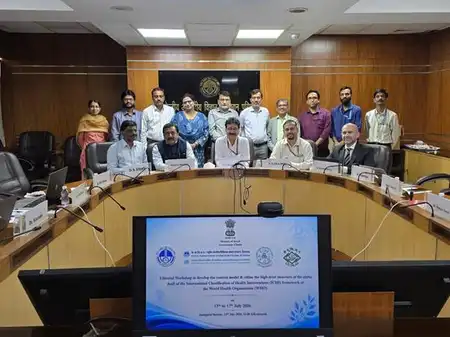
The Ministry of AYUSH has launched a five-day workshop on WHO-ICHI Framework for Ayurveda, Siddha and Unani Systems, which is an important step towards placing India’s traditional medicine systems in the global digital health ecosystem and universal health coverage framework.
Kotecha said this initiative is more than just a coding exercise. “This is a game-changing step towards giving India’s traditional medical system a place in the global scientific, digital and policy ecosystem,” he said in the inaugural session.
Dr. Kavita Jain, Joint Secretary, Ministry of AYUSH, explained in detail about digital documentation and the long-term policy impact of incorporating traditional methods into the global health system. Dr. Geeta Krishnan, Unit Head, GTMC Jamnagar, shared the global operational context, while WHO representatives Dr. Robert Jacob, Data Standards and Informatics Team Leader, and Dr. Stephen Espinosa, Consultant, WHO, also delivered keynote addresses that focused on global interoperability and alignment with digital informatics.
The workshop is being organized by the Central Council for Research in Ayurvedic Sciences (CCRAS) through its World Health Organization Collaborating Centre, National Institute of Indian Medical Heritage (NIIMH), Hyderabad.
It brings together leading scientific experts, institutional heads and international informatics professionals to finalize a scientifically sound, layered hierarchy of National Health Intervention Codes (NHIC) for Ayurveda, Siddha and Unani (ASU) systems. The statement said that there are 25 specialties, 130 therapies and 996 procedures for Siddha. There are 15 specialties, 179 therapies and 551 procedures for Unani.
–IANS
PIM/PM