
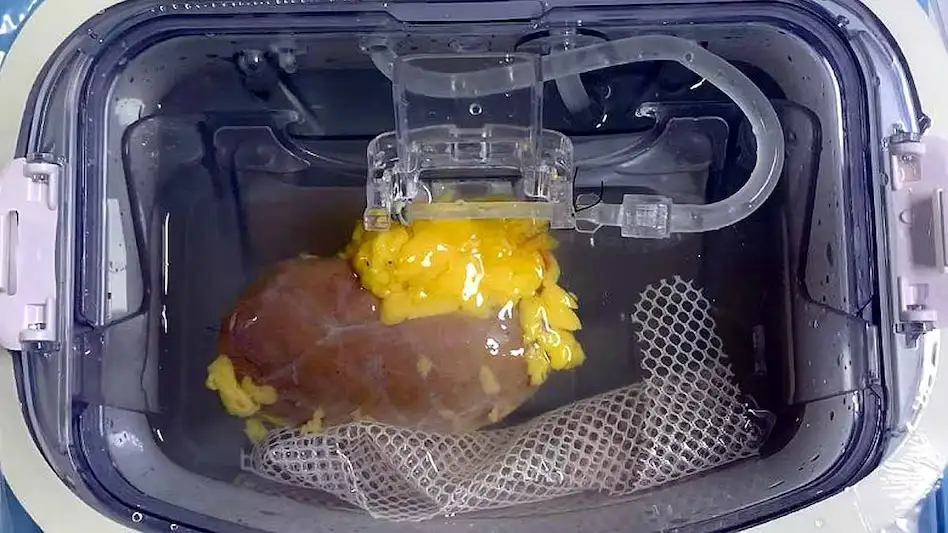
Millions of people suffering from kidney disease are constantly looking for new hope. But now there is a good news. After 10 years of hard work, scientists from Canada and China have created a universal kidney, which can be given to patients with any blood group. This will reduce the waiting list and save lives.
Current problem of kidney transplant: blood group wall
First, understand the problem. For kidney transplantation, the donor kidney must match the blood group of the recipient. Type O blood is a “universal donor”, meaning it can be given to a person with any blood group (A, B, AB, O). However, type O kidneys are rare because anyone can use them.
More than half the people on the waiting list are waiting for a type O kidney. In the United States alone, 11 people die every day from kidney failure. Even in India, lakhs of patients are living on dialysis. If a kidney with a different blood group is transplanted, the body rejects it as foreign. What is the current method? Preparing the patient by giving him medicines is expensive, lengthy and risky. This requires a living donor and takes several months.
What is a universal kidney? a look
This new kidney is like “Type O”, which adapts to the body of patients with any blood group. Scientists converted a type A kidney into a type O kidney. Biochemist Stephen Withers of the University of British Columbia, Canada, says this is the first time it has been tested in the human body. This gives us suggestions for long-term performance. This kidney continued to function for several days in the body of a brain-dead person. This research was done with the consent of the family.
How were these kidneys formed? magic scissors of enzymes
Blood types A, B, or AB have sugar molecules (antigens) on the surface of the kidneys that tell the body whether it is “home” or “foreign.” Type O does not have these antigens. Scientists used special enzymes (proteins) that cleave the type A antigen. Withers compares it to removing paint from a car, like removing red paint and removing a neutral primer. Once the antigen is removed, the immune system accepts the kidney as its own. These enzymes had been identified earlier, but have now been used successfully in the kidney. This research has been published in the journal Nature Biomedical Engineering.
How was the test done? What were the results?
A type A kidney was transplanted into the body of a brain-dead person. It worked for several days—filtering blood and removing waste. On the third day, some symptoms of type A appeared, causing a mild immune response. But it was less than normal. The body was trying to tolerate the kidneys. Withers says it’s about bringing basic science to patients. “Our discoveries are now showing real-world impact.”
Challenges ahead: Testing on living humans is still pending.
This is just the beginning.
Many difficulties remain…
If the antigens are not completely removed, rejection may occur.
How long will this last? Now only a few days are left.
When will trials begin on living patients? There’s still plenty of time.
Scientists are also considering other methods – such as using pig kidneys or creating new antibodies. But this universal kidney could save millions of lives by reducing waiting times.
Why is this success important?
The incidence of kidney failure due to diabetes and high blood pressure is increasing worldwide. More than 100,000 people are on the waiting list in the US. More than 2,00,000 in India. Most patients die from type O deficiency. If universal kidney implementation is implemented, the number of donors will double.