
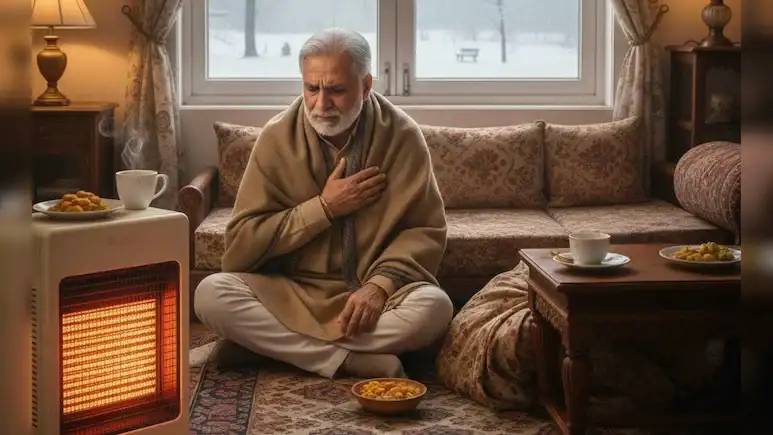
These days, winter has taken a deadly turn in North India, where the severe cold wave has brought the temperature to the lowest level in this season. The minimum temperature in the capital Delhi fell to about 3 degrees Celsius, which was the coldest day so far this winter. Near sub-zero temperatures were recorded at the airfield and surrounding areas. The India Meteorological Department (IMD) has predicted that the severe cold wave will continue for the next few days. The intensity of cold in this season is not limited to just unbearable temperatures, but it is having a deep impact on our health. Expert doctors at AIIMS (All India Institute of Medical Sciences), Delhi, have advised not to consider cold as a “mere weather phenomenon” but termed it as a matter with serious health risks.
Additional danger to heart patients
According to Dr. Rajeev Narang, Professor, Department of Cardiology, AIIMS, blood vessels shrink during cold weather, which increases additional pressure on the heart. Drinking less water and consuming more salt in winter can increase blood pressure, which also increases the risk of heart attack. Because of this, he especially urges heart patients to take prescribed medications regularly, and to avoid early morning exercise or walks in extremely cold weather. Dr. Narang has said that cold wave should be taken as seriously as heat wave. Just as there are heat action plans, there is a need for cold action plans to ensure the safety of vulnerable groups.
Effects on lungs and respiratory system
Dr. Sanjay Sinha of the Medicine Department of AIIMS said that cold air directly affects the respiratory tract. This can cause the respiratory tract to shrink, which gives rise to problems like bronchospasm. This problem can be especially dangerous for patients with COPD (chronic obstructive pulmonary disease) and asthma. Such patients face an increase in complaints like cough, difficulty in breathing and wheezing.
Risks for children and kidney patients
Dr. Rakesh Lodha, Professor, Department of Pediatrics, AIIMS, warned that the body temperature of infants and young children decreases quickly, due to which they may face problems like illness, lethargy, loss of appetite and respiratory problems if they get cold. He said that it is very important for children to cover their head as there is a lot of temperature loss from the head.
Diabetes and cold combination
Dr. Rajesh Khadgawat, endocrinology expert of AIIMS, says that during the winter season, diabetic patients face difficulty in controlling blood sugar because people are less mobile. It is also noteworthy that vaccines such as pneumococcal vaccine can help prevent serious infections this season, especially in elderly and vulnerable patients.