
New Delhi, March 15 (IANS). Delhi government is going to take big steps to make the health services of the capital modern, accessible and more effective. The government has decided to integrate major government medical institutions in the capital such as Guru Teg Bahadur Hospital (GTB), Delhi State Cancer Institute (DSCI) and Rajiv Gandhi Super Specialty Hospital (RGSSH) and develop them as an autonomous institute on the lines of AIIMS.
At the same time, work will also be done towards developing the Institute of Human Behavior and Allied Sciences (IHBAS) as National Institute of Mental Health and Neuroscience-2 in future.
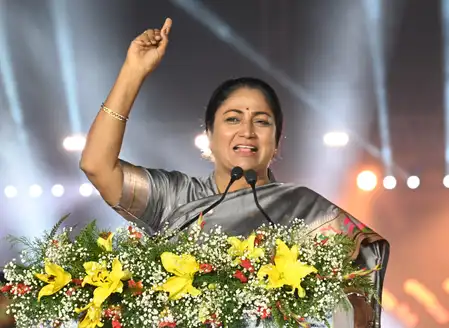
In this regard, a high-level review meeting was recently organized in Delhi Secretariat under the chairmanship of Chief Minister Rekha Gupta. Health Minister Dr. Pankaj Kumar Singh and senior officials of various departments were present in the meeting. In the meeting, important proposals related to developing a strong and modern medical system by integrating the major government medical institutions of the capital, better utilization of available resources and development of world class health facilities were discussed in detail.
CM Rekha Gupta said that proper and scientific use of available resources is very important to strengthen health services in the capital. Integration of various institutions will enable better utilization of doctors, specialists, medical equipment and infrastructure and provide more streamlined and advanced medical facilities to patients.
The status of beds available in hospitals and the pressure of patients were also discussed in the meeting. It was told that Rajiv Gandhi Super Specialty Hospital has a total capacity of 650 beds, but at present only about 250 beds are in use and about 400 beds are lying vacant. On the other hand, the number of patients in Delhi Cancer Institute and GTB Hospital is more than the capacity. GTB Hospital has more than 1,500 beds in use against the original capacity of about 1,400 beds.
According to patient data, more than 14 lakh patients visit OPD at GTB Hospital and around 95 thousand patients avail In-Patient Department (IPD) services. At the same time, about 1.27 lakh OPD patients have been registered in Delhi Cancer Institute and about 2.87 lakh OPD patients have been registered in Rajiv Gandhi Hospital. It is clear from these figures that there is immense pressure of patients on GTB Hospital, while the capacity of some hospitals is not being fully utilised.
The Chief Minister said that after the integration of the hospitals, there will be systematic delivery of various super specialty services so that the patients can get better and specialist treatment. According to the proposal, super specialty services like cardiology, pulmonology, gastroenterology, gastro surgery, nephrology, urology, rheumatology and clinical hematology will be strengthened in Rajiv Gandhi Hospital. Delhi State Cancer Institute will be made a major center for services related to cancer treatment, where services like radiation oncology, surgical oncology, nuclear medicine, palliative care and radio imaging will be integrated. At the same time, many departments including orthopedics, internal medicine, ENT, general surgery, neurosurgery, endocrinology, ophthalmology will be further strengthened in Guru Teg Bahadur Hospital.
According to CM Rekha Gupta, the review also revealed that modern medical equipment is available in many hospitals, but due to lack of specialist staff and scattered resources, they are not getting full benefit. For example, Rajiv Gandhi Hospital has advanced bronchoscopy facilities, Delhi State Cancer Institute has a linear accelerator for radiotherapy, Rajiv Gandhi Hospital has a cath lab and echo lab, while GTB Hospital has a bone bank. Under the integrated system, better and coordinated use of all these expensive equipment will be ensured.
Chief Minister Rekha Gupta said the initiative aims to develop world-class health facilities in Delhi and make the capital the new center of medical excellence.
–IANS
SK/ABM