
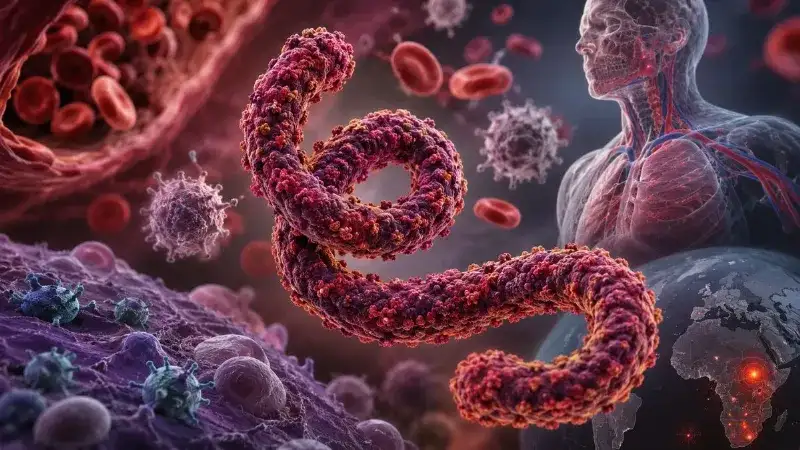
The Ebola virus, which is spreading in parts of Africa, has once again raised global concerns. Recently, the World Health Organization (WHO) has declared the ongoing Ebola outbreak in the Democratic Republic of Congo (DRC) and Uganda as a ‘public health emergency of international concern’. According to reports, as of May 16, 246 suspected cases and 80 suspected deaths were recorded in DRC’s Ituri province, while several cases have also been confirmed through laboratory tests.
Has a new epidemic started?
WHO Director-General Dr. Tedros Adhanom Ghebreyesus said that although the current situation has not yet reached the level of a pandemic, the seriousness of the infection requires urgent international cooperation. DRC’s Health Minister, Samuel-Roger Kamba, said that there is currently no effective vaccine or specific treatment for the particular strain of the virus that has emerged this time, and its mortality rate could reach 50 percent.
What is Ebola?
Ebola is an extremely dangerous and deadly disease caused by viruses of the *Orthobolavirus* family. So far, six different strains of this virus have been identified; However, three of these types are responsible for large outbreaks, causing serious infections in humans. This virus usually spreads from animals to humans. According to experts, fruit bats are considered the natural reservoir of this virus. This infection can spread rapidly through blood, bodily fluids, or direct contact with an infected person. This is why health workers are at high risk of infection while treating patients in hospitals. Apart from this, there is a risk of infection through direct contact during the last rites of an infected person.
What are its symptoms?
According to the World Health Organization, the initial symptoms of Ebola are similar to those of a common viral fever, making it difficult to identify in the early stages of the disease. Within two to 21 days of infection, symptoms such as sudden high fever, extreme fatigue, body aches, headache and sore throat may begin. After this, the patient starts experiencing vomiting, diarrhea, stomach pain, skin rashes and kidney and liver complications. In many cases, the patient also begins to exhibit mental confusion, irritability, and aggressive behavior. Although there is a misconception among the common people that Ebola always bleeds, but experts say that bleeding does not happen in every patient and it usually happens only in the later stages of the disease.
Additionally, Ebola is not easy to detect because its initial symptoms are similar to those of many other infectious diseases, such as malaria, typhoid, meningitis, and common viral fevers. This is the reason why in many cases, the disease is not detected in the early stages. According to doctors, if proper investigation and diagnosis is not done on time, the infection can quickly turn into a serious condition.
When did this disease spread?
The history of Ebola is truly horrifying. Its first major outbreak occurred in 1976, when the disease spread twice on a large scale in Sudan and Congo. Then, between 2000 and 2001, the virus spread rapidly in Uganda. However, the most devastating outbreak occurred in West Africa between 2013 and 2016. During that time, more than 28,000 cases were reported in countries such as Guinea, Liberia and Sierra Leone, resulting in more than 11,000 deaths. It is considered the deadliest Ebola outbreak to date. The infection later spread to the US and Europe, where some cases were found in travelers and healthcare workers returning from Africa. Then, between 2018 and 2020, the infection spread again extensively in DRC and Uganda; And recently, new cases were reported in Uganda in 2025.
What is its treatment? Researchers say that treating Ebola is a big challenge. According to medical experts at Imperial College London, the treatments currently available are effective only against the Zaire strain. In contrast, for the current Bundibugyo strain, there is neither a certified vaccine nor any effective antiviral drug. As a result, treatment mainly depends on maintaining fluid and electrolyte balance in the body, keeping oxygen levels stable, and managing the patient’s condition.