
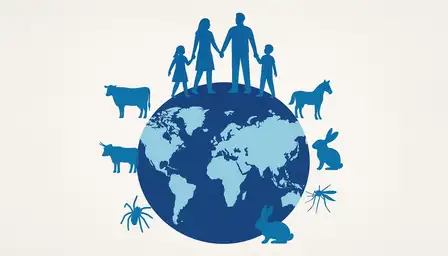
New Delhi, July 5 (IANS). A disease that starts with one animal can bring the entire world to a standstill. This may sound surprising, but the Covid-19 pandemic that broke out a few years ago showed how a microscopic virus can stop the entire world. Lakhs of people lost their lives in this epidemic and the global economy was also deeply affected. World Zoonosis Day is celebrated every year on 6 July to make people aware of the diseases that spread from animals to humans. These are called zoonotic diseases.
Zoonotic diseases are infectious diseases that spread primarily from animals to humans. Their infection can occur through direct contact with an infected animal, its bite or scratch, vectors such as mosquitoes and ticks, contaminated food or water, and infected environment.
The history of World Zoonosis Day is also very important. On July 6, 1885, French scientist Louis Pasteur successfully vaccinated a child infected with rabies for the first time. World Zoonosis Day is celebrated every year on 6th July to commemorate this historic achievement of medical science and to make people aware of the importance of vaccination and prevention.
Rabies is the most talked about disease that spreads from animals to humans. Apart from this, many serious diseases like Ebola, Nipah virus, bird flu (avian influenza), Lassa fever and bovine tuberculosis also come under the category of zoonotic diseases. COVID-19 is also widely considered a pandemic of possible zoonotic origin. Many of these diseases can prove fatal if not treated on time.
According to the Food and Agriculture Organization of the United Nations (FAO), about 60 percent of the world’s known infectious diseases are zoonotic, while about 75 percent of new and emerging infectious diseases originate from animals.
After the Covid-19 pandemic, the whole world has become more alert about these diseases than before. According to the World Health Organization, this epidemic took the lives of millions of people and also taught that if prevention measures are not taken in time, any infection can take the form of a global crisis. However, by adopting some easy precautions the risk of these diseases can be reduced to a great extent.
If you have pets in your house, get them vaccinated regularly. Contact a doctor immediately if bitten or scratched by an animal. Always consume things like meat, eggs and milk after cooking them thoroughly. It is also very important to wash hands thoroughly with soap after coming in contact with animals. Maintain distance from sick or dead wild animals and seek medical advice without delay if any unusual illness symptoms appear.
–IANS
PIM/AS