
The Commission for Air Quality Management in Delhi-NCR and Adjoining Areas (CAQM) since its inception in 2021, through a series of directions/advisories and orders, has initiated various policy measures and ground actions to reduce air pollution in Delhi-NCR.
The sustained, coordinated and tireless efforts of all stakeholders have further improved Delhi’s air quality as evidenced by the record 79 days with AQI at or below 100 (i.e. in the ‘good’ and ‘satisfactory’ category) in 2025, which is less than only the Covid year 2020. The number of days with ‘severe to severe+’ AQI in the year 2025 was the second lowest since 2018 (i.e. 8 such days).
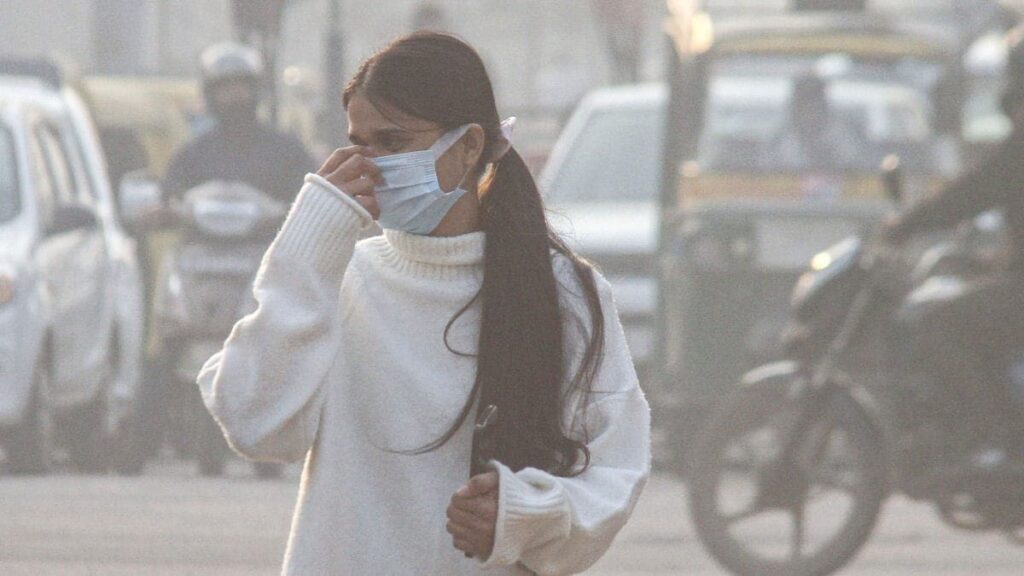
Dense fog blanketed the national capital and many areas around the National Capital Region (NCR) on Wednesday morning, reducing visibility to extremely low levels and disrupting normal traffic in major areas.
Visuals from Ghaziabad’s Indirapuram, Noida’s Botanical Garden metro station and Delhi’s Akshardham area showed roads and residential areas covered in a blanket of dense fog, with vehicles moving at slow speeds due to severe deterioration in visibility.
A similar situation was seen in many areas of Noida, where commuters faced problems in the early morning due to dense fog.
According to Central Pollution Control Board (CPCB) data, Delhi’s overall air quality index (AQI) was recorded at 384 at 7 am, placing it in the ‘very poor to severe’ category.
Several air quality monitoring centers across the city recorded worrying AQI levels. The AQI was recorded at 452 in Anand Vihar, 426 in ITO, 411 in RK Puram and 419 in Chandni Chowk, all falling in the ‘severe’ category. Dwarka Sector 8 also recorded AQI 414, which is quite high.
Air quality levels were slightly lower in other areas, but still remained hazardous. The AQI of IGI Airport (Terminal 3) was recorded at 334, while that of Najafgarh was 331 and Aya Nagar was 321. All these have been kept in the ‘extremely bad’ category.