
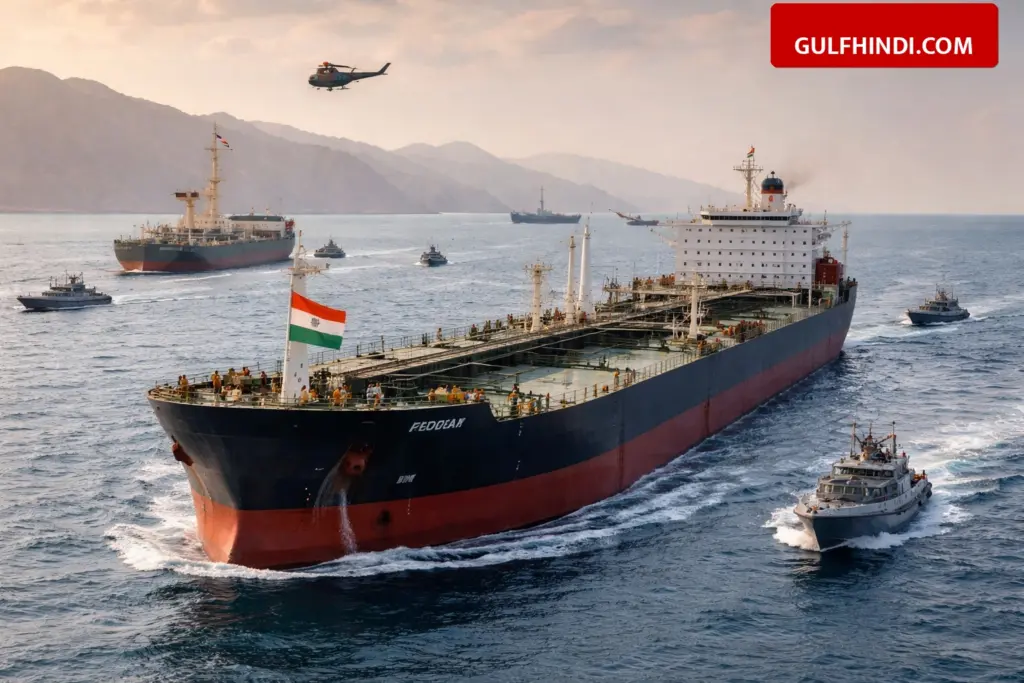
There has been a huge decline of 97 percent in the number of commercial ships passing through the Strait of Hormuz. While in February, 129 ships used to pass through here every day, now this number has come down to only 4. Iran has clarified that the waterway is open to international shipping except for ships belonging to the US and Israel. India’s Foreign Minister S Jaishankar has said that direct talks with Iran are yielding good results and two Indian gas tankers were safely evacuated from here on Saturday.
🗞️: New rule implemented before Eid in Abu Dhabi, there will be 24-hour surveillance on food shops and markets.
Ships from which countries are getting entry?
According to Iran’s Foreign Minister Abbas Araghchi, Iran’s doors are open for countries that want to talk. The decision on the passage of ships is entirely decided by their military. At present many countries are in contact with Iran to get their ships out safely.
India: Following talks with Indian officials, the two gas tankers passed safely.
Pakistan: A crude tanker named ‘Karachi’ bearing the flag of Pakistan also left here safely on Sunday.
Türkiye and China: One Turkish ship has received approval while 14 are still waiting. At the same time, Chinese ships are also continuously using this route to maintain global supply.
Japan and Australia have refused to join the US Navy’s alliance to patrol the region. Both the countries have cited their legal and constitutional reasons behind this.
What has been the impact on shipping and freight?
In view of this entire incident, shipping companies have increased their charges significantly. This can have a direct impact on expatriates living in Gulf countries and the prices of everyday goods in the markets there. Big shipping companies have currently limited their services on the Gulf route.
Hapag-Lloyd has imposed a war risk surcharge of $1500 per container for Gulf ports from March 2. Insurance premiums for Gulf Transit have increased up to four times. There has been an increase of 54 percent in the freight rate of crude oil and 72 percent increase of refined products. Marine fuel prices in Singapore have also almost doubled to $1020 per tonne.
The US has advised its ships to stay away from Iranian waters. At the same time, US Treasury Secretary Scott Besant says that the world supply should remain intact and it is a good thing for some fuel ships to go through this route.