
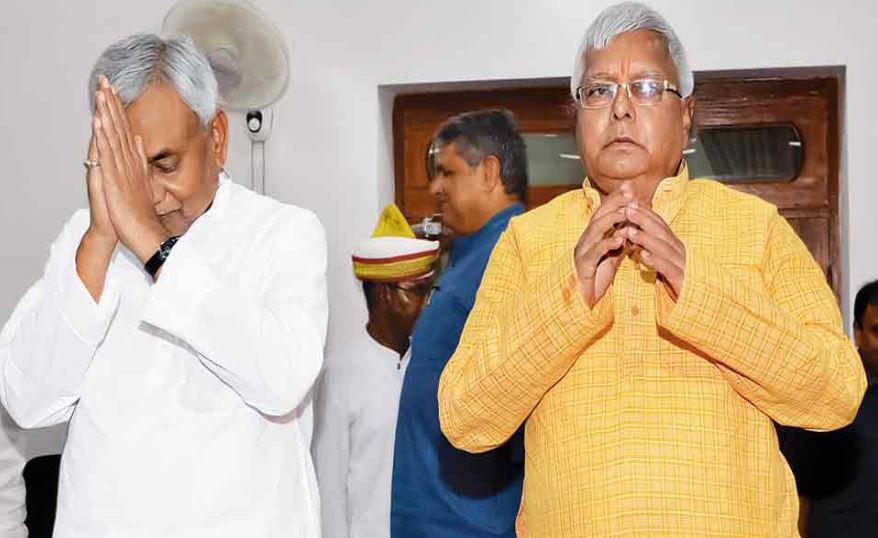
No wave is yet visible in favor or against any party or alliance in Bihar. Due to this there is a possibility of fractured mandate
Like every time, this time too everyone’s eyes are on Bihar Assembly elections. This time too it is being said that the election results will have a wide impact on the politics of the country. However, there is less discussion about what effect the elections to be held in two phases in November will have on the lives of the common people there. Will the election results of this time prove to change the condition of Bihar and bring such positive changes, due to which the socio-economic conditions of the state will change and it will be included in the list of developed states in the next five years?
Despite all the government claims, figures and efforts, it cannot be denied that on the basis of modern parameters of development, Bihar is still among the poorest states in the country, whether it is a matter of per capita income or the question of education, health and employment generation. Therefore, before every election, a small hope arises in the minds of people that perhaps this time’s elections will prove to be a change in the fate and picture of Bihar.
It would be unfair to say that Bihar did not develop during the two-decade tenure of Nitish Kumar. Undoubtedly, under the leadership of Nitish, Bihar made remarkable progress in many fields, due to which he earned the title of ‘Development Man’. During Nitish’s tenure, especially in the initial years, Bihar’s growth rate was recorded in double digits, which was better than many developed states. Despite this, Bihar is still miles behind compared to developed states. Who knows how many more decades it will take to catch up with the developed states. Obviously, the gap between rich and prosperous states like Maharashtra, Gujarat and Tamil Nadu and poor, backward states like Bihar has increased so much in the last fifty-sixty years that now it seems difficult to bridge it.
Nitish’s first eight-year tenure (2005-13) is called his golden period. During that period, the growth rate of Bihar was recorded at 14-15 percent, but it was also said that if Bihar continues to develop at the same pace and there is no increase in the growth rate of developed states during that period, then it is possible that Bihar could match them after about 30-40 years. Before the elections, the question is whether the incoming government can develop the state at the same pace (or faster) which was seen in the initial years of Nitish’s tenure?
Like many previous elections, this time too the main contest is between Nitish led NDA and Rashtriya Janata Dal led Grand Alliance, but this time due to the presence of famous election strategist Prashant Kishor’s new Jan Suraj Party in the fray, the elections are being predicted to be triangular. There are apprehensions that this time no single party or alliance may get a clear mandate in the state. If this happens, it will be the first time since February 2005 that a hung assembly will be seen in Bihar.
Not only the leaders of NDA and Grand Alliance, Prashant Kishore is also confident of his victory. He claims that he will be disappointed if his party wins less than 150 seats. But this is possible only when the public rejects both the NDA and the Grand Alliance outright. It can be said that due to his party contesting elections from all 243 seats, both the major alliances may have to suffer losses, which may affect the final results.
After 2005, the people of Bihar never gave a divided mandate in the elections. Despite being a constituent party of NDA in the 2020 assembly elections, Chirag Paswan of Lok Janshakti Party fielded his candidates against JDU, due to which JDU had to face defeat on 36 seats. Despite this, NDA achieved the majority figure, albeit by a small margin.
However, no wave is yet visible in favor or against any one party or alliance in the state. Perhaps this is the reason why fears of a fractured mandate are being expressed. But, can such a mandate really emerge this time which would restart the period of political turmoil in the state? Political stability is necessary for the development of any state, hence this time also the expectation from the people of Bihar will be that they hand over the keys of power to the party or alliance for five years only. This is necessary for the development of the state.