
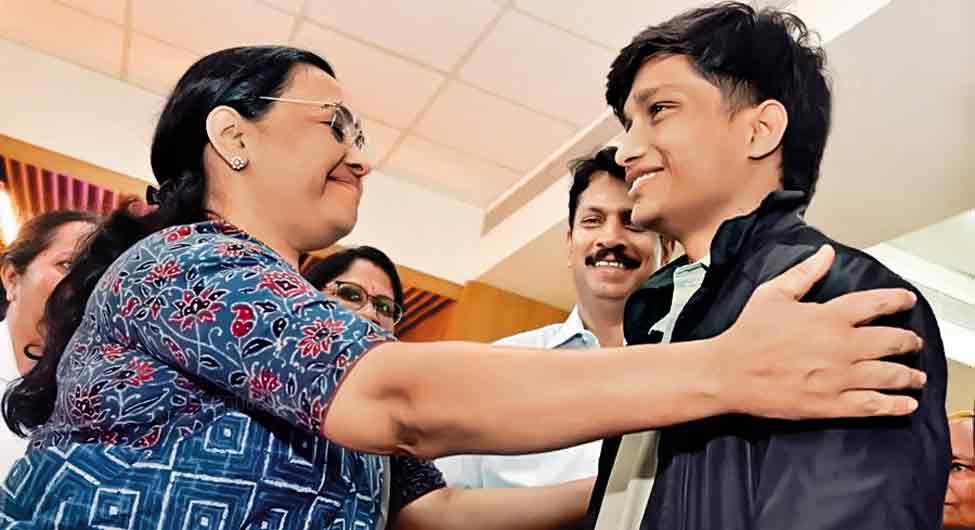
A government hospital in Kerala saved the life of a Nepali girl amid the ethical dilemma hidden in organ transplant arrangements.
For more than six months, Aparna alias Durga Kami (22) lived in the hope that the strict rules related to organ transplant, which are different for locals, nationals of the country and foreign nationals, might be relaxed a little for a person on the verge of death. He was suffering from last stage heart failure. As time was slipping away from his hands, his condition was worsening. According to the rules, local people are given first priority in organ transplantation. When his turn came in September, his surgery was postponed due to the arrival of a local patient. After that his hopes almost started falling apart. After a long wait of more than six months, Durga Kami got a place in a government hospital in Kerala. After successful heart transplant there, she is slowly recovering. He got this heart from a brain-dead patient in Thiruvananthapuram. His surgery became possible after the intervention of the Kerala High Court and special relaxation in the rules.
law and ethics
The first heart transplant performed in a government district general hospital in the state. The case also exposed the ethical dilemma inherent in the organ transplant system, where nationality is given priority. Durga’s mother, who lived in an orphanage in Nepal with her brother, also died of heart disease. About four years ago, Durga Kami also started having problems like shortness of breath, which was pointing towards serious heart disease.
Dr. Shajan Varghese was told by one of his friends about the orphanage where Kami lived. Dr. Shajan says, “When I saw Durga, I understood that her condition was serious. She has cardiac sarcoidosis.”
Dr. Varghese brought him to Ernakulam General Hospital where preparations for a heart transplant were underway. After medical examination, doctors found that his heart could be transplanted. The wait that followed was long and brutal. Every time there was news of a possible heart donation, there was hope. But as soon as the rules came into force, hope turned into wait.
humanity beyond borders
The order of organ allocation under Rule 31(4)(e) of Human Organ and Tissue Transplant Rules, 2014 (THOTA) is clear and fixed. State list, regional list, national list, persons of Indian origin and finally foreign citizens.
The strict provisions for foreign nationals are rooted in concerns over ‘transplant tourism’. In view of this, the Union Health Ministry has taken steps to make foreign nationals coming to India for transplant aware about the laws of the country. India is becoming a preferred destination for organ transplant due to skilled doctors.
But these terms and conditions, made with good intentions, have nothing to do with the actual experience of Durga Kami. Orphan Durga had no option of medical tourism. She came to Kerala not as a patient, but because of the humanitarian initiative of a doctor. As time passed and his health declined. Under these strict rules, there was no scope for compassion for Durga.
Ultimately he got relief through judicial intervention. This intervention reminded the system that law may recognize boundaries and categories, but humanity transcends all these boundaries.
Ultimately the transplant was successful and Durga Kami got a new life. They found the heart of Shibu (46), who hailed from Kollam and was declared brain-dead. The heart was taken out from the Government Medical College, Thiruvananthapuram and taken to Ernakulam.
This complex surgery is a major achievement for the public health system of Kerala. This surgery was performed under the leadership of Dr. George Valluran, cardiothoracic surgeon of the General Hospital. After this, Ernakulam General Hospital has become the first district hospital in the country where heart transplant was done.
increasing number of donors
Two consecutive heart transplants were performed at a private hospital in Kochi two months ago, showing the growing trend of organ transplants in Kerala. According to data from the Kerala State Organ and Tissue Transplant Organization (K-SOTTO), a total of 83 heart transplants took place in the state between 2012 and 2024. Of these, 72 were done in private hospitals and only 11 were done in government hospitals.