
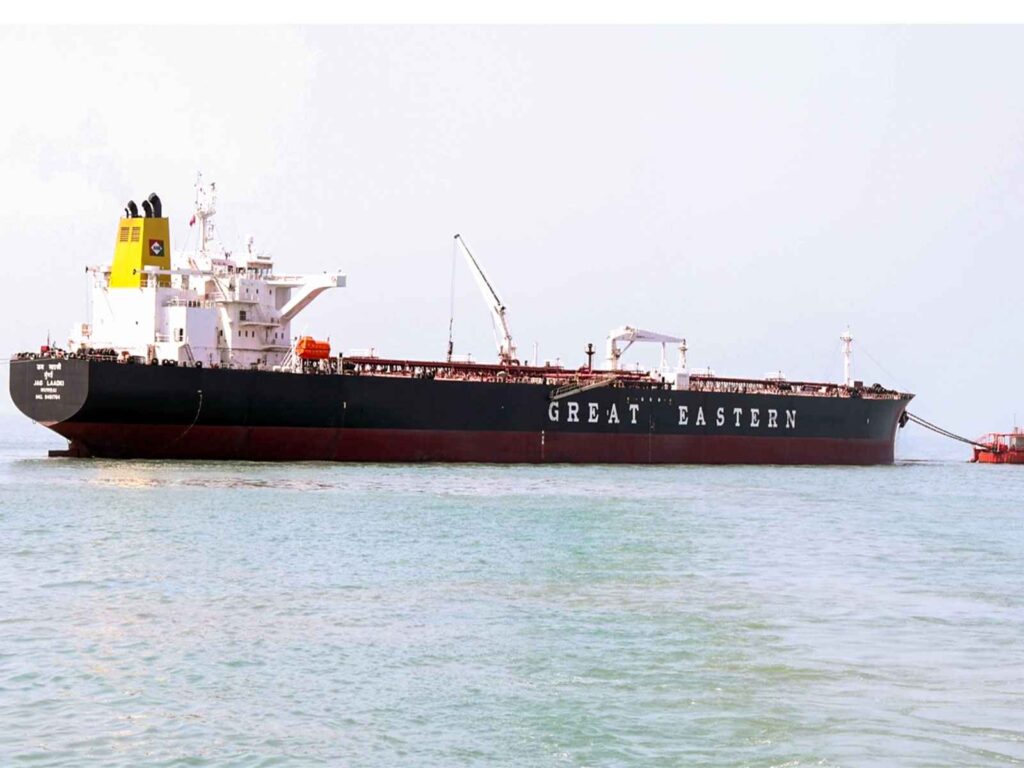
Two more merchant ships carrying petroleum products for India are passing through the Strait of Hormuz. Sources told ANI that Indian Navy warships are ready to provide assistance.
Sources said more ships are expected to arrive soon.
Earlier, Rajesh Kumar Sinha, Special Secretary, Ministry of Ports, Shipping and Waterways, speaking at a joint inter-ministerial briefing, said officials were closely monitoring the situation and maintaining coordination with various stakeholders.
“No incidents have been reported involving Indian-flagged ships or Indian sailors in the Gulf area in the last 24 hours. All are safe,” Sinha said.
He further said that Indian ships operating in the Persian Gulf are also safe. “There are 20 ships operating under the Indian flag in the Persian Gulf, with around 540 Indians on board, and they are also safe,” he said.
Sinha further said that the Directorate General of Shipping is actively responding to queries and concerns through its communication centre.
“In the last 24 hours, the DG Shipping Communication Centre, which operates 24 hours, received 98 calls and 335 emails, all of which were responded to,” he said.
India on Friday reiterated its urgent appeal to maintain safe and unimpeded maritime navigation through the Strait of Hormuz and stressed that it is necessary to adhere to international law amid the deteriorating security situation in West Asia. The government confirmed that it is keeping a close eye on regional instabilities to protect national energy interests.
During the weekly media briefing, Ministry of External Affairs (MEA) spokesperson Randhir Jaiswal said New Delhi is actively coordinating with global partners to ensure stability.
“We are closely monitoring all developments in West Asia. We continue to maintain our priority of ensuring safe and unimpeded navigation through the Strait of Hormuz,” Jaiswal said.
Providing an important update on maritime security, the spokesperson revealed that four India-bound ships carrying Liquefied Petroleum Gas (LPG) successfully crossed the strategic chokepoint.