
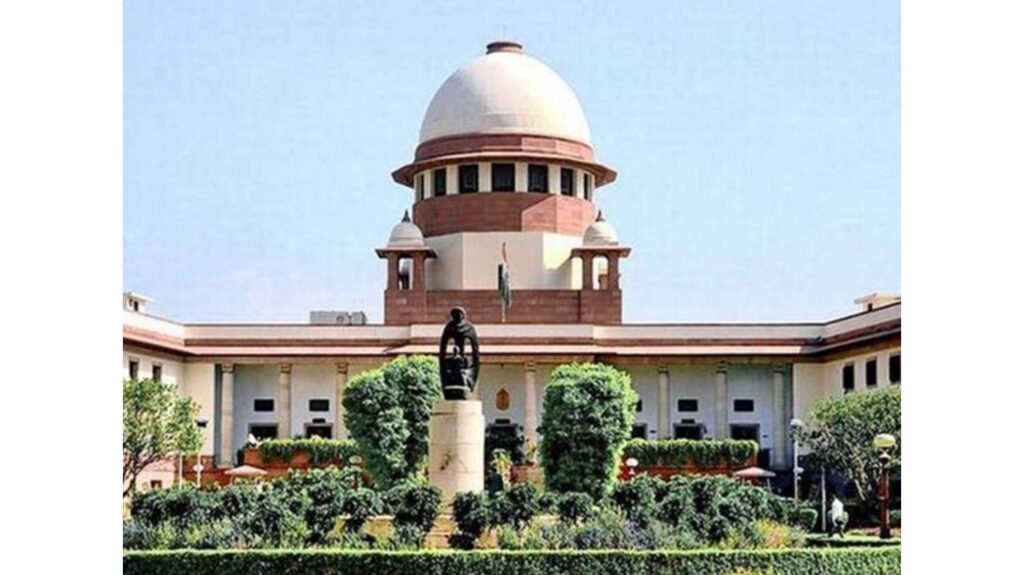
In a landmark decision, the Supreme Court of India on Wednesday allowed passive euthanasia for a 31-year-old Ghaziabad man who was in a persistent coma-like state for more than a decade. The Court found that continuing life-saving treatment would no longer be in the patient’s best interests.
A bench of Justices JB Pardiwala and KV Vishwanathan allowed withdrawal of clinically assisted nutrition and hydration (CANH) for Harish Rana, who is in a coma-like state since he accidentally fell from a building in 2013.
Passive euthanasia refers to the withholding or stopping of life-sustaining treatment so that the patient can die naturally even if there is no reasonable chance of recovery.
While pronouncing the judgement, the court expressed deep sorrow and said that all the stakeholders, including the patient’s family and the medical boards constituted to assess his condition, were in agreement that no meaningful purpose would be served by continuing aggressive medical assistance.
“In the light of the unanimous decision taken by the parents/close relatives and the medical boards constituted, we are of the view that the medical treatment should not be pursued further,” the court commented.
Considering the gravity of the case, the bench said that the proceedings have highlighted the impermanence of life and the intense suffering suffered by the patient in the last thirteen years.
The court commented “We have been deeply saddened throughout the hearing of this case. The issues of this case have once again highlighted the transience and instability of our lives, and also shown how quickly things can deteriorate. For the last thirteen years, the applicant’s life has been full of pain and suffering. This suffering is made all the more cruel because, unlike most of us, she did not even have the right to express her pain,” the court commented.
The bench also expressed its appreciation to the patient’s family, noting that they had remained steadfast in their care over the years. “We acknowledge with utmost respect that the parents and siblings of the applicant have stood as pillars of unwavering support. They have made every possible effort to care for him and continue to do so with unwavering dedication. We express our deep gratitude for their immense love, patience and kindness in such adverse circumstances,” the judgment said.
Addressing the family directly, the court acknowledged the emotional burden of the verdict and said that by seeking euthanasia for their son, they were allowing him to depart with dignity.
“We understand the deep emotional weight of this judgment on the family of Harish. This judgment may seem like a capitulation, but we believe that it is actually an act of profound compassion and courage. You are not abandoning your son. You are allowing him to depart with dignity. This reflects the depth of your selfless love and devotion towards him,” the bench said.
The court also directed the All India Institute of Ayurveda (AIIMS) to facilitate transfer of the patient to its palliative care department, where the process of withdrawal of medical aid will be carried out in an orderly and dignified manner.
The bench also noted the absence of a comprehensive law on end-of-life care and urged the Central government to consider bringing a law in line with the principles laid down in Common Cause vs. Union of India (2018), in which the Supreme Court had recognized the right to die with dignity as part of the right to life under Article 21 and laid down guidelines allowing passive euthanasia.
The court said, “The long absence of a comprehensive legislation on end-of-life care has forced this Court to repeatedly intervene and fill this gap.” The court further said that a dedicated law should be made in this regard, which would bring greater clarity and certainty in such emotionally complex issues.