
The Indian government on Friday categorically rejected China’s infrastructure construction through the China-Pakistan Economic Corridor (CPEC) in the Shaksgam Valley, terming it as “illegal and invalid” and saying the area is an “integral and inseparable part” of India.
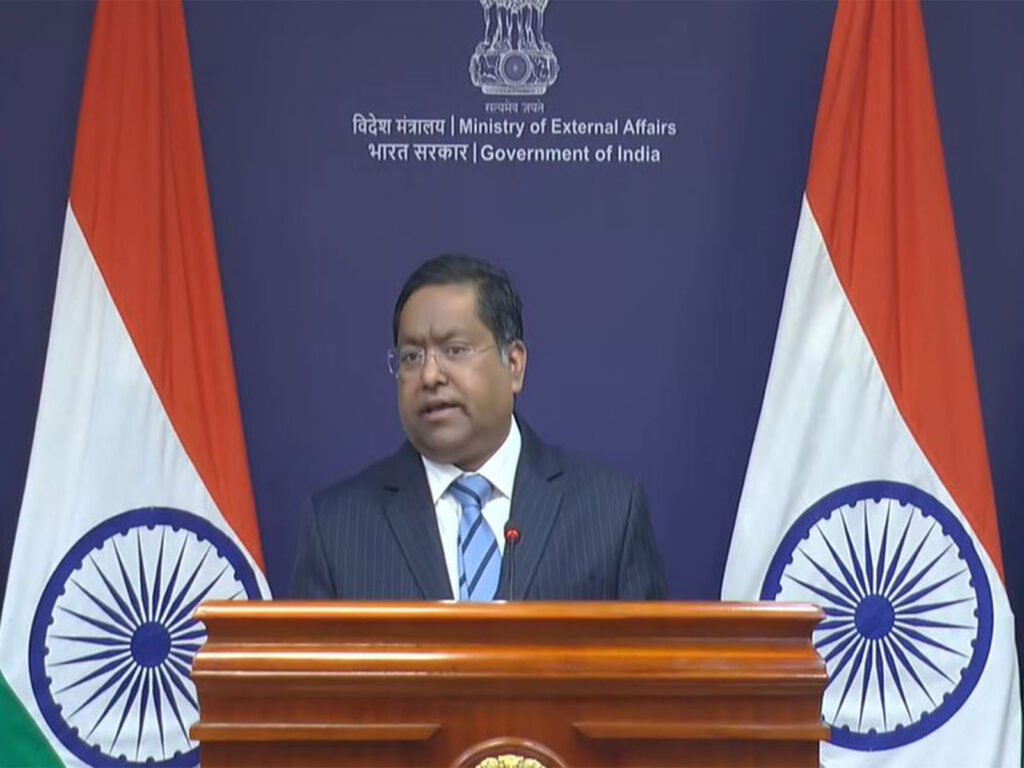
During the weekly press briefing, External Affairs Ministry spokesperson Randhir Jaiswal said that India has never recognized the so-called China-Pakistan Border Agreement of 1963 or the so-called CPEC.
Jaiswal said, “The Shaksgam Valley is Indian territory. We have never recognized the so-called China-Pakistan border agreement of 1963. We have consistently maintained that this agreement is illegal and invalid. We also do not recognize the so-called China-Pakistan Economic Corridor, which passes through Indian territory, which is forcibly and illegally occupied by Pakistan.”
He reaffirmed that the Union Territories of Jammu and Kashmir and Ladakh are an integral and inalienable part of India, and said New Delhi has consistently protested to the Chinese side on this matter and has also reserved the right to defend its interests.
The External Affairs Ministry spokesperson further said, “The entire Union Territories of Jammu and Kashmir and Ladakh are an integral and inalienable part of India. This has been clearly conveyed to Chinese and Pakistani officials several times. We have consistently opposed Chinese efforts to alter the ground reality in Shaksgam Valley. We also reserve the right to take necessary steps to protect our interests.”
The comments were made in response to reports of China building military infrastructure and roads in the Shaksgam Valley, an area across the Karakoram that was ceded to Pakistan under the terms of the so-called 1963 boundary agreement.
Furthermore, the ongoing China-Pakistan border negotiations in the Karakoram region of Pakistan-occupied Kashmir (which covers a distance of more than 590 kilometres) violate India’s customary and legal rights in the region.
Over the past several years, China has maintained military pressure on India through incursions across the Line of Actual Control (LAC), as it strategically plans to build a permanent presence in these areas.
India has repeatedly opposed Chinese attempts to change the regional status quo, especially with regard to territorial issues, and has underlined New Delhi’s stand on the sovereignty and territorial integrity of Jammu and Kashmir and Ladakh.