
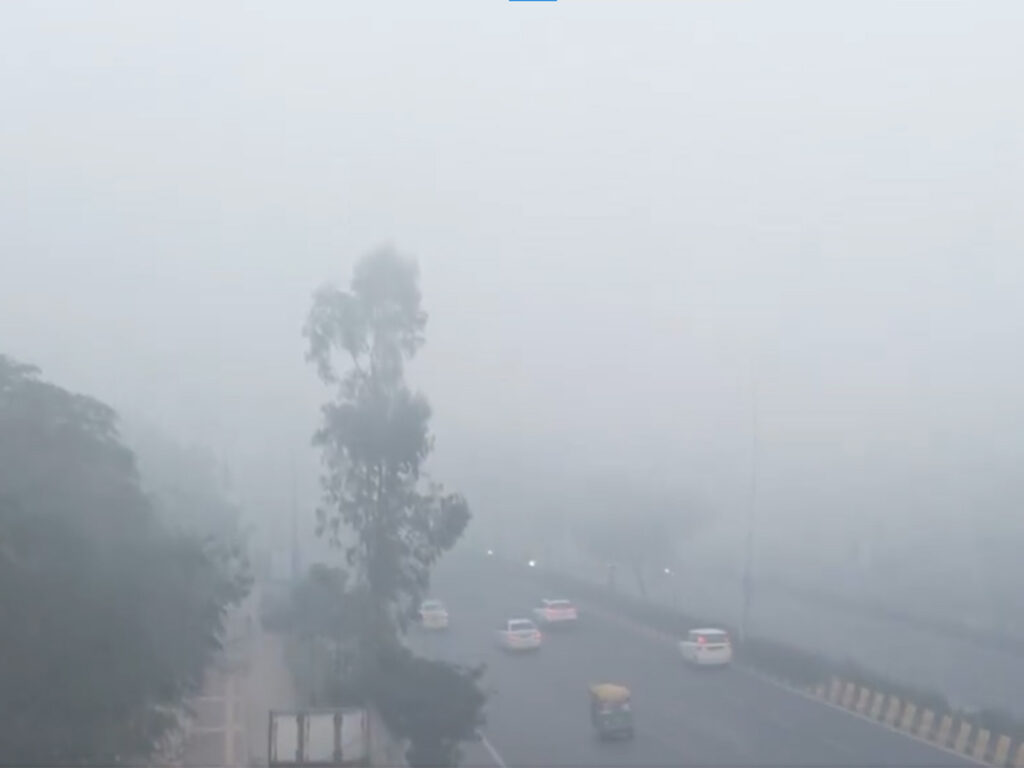
Heavy smog blanketed the capital on Saturday morning, hampering visibility and causing inconvenience to residents. According to the Central Pollution Control Board (CPCB), the overall air quality index (AQI) at around 7 am was 380, which falls in the ‘very poor’ category. However, air quality levels reached severe levels at some places.
Pollution levels remain worryingly high in many parts of the city. According to CPCB, the AQI in Sarai Kale Khan stood at 428, while in Akshardham it was recorded at 420. AQI was 403 on Rao Tularam Marg and 380 in Barapulla flyover area.
Other pollution hotspots include Anand Vihar (428), Ashok Vihar (407) and ITO area (429), with large parts of the national capital falling under the ‘severe’ category.
In view of the deteriorating air quality, the Commission for Air Quality Management (CAQM) has implemented all measures under Phase 4 of the Phased Response Action Plan (GRAP) in Delhi-NCR. The restrictions imposed under GRAP-IV include a ban on non-essential manufacturing activities, ban on entry of certain diesel vehicles and stringent enforcement measures to control sources of pollution.
According to AQI classification, 0-50 is ‘good’, 51-100 ‘satisfactory’, 101-200 ‘moderate’, 201-300 ‘poor’, 301-400 ‘very poor’ and 401-500 ‘severe’.
Earlier, Delhi Environment Minister Manjinder Singh Sirsa had conducted surprise inspections at several petrol pumps, including at the Delhi-Gurugram border and Janpath, to review compliance with the ‘No PUC, No Fuel’ directive.
He interacted with the pump staff and instructed them to enforce the rules while remaining calm and polite.
He said, “You are the first point of contact in this campaign. Cooperate with people and make them understand that this rule is for their and their children’s health.”
The Minister also directed that clear signage, announcements and better queue management should be ensured.
Speaking to vehicle owners present at the spot, he said, “This is not a matter of issuing challans; it is a question of clean air. Every valid PUCC issued today is a small victory in our fight against pollution.”
On December 17, 29,938 PUCCs were issued in Delhi. Till 5.20 pm on December 18, 31,974 new certificates were issued. Thus, the total number crossed the 61,000 mark in almost a day. The government hopes to further increase the number of people availing PUCC before filling up petrol or diesel.
“More than 60,000 people receiving PUCC in a single day shows that when citizens are confident that steps are being taken in public interest, they extend full cooperation,” the minister said.