
During the summer months, when the sun is scorching hot and the humidity levels rise, we usually resort to traditional methods to get relief—like consuming ice, ice cream, cold water or cold drinks. Additionally, to keep places like homes and offices cool, we use electronic appliances like fans, air coolers and air conditioners. Although all these measures can give a feeling of external coolness for some time, but they are not able to provide real comfort or coolness to the body from inside. When the body remains naturally cool from within, it also contributes significantly to maintaining overall health.
In our modern culture, we are gradually moving away from our ancient traditions. The methods that people used in the past to keep their body cool naturally are considered scientifically effective even today. Yogacharya Umang Tyagi often shares various dietary tips and techniques for maintaining good health—methods that perhaps few people know about today. He has told about many 5,000 year old techniques that can help you stay cool in the summer season.
A 5,000 year old method
Yogacharya Umang Tyagi explains that the *Hatha Yoga Pradipika*—a text that is 5,000 years old—describes three special *pranayams* (breathing exercises) that keep the body cool from within. He points out that in the *Hatha Yoga Pradipika*, Acharya Swatmaram has described eight types of *kumbhakas* (breath holding techniques); Of these eight *Kumbhakas*, three special *Pranayamas* are particularly *Pitta-shamaka*—that is, they reduce the *Pitta* (heat) element in the body and increase the feeling of coolness.
Shitali Pranayam
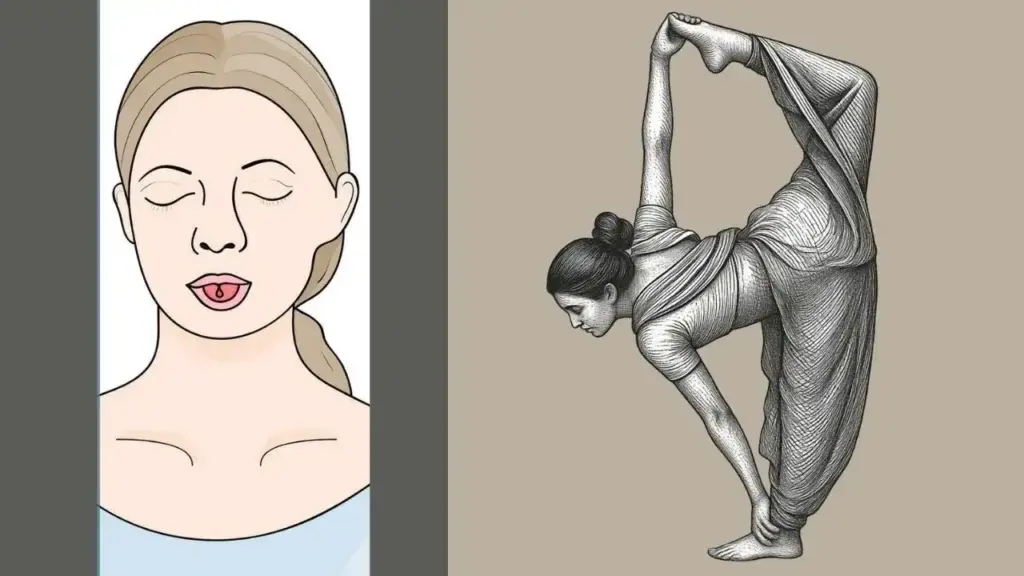
The first *pranayama* that Yogacharya Umang recommends to keep the body cool is *sheetali*. To perform this technique, you have to stick out your tongue and fold it lengthwise into a tube shape. Next, take a deep breath in through the tube formed by your tongue. After inhaling, pull your tongue back in, close your mouth, and hold your breath for a few seconds. Finally, exhale slowly through your nose. You can repeat this entire process several times as per your individual ability and comfort level.
Here are its benefits:
Along with pacifying *Pitta* (fire element), Sheetali Pranayama helps control problems like fever, excessive thirst and excessive hunger.
cooling pranayam
The second pranayama to keep the body cool is Sheetkari. People who are unable to shape their tongue like a tube can try this technique; This can also be done with Sheetali. In this exercise, you open your mouth as if you are smiling. Then, you clench your teeth together, placing the upper row directly over the lower row. Next, take a deep breath in through your mouth. When you have taken a full breath in, slowly exhale through your nose.
Chandrabhedi Pranayam
In the summer months, you should practice Chandrabhedi Pranayama to keep your body cool. In this technique, you use your thumb to close your right nostril and breathe in through the left nostril. Next, close the left nostril and exhale through the right nostril. You should repeat this process continuously. It is important to remember that you inhale through the left nostril and exhale through the right nostril.
Benefits of these pranayams
Yoga experts explain that these pranayams activate your *Ida Nadi*—specifically, the left energy channel. This, in turn, stimulates your nervous system. It reduces body temperature and calms the mind. He points out that modern science also accepts these effects, believing that practicing Shitali Pranayama has benefits ranging from lowering body temperature (which often rises due to heatstroke) to helping control high blood pressure.
**Who should avoid these exercises?**
Umang Tyagi advises that if you are suffering from excessive *kapha* (phlegm), low blood pressure, asthma or depression, you should avoid practicing Shitali and Chandrabhedi Pranayam, as they increase the effect of cold inside the body. Also, if you are pregnant, consult your doctor before trying these exercises. You can choose one of these techniques in the morning, or you can do a combination—practicing all three pranayamas for short periods of time.