
Days after India completed negotiations on a Free Trade Agreement (FTA) with the European Union, which is being called the ‘mother of all agreements’, India is now moving towards finalizing an FTA with the United States and similar agreements with other countries.
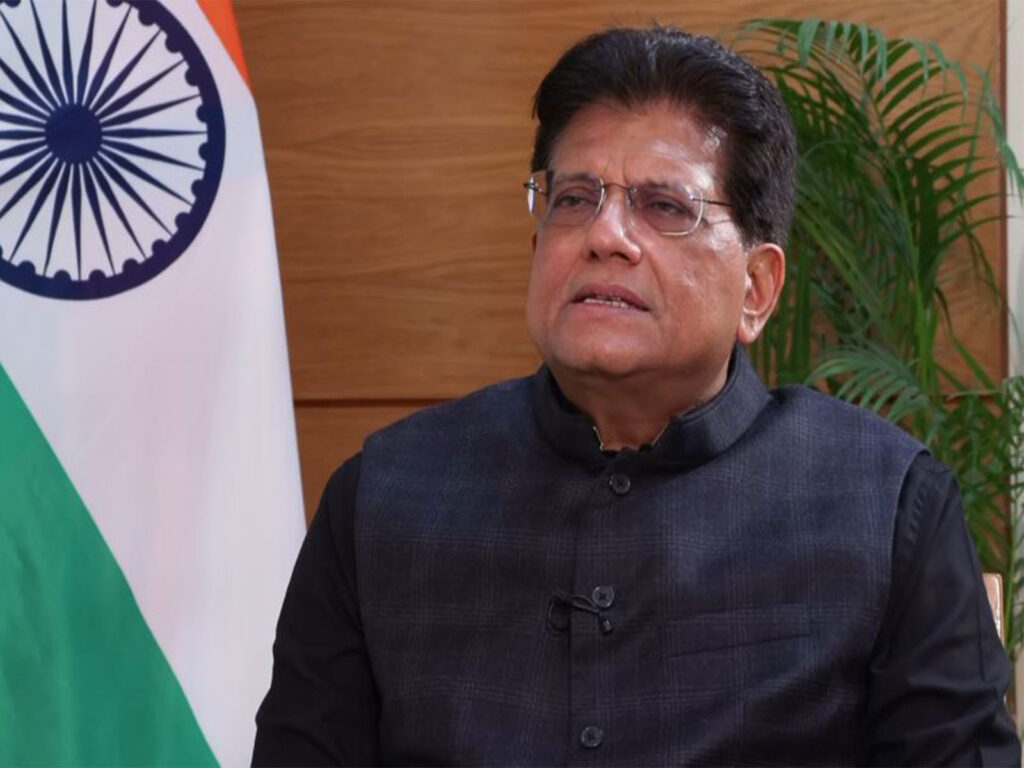
Talking about the upcoming international trade agreements in an interview to ANI, Union Minister Piyush Goyal said, “Every agreement, every free trade agreement (FTA), is important in itself and India takes its decisions based on its own assessment of the pros and cons. No agreement is dependent on any other agreement, nor is any agreement made as per any deadline.”
He said, “Fruitful negotiations are underway with many countries. I can assure you with full confidence that India will open up new markets while protecting its interests. It will continue to enter into new agreements to provide more opportunities for its exporters, and at the same time, protect the interests of our farmers, fishermen, pastoralists and small-scale industries.”
He further said, “We are in a very advanced stage of negotiations going on in Chile, and we are also in talks with Canada and the US. We will also start talks with the six countries of the Gulf Cooperation Council (GCC) very soon.”
Goyal described the India-EU Free Trade Agreement (FTA) as a historic agreement, which places India at the top echelon of international geopolitics.
Speaking to ANI on the FTA, Goyal emphasized that the agreement is a win-win for all parties, which will drive economic growth and create new opportunities for Indian businesses and citizens. Goyal highlighted the potential benefits of the FTA for India’s textile sector, which is expected to significantly increase exports.
Goyal said, “This Free Trade Agreement between the EU and India positions India at the pinnacle of international geopolitics. Under the leadership of Prime Minister Modi, India has gained recognition and importance across the globe. The world recognizes India as the fastest growing mega economy, a country with strong macroeconomic fundamentals and a rapidly growing demand generated by its population of 14 lakh – an ambitious, young India brimming with talent and skills.”
He further said, “Today, India is seen as a trading partner and strategic ally by developing countries across the world. In the past, India was hesitant about such agreements; we were defensive, cautious and shy of facing big challenges. Under the leadership of Prime Minister Modi, India now aspires to become a developed nation, a ‘Visit Bharat’ by 2047. This goal cannot be achieved without expanding our international presence, trade and relations.”
Earlier, External Affairs Ministry sources had said that significant progress has been made in the India-US agreement as talks continue on the India-EU Free Trade Agreement.
According to sources, the deal “could be finalized any day”. Now only the formalities remain to be finalized for both the parties.
Sources further said that there has been strength in the recent rounds of talks and talks regarding the agreement.
On January 21, in Davos, US President Donald Trump expressed confidence over the India-US bilateral trade agreement (BTA), saying the two countries are “going to have a good deal”, and praised Prime Minister Narendra Modi, calling him a close friend and respected leader. Trump made this comment after his address at the 56th annual summit of the World Economic Forum.
Asked by Moneycontrol about the India-US trade deal, Trump said, “I have great respect for your prime minister. He’s a wonderful man and a friend of mine, and we’re going to get a good deal.”
Earlier, India’s Commerce Secretary Rajesh Agarwal had said the much-awaited first tranche of the India-US BTA was “very close”, but did not give any timeline.
The bilateral trade agreement (BTA), formally proposed in February following directions from the leadership of both countries, aims to more than double bilateral trade from the current US$ 191 billion to US$ 500 billion by 2030. The talks were first announced during Prime Minister Narendra Modi’s visit to Washington in February 2025.