
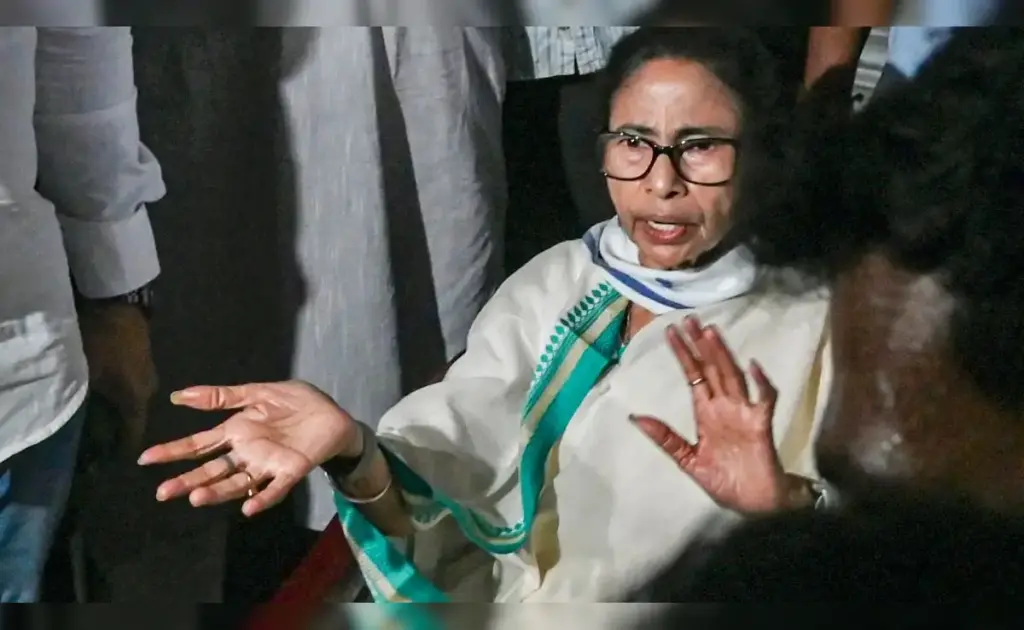
The politics of West Bengal has taken a turn which hardly anyone could have imagined. The 2026 election results may have cleared the state’s political landscape, but Chief Minister Mamata Banerjee’s stubborn attitude has created an unprecedented constitutional impasse. His decision to refuse to resign despite losing his majority in the Assembly has not only boosted the morale of BJP but also sparked a new debate in the legal circles. Questions are being raised: Can a Chief Minister remain in power even after losing the election? And – if she does – can the police arrest her? Let us examine this issue.
Mamata clearly refuses to resign
According to reports on May 5, 2026, despite facing a crushing defeat in the West Bengal Assembly elections, Mamata Banerjee has flatly refused to accept defeat. She publicly announced that she would not go to *Lok Bhawan* to resign. He says he fought and won – a claim that is in stark contrast to the figures released by the Election Commission. Mamata Banerjee’s decision is not just a political statement; This is a direct challenge to established democratic traditions and constitutional norms.
Is arrest possible for refusing to resign?
The first question in the minds of common people is: Can Mamata Banerjee be arrested for breaking the law? According to experts in Indian law, refusing to resign after losing an election is not a criminal act. Therefore, there is no direct legal provision that could justify his immediate arrest merely on the ground that he has refused to leave his post. This matter falls within the scope of constitutional jurisdiction and due process rather than criminal law. The question of arrest will arise only if any other legal violations or criminal acts come to light. **If a Chief Minister refuses to resign after losing the election, what can the Governor do?**
If a Chief Minister refuses to resign even after losing his legislative majority, Article 164(1) of the Constitution gives considerable powers to the Governor. Under this article, the Governor has the power to dismiss the Chief Minister and his entire Council of Ministers with immediate effect. In the case of Mamata Banerjee, this appears to be the most obvious course of action. The Governor is not required to resign; Depending on the majority figures, he can dissolve the current government and pave the way for the formation of a new administration.
constitutional crisis
In a democracy, when a leader loses public confidence, his tenure becomes completely unconstitutional. Due to lack of majority in the Assembly, the Chief Minister no longer has the authority to take government decisions or sign official documents. If Mamata Banerjee continues her obstinate attitude, it will be considered a serious constitutional crisis. Such a situation could paralyze the state administration – a situation in which the Constitution empowers the Central government and the Governor to take stringent measures.
BJP’s claim and possibility of new government
In the 2026 elections, the Bharatiya Janata Party (BJP) won a clear majority by winning 207 seats. As per constitutional protocol, BJP now has the right to take the initiative. The party will approach the Governor to stake claim to form the government. Even if the outgoing Chief Minister refuses to cooperate, the Governor reserves the prerogative to administer the oath to the leader of the majority party. Although it is a traditional practice for the outgoing Chief Minister to resign in this process, his absence – or refusal to resign – cannot prevent the formation of a new government.
Removal from office: the only constitutional remedy
Ultimately, the only remaining option is this: although Mamata Banerjee’s refusal to resign will not land her behind bars, it could certainly lead to her ignominious removal from post. The Constitution of India is not flexible enough to allow any person to cling to power while opposing the mandate. After the intervention of the Governor, the process of forming a new government in the state will start automatically. This approach adopted by Mamata Banerjee may go down as an example in political history, but it will prove legally insufficient to enable her to remain in power.