
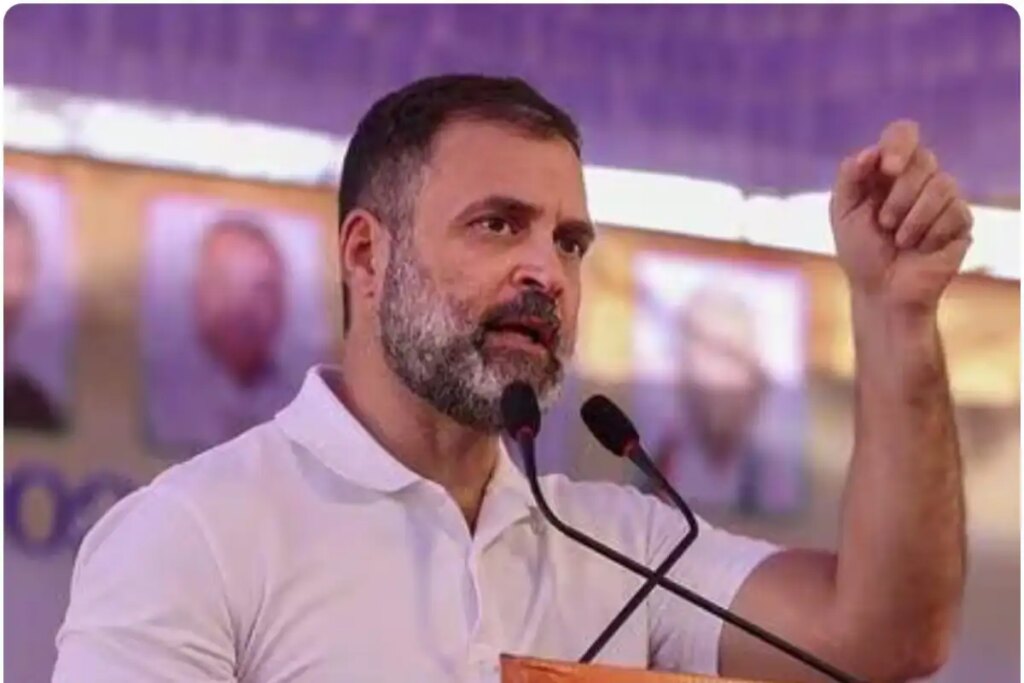
Congress leader and leader of opposition in the Lok Sabha, Rahul Gandhi made serious allegations against the central government in a post shared on Instagram. He said that peaceful protest has been made the most serious crime in India. He wrote that the world’s largest democracy is gradually being pushed onto a path where dissent is being termed as treason and raising questions as a conspiracy. In his post, Rahul Gandhi made it clear that no matter what the issue is, if you raise your voice against the government in a constitutional manner, lathi charge, lawsuit and going to jail is almost certain. He gave many examples to strengthen his point.
Lathi charge on youth troubled by paper leak
Troubled by the paper leak, the youth raised their voice about their future, but they had to face lathi charge. Proud women wrestlers of the country demanded an impartial investigation into the serious allegations against an influential BJP leader. Their voices were discredited, the movement was suppressed and they were forcibly removed from the streets. A peaceful demonstration was held at India Gate in support of a rape victim, but the demand for justice was dismissed as an “inconvenience” to the system. When Youth Congress protested peacefully against the US trade deal which was harmful to the country, they were called “anti-national” and arrested.
Today in a powerful post, he made serious allegations against the Central Government and said that peaceful protest has been made the biggest crime in India. He wrote that the world’s largest democracy is gradually being pushed onto a path where dissent is termed as treason and asking questions as conspiracy.
Environmental concerns are being suppressed by calling them “politics”. In his tweet, Rahul Gandhi further writes that when common people stood up against poisonous air, their environmental concerns were also suppressed by calling them “politics”. When farmers protested for their rights, they were called anti-national. Tear gas, rubber bullets, water cannons and batons became the means of negotiation. When tribal communities stood up for their rights to water, forests and land, they too were looked at with suspicion, as if demanding their rights was a crime.
Asking questions is not the weakness of democracy, but its strength. Rahul Gandhi asked what kind of democracy is this, where a compromising PM is afraid of questions? Where suppressing dissent is becoming the rule of governance. He stressed that peaceful protest is not a crime but the soul of democracy. Asking questions is not the weakness of democracy, but its strength. Democracy is strong when the government listens to criticism, responds and remains accountable. Finally, Rahul Gandhi delivered the message: “Modi ji, this is India, not North Korea. When the government considers itself the country and dissent the enemy, democracy dies.”